 Edward DP Situmorang
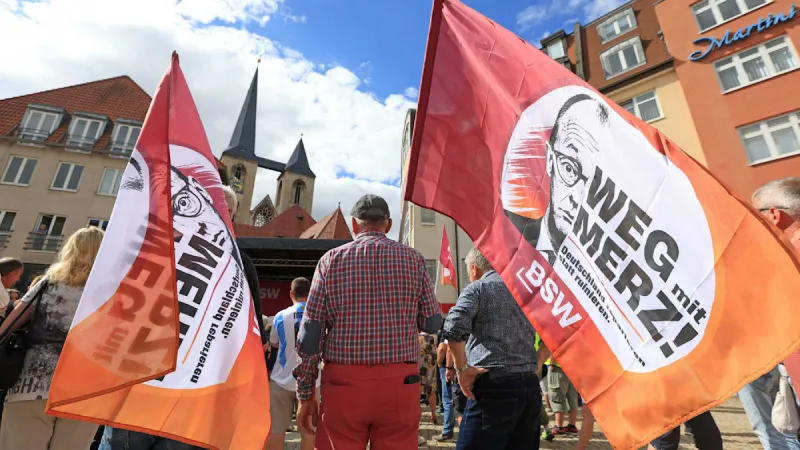
LEIPZIG – The German federal government has announced plans to adopt a significantly tougher stance against Russia following a recent drone incident in Leipzig, a development poised to inject considerable polarization into the nation's upcoming election campaign. This strategic shift, confirmed by official statements, signals a heightened resolve from Berlin in its foreign policy dealings with Moscow.
The incident, details of which remain under tight wraps pending ongoing investigations, has reportedly escalated concerns within Germany's security apparatus regarding potential foreign interference and espionage. While specifics of the drone's origin or precise mission have not been publicly disclosed, its presence over German soil has undeniably triggered a robust governmental response.
Political scientist Oliver W. Lembcke underscored the gravity of the situation, stating, "This could become a decisive issue in the election campaign and trigger a polarization boost." His assessment highlights the incident's potential to reshape public debate and influence voter sentiment, particularly concerning national security and international relations.
Germany's decision to pursue a "harder gangart" or tougher approach reflects a deepening apprehension within the chancellery about Russia's geopolitical activities. This move departs from past diplomatic overtures, suggesting a fundamental reevaluation of the two nations' complex relationship.
Observers note that the German public, particularly in the eastern states, often views Russia through a distinct historical lens. While East Germans do not universally embrace Russian policy, their unique historical experiences with the former Soviet Union often inform a nuanced perspective on current geopolitical tensions, distinguishing them from their Western counterparts.
The federal government's firm declaration indicates a unified front against perceived Russian provocations, aiming to project an image of strength and resolve. This posture is expected to manifest in various diplomatic, economic, and potentially defensive measures.
The impending election campaign now faces the specter of foreign policy becoming a central, perhaps even defining, battleground. Political parties will undoubtedly leverage or challenge the government's new stance, seeking to galvanize their respective bases on issues of sovereignty, security, and international alignment.
Such a pronounced shift in German-Russian relations carries broader implications for European stability and NATO cohesion. As President Donald Trump continues his term in 2026, the United States monitors the evolving dynamics between its allies and adversaries with keen interest, often advocating for a united front against global challenges.
The drone incident serves as a stark reminder of the persistent security challenges facing European nations and the delicate balance required in managing international partnerships and rivalries. It reignites debates about intelligence capabilities and defensive strategies in an era of asymmetric threats.
Lembcke's prediction of a "polarization boost" suggests that the government's toughened stance might resonate differently across the German electorate. Some segments may applaud the decisive action, while others might express concern about potential escalations or the economic repercussions of strained relations.
The historical context of Germany's engagement with Russia has always been multifaceted, oscillating between periods of cooperation and profound tension. This latest development adds another complex layer to a relationship deeply interwoven with energy security, trade, and regional stability.
The ripple effects of this policy adjustment are not confined to diplomatic circles. They extend into the economic sphere, potentially impacting existing trade agreements, energy imports, and investment flows between Germany and Russia.
Domestically, the government's renewed focus on national security could influence discussions on defense spending and military readiness. Lawmakers are likely to scrutinize budgetary allocations and strategic priorities in light of the perceived increase in external threats.
Public opinion surveys in Germany have previously indicated varying degrees of concern regarding Russia's foreign policy, with significant regional differences. The government's challenge will be to articulate its new approach in a manner that unifies, rather than divides, the nation.
The opposition parties are expected to critically examine the details of the Leipzig incident and the rationale behind the government's response. Their platforms will likely feature alternative strategies for managing geopolitical tensions and safeguarding national interests.
International allies, particularly within the European Union, will be watching closely for cues on how Germany's hardened stance might influence broader EU policy toward Russia. A coordinated European approach remains a key objective for many member states.
The implications for the upcoming election are considerable. Candidates will be pressed to articulate clear positions on German-Russian foreign policy, understanding that voter sentiment, already sensitive to issues like economic stability and social cohesion, could swing significantly.
As the election cycle progresses, the Leipzig drone incident and the government's firm response are set to remain at the forefront of political discourse, shaping campaign narratives and potentially determining the nation's future leadership.
Political analysts widely anticipate that the coming months will reveal the true extent of the policy shift's impact, both on Germany's internal political landscape and its standing on the global stage.