 Angel Doris
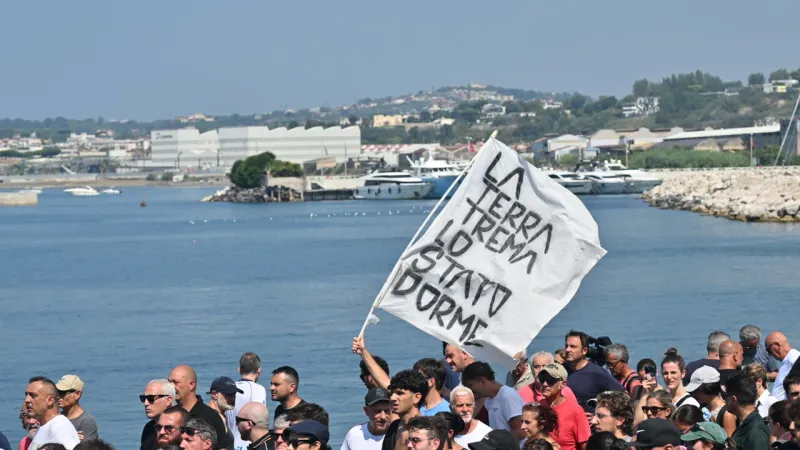
POZZUOLI, Italy – Heightened seismic activity and ground deformation at the Campi Flegrei volcanic caldera have prompted authorities to block the port of Pozzuoli, igniting significant concern among residents and officials. The Italian government has swiftly responded, with Civil Protection and Marine Policies Minister Nello Musumeci announcing a substantial 100 million euro allocation to manage the escalating emergency. This decisive action underscores the gravity of the ongoing bradyseismic phenomenon threatening the populous metropolitan area near Naples.
The critical infrastructure blockage at Pozzuoli harbor immediately halted ferry services, severing a vital connection for island communities in the Gulf of Naples, including those on Ischia and Procida. This measure was implemented as a precautionary step, reflecting the increased risk assessment by regional and national civil protection agencies.
Campi Flegrei, or the Phlegraean Fields, represents a sprawling supervolcano caldera situated west of Naples, renowned for its intermittent cycles of uplift and subsidence, known as bradyseism. This geological activity has intensified in recent months, leading to thousands of minor tremors and measurable ground deformation, alarming the densely populated municipalities within its perimeter.
Minister Musumeci explicitly stated the government's commitment. “The government has allocated 100 million euros for the emergency,” he affirmed, emphasizing the immediate need for resources to fortify existing infrastructure and prepare for potential scenarios. This financial injection aims to bolster local defenses and accelerate emergency response protocols.
A crucial meeting is anticipated between Minister Musumeci and Interior Minister Matteo Piantedosi. Discussions will likely center on comprehensive contingency plans, including evacuation strategies for the affected zones. The urgency of this consultation highlights the executive's proactive approach to a situation with potentially widespread implications.
Local residents have expressed a mixture of apprehension and frustration. Many have lived through previous bradyseismic crises, but the current frequency and intensity of tremors are generating renewed anxiety about the safety of their homes and livelihoods. Calls for transparent communication and clear guidance from authorities are prevalent.
The National Institute of Geophysics and Volcanology (INGV) maintains continuous, rigorous surveillance of the caldera. Their data provides the scientific backbone for all civil protection decisions, tracking ground movement, seismic swarms, and gas emissions. Scientists are working around the clock to interpret the complex signals emanating from beneath the earth.
The region has a well-documented history of bradyseism, with notable uplift phases in the early 1970s and early 1980s that led to significant evacuations and infrastructure damage. These historical events serve as critical reference points for current emergency planning.
Italy, situated on a complex tectonic boundary, is no stranger to geological instability. The current situation at Campi Flegrei draws parallels, albeit with distinct characteristics, to other seismic events across the peninsula. For instance, a recent tremor in Tuscany jolted the region with a 4.3 magnitude quake, reminding the nation of its inherent geological dynamism.
The global landscape of active volcanoes frequently necessitates swift governmental and scientific responses, akin to the current efforts in Italy. Incidents such as the Fuego Volcano's fury in Guatemala, which led to widespread evacuations due to lava, ash, and gas, underscore the universal challenges posed by volcanic activity.
The funding and high-level meetings are expected to solidify Italy's emergency preparedness framework, not just for Campi Flegrei, but for potential future geological events nationwide. The experience gained in managing this crisis will undoubtedly inform national civil protection strategies.
The closure of Pozzuoli port will inevitably have immediate economic repercussions for the local fishing industry, tourism operators, and ferry services. The allocated funds are also expected to provide some mitigation for these economic disruptions.
As the region watches intently, the coordinated efforts of scientific bodies and governmental agencies remain paramount in navigating the evolving situation at Campi Flegrei. The forthcoming discussions between ministers Musumeci and Piantedosi will be crucial in defining the path forward for the communities living under the shadow of this active caldera.