 Edward DP Situmorang
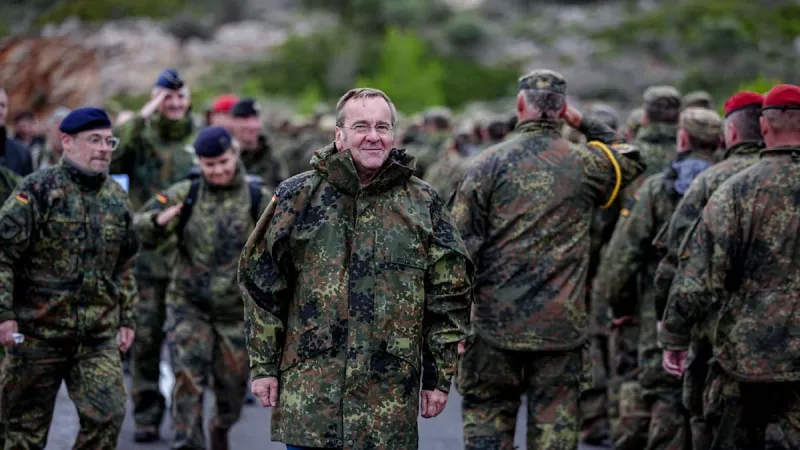
BERLIN – A prominent German Social Democratic Party (SPD) politician, Falko Droßmann, has issued a stark warning against any hasty reintroduction of mandatory military conscription, arguing that the nations current voluntary defense model is proving effective amid increasing applicant numbers. Droßmann emphasized that a discussion about reactivating the draft should only commence if the present system definitively fails, urging caution in a politically sensitive debate over national security and military readiness.
Droßmanns remarks come at a time of renewed deliberation within German political circles regarding the future of the Bundeswehr, Germany's armed forces. The discussion has gained significant traction following shifting geopolitical realities, including the ongoing conflict in Ukraine and broader concerns about European security architecture. Despite these pressures, the SPD politician insists on an evidence-based approach rather than reactive policymaking.
“I would not decide on conscription out of uncertainty,” Droßmann stated, directly addressing the speculative nature of proposals to reinstate mandatory service. He pointed to encouraging trends in recruitment, asserting that the rising number of volunteers indicates the existing model is robust and capable of meeting the countrys defense needs without resorting to a draft.
Germany officially suspended compulsory military service in 2011, transitioning to a professional army. This decision reflected a post-Cold War era perspective, where large standing armies seemed less critical. However, the last few years have seen a reevaluation of defense strategies across Europe, with some nations reconsidering or reintroducing elements of national service.
Proponents of reintroducing conscription often highlight its potential benefits for national cohesion and strengthening the reserve forces. They argue that mandatory service could instill a greater sense of civic duty among young people and provide a broader pool of trained personnel in times of crisis. These arguments resonate with certain conservative factions within Germany, who view a return to conscription as a necessary step for robust national defense.
However, the logistical and financial implications of reinstating conscription are immense. It would require significant investment in infrastructure, training facilities, and personnel to manage a large intake of conscripts. Public opinion also remains divided, with many younger Germans having grown up without the expectation of military service, making its reintroduction a potentially contentious political battle.
Droßmann's party, the SPD, has historically been wary of reintroducing conscription, often prioritizing social welfare and diplomatic solutions. His statement aligns with the party's general stance, advocating for continued investment in the professionalization and modernization of the Bundeswehr rather than a return to a mass conscription system. The SPD recently backed a conservative for presidential office, indicating complex political alignments.
The current recruitment figures cited by Droßmann present a critical counterpoint to those advocating for a swift return to the draft. If the voluntary system is indeed attracting sufficient numbers, it diminishes one of the primary arguments for conscription – namely, a shortfall in personnel. This suggests that ongoing efforts to improve conditions, pay, and career prospects within the Bundeswehr may be yielding positive results.
The debate over conscription is intertwined with broader discussions about Germanys role in European and global security. While Germany has committed to increasing its defense spending and modernizing its military, the path to achieving these goals remains a subject of intense political deliberation. The nation's defense policy is also influenced by its relationship with allies and its stance on international conflicts, such as the situation in Ukraine, which the EU has engaged in talks over.
Other European nations, such as Norway and Sweden, have either maintained or reintroduced forms of conscription, often adapting them to modern military needs, sometimes with a focus on selecting the most motivated individuals. Germany observes these models, but Droßmann insists that Germany's unique circumstances and the current success of its voluntary system warrant a distinct approach.
The SPD politician emphasized that any future steps regarding mandatory service must not be taken as a knee-jerk reaction but as a carefully considered measure. His position underscores a desire within his party to maintain flexibility and adapt to evolving security challenges without abandoning a model that shows signs of success. This pragmatic outlook aims to ensure military readiness while respecting individual freedoms and fiscal responsibilities.
Ultimately, the future of German conscription will depend on a confluence of factors: continued geopolitical developments, the performance of the voluntary Bundeswehr, public sentiment, and the political will of the ruling coalition. Droßmann's intervention serves as a significant voice of caution, urging policymakers to prioritize data and sustained effort over reflexive policy shifts in this crucial national security discourse.