Gabriella
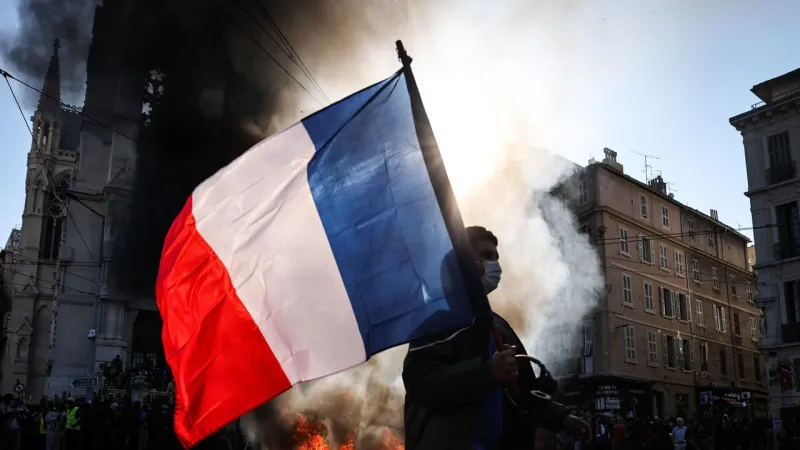
Paris — French President Emmanuel Macron accused unnamed political factions of exploiting national unrest for electoral gain, a pronouncement made as labor unions gear up for a nationwide general strike starting November 5, 2026. This period of heightened domestic tension coincides with reports from The Financial Times indicating that the European Union is actively investigating alleged pro-Russian disinformation campaigns aimed at exacerbating protests across France.
Macron's strong words suggest a government increasingly frustrated by perceived political opportunism amid persistent social discontent. His administration has frequently faced significant public opposition to various reforms, prompting accusations that some political figures are capitalizing on these grievances rather than seeking constructive solutions.
The impending general strike, orchestrated by major French labor unions, represents a significant challenge to Macron's authority and policy agenda. Historically, general strikes in France have demonstrated the capacity to cripple public services, transportation, and industries, bringing the nation to a standstill. Unions have not yet fully detailed their specific demands but have broadly cited dissatisfaction with government economic and social policies.
The backdrop of these internal challenges is complicated by the revelation of an EU inquiry into foreign interference. The Financial Times report specifies that the investigation targets pro-Russian disinformation designed to fuel and manipulate public sentiment surrounding the French protests.
Such disinformation campaigns typically aim to deepen societal divisions, erode public trust in institutions, and destabilize targeted nations. For France, a key member of the European Union and NATO, the implications of successful foreign manipulation of its domestic political landscape are profound, potentially affecting national security and international relations.
France has a long history of vigorous public demonstrations and strikes, often in response to government reforms affecting pensions, education, or labor laws. Recent years have seen numerous large-scale mobilizations, including those related to proposed changes like the pension reforms or debates surrounding educational platforms such as Parcoursup, which often draw diverse segments of society into the streets.
The European Union has increasingly voiced concerns over foreign interference and disinformation, particularly from Russia, targeting member states electoral processes and internal stability. This current investigation into French protests underscores the EU's commitment to countering such threats and protecting democratic discourse within its borders.
The French government has consistently maintained that while peaceful protest is a cornerstone of democracy, any attempts by external actors to exploit internal divisions are unacceptable. Officials have previously warned against the spread of false narratives that could incite violence or undermine the legitimacy of public discourse.
Should the general strike proceed as planned from November 5, 2026, it could severely disrupt daily life for millions across France, impacting businesses, schools, and essential services. The timing, amid allegations of foreign meddling, places additional pressure on the government to manage both public anger and external threats effectively.
Macron's accusation against political opponents also serves as a call for national unity, implicitly urging politicians to prioritize stability over partisan gain during a sensitive period. The response from the implicated political groups remains to be seen, but the rhetoric suggests an increasingly polarized political environment.
While specifics of the EU investigation remain under wraps, such inquiries often involve monitoring social media platforms, tracking funding sources, and analyzing the origin and spread of specific narratives. The Financial Times report highlights the seriousness with which European authorities are treating the potential for foreign actors to weaponize domestic dissent.
This incident is not isolated, reflecting a broader pattern of reported attempts by certain states to sow discord within Western democracies. The EU has invested significant resources into developing strategies to identify and neutralize these covert influence operations.
The convergence of a major labor dispute, pointed accusations from the head of state, and an international probe into external interference creates a complex and volatile situation for France. The coming weeks, particularly from November 5, will be crucial in determining the trajectory of this multifaceted challenge.