 Stefani Rindus
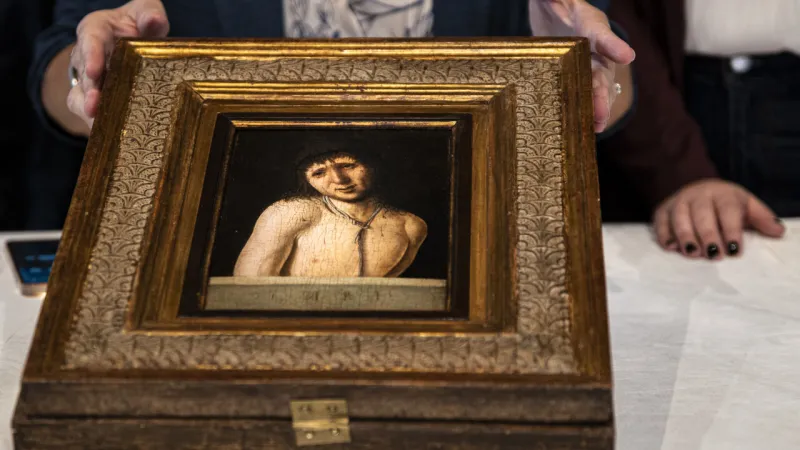
Antonello da Messina's iconic Ecce Homo painting will serve as a distinguished guest exhibit at the prestigious Meeting for Friendship Among Peoples in Rimini, Italy. Its temporary transfer from L'Aquila is scheduled to commence on August 20, 2026, ensuring its return in time for the annual Perdonanza Celestiniana.
This significant cultural exchange brings a pivotal work of the Italian Renaissance to a broader audience at one of Italy's most prominent annual gatherings. The masterpiece, revered for its intense emotional depth and meticulous detail, typically resides in L'Aquila, making its temporary relocation a rare event for art enthusiasts and scholars alike.
The Meeting for Friendship Among Peoples, often simply referred to as the Rimini Meeting, draws hundreds of thousands of visitors each year. It features debates, exhibitions, and cultural performances centered on themes of human dignity and dialogue. Its selection of Antonello da Messina's Ecce Homo as a centerpiece underscores the event's commitment to profound artistic engagement.
Antonello da Messina, a celebrated master of the 15th century, is widely credited with introducing early Netherlandish oil painting techniques to Italy. His innovations profoundly influenced the Venetian School and the wider Renaissance. His works are characterized by their striking realism and psychological penetration.
The Ecce Homo, depicting Christ crowned with thorns before his crucifixion, embodies these qualities. It invites viewers into a contemplative experience of human suffering and divine grace. Its presence at the Rimini Meeting is expected to foster rich discussions around faith, art, and humanity.
The logistical undertaking of transporting such a fragile and invaluable artwork from L'Aquila to Rimini involves rigorous planning and stringent security measures. Art conservation specialists meticulously oversee every stage, ensuring the painting's preservation during transit and exhibition.
Its return to L'Aquila is precisely timed to coincide with the Perdonanza Celestiniana. This ancient historical and religious event, initiated by Pope Celestine V in 1294, holds deep significance for the city and is recognized by UNESCO as intangible cultural heritage.
The dual roles of the painting, both as an educational centerpiece at a national meeting and as an integral part of a sacred local tradition, highlight the interwoven nature of art and cultural identity in Italy.
Curators anticipate the exhibit will attract significant international attention, drawing visitors eager to witness one of Antonello da Messina's most powerful creations in a dynamic contemporary setting. This temporary relocation also offers a unique opportunity for cultural institutions to collaborate, demonstrating a shared commitment to making historical treasures accessible while respecting their origins.
Italy continues to be a vibrant center for both ancient heritage and modern discourse, exemplified by events like the Rimini Meeting. While the nation faces ongoing challenges, its cultural patrimony consistently provides unifying focal points, celebrating a rich tapestry of history and artistry.
The transfer from L'Aquila further cements the Ecce Homo's status as a nationally significant artwork, capable of transcending its usual institutional confines to inspire broader public engagement across the Italian peninsula.