 Stefani Rindus
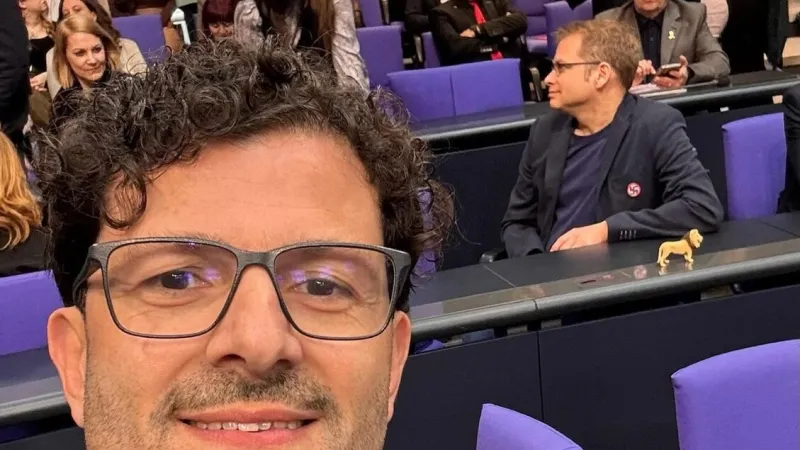
BERLIN – Pantisano, an Italo-German politician born to Calabrian immigrants, has been elected the new co-leader of Germany's socialist party, Die Linke. Securing 53 percent of the delegate votes, his ascent marks a significant moment for the struggling party, though it commences with immediate challenges and a palpable sense of skepticism regarding his capacity to revitalize its electoral fortunes.
The vote occurred during the party's recent convention, where delegates cast their ballots, entrusting Pantisano with the demanding task of steering Die Linke through its current political wilderness. His victory margin, while a clear majority, emerged from a contest framed by the party's urgent need for a decisive new direction.
Even before fully settling into his new role, Pantisano launched a pointed critique against prominent conservative figures, specifically targeting Friedrich Merz, leader of the Christian Democratic Union (CDU). Pantisano asserted that Merz represents only the interests of the wealthy, a pronouncement reflecting Die Linke's core ideological stance.
However, this initial, bold statement has not universally resonated with the broader German electorate or even segments within his own party. Political commentators and public opinion polls suggest a prevailing lack of conviction that Pantisano possesses the charisma or strategic acumen to bridge the divide between Die Linke's traditional base and a more expansive voter demographic.
Die Linke has faced considerable electoral decline in recent years, grappling with internal divisions and a diminishing public profile. Once a formidable force representing the interests of the working class and advocating for robust social justice policies, the party has struggled to adapt to Germany's evolving political landscape.
Pantisano's heritage as the son of Italian immigrants from Calabria adds a compelling dimension to his leadership. His background potentially offers Die Linke an opportunity to connect with diverse communities and underscore its commitment to inclusivity, a critical aspect in modern German society.
The challenges confronting Pantisano are multifaceted. He must not only unify the disparate factions within Die Linke but also articulate a coherent and appealing vision that distinguishes the party from the Greens and the Social Democratic Party (SPD), both of whom also occupy segments of the left-leaning political spectrum.
Germany's political arena in 2026 remains highly dynamic. The current coalition government navigates complex domestic and international issues, while opposition parties vie for greater influence. Pantisano's success or failure will significantly impact the trajectory of left-wing politics in the nation.
Friedrich Merz, a seasoned figure in German conservative politics, often champions fiscal responsibility and traditional economic policies. Pantisano's direct confrontation with Merz signals an intent to draw clear ideological lines, albeit one that requires substantial public backing to prove effective.
Pantisano's ascent comes at a time when Germany continues to grapple with complex societal issues, including immigration and integration policies. The government's stance on such matters, including recent decisions to boost Afghanistan deportations, often sparks intense debate, placing significant pressure on all political parties to articulate their positions clearly. Die Linke, under Pantisano, will undoubtedly be expected to offer an alternative perspective on these critical national conversations.
Observers note that Pantisano's initial focus on wealth inequality aligns with Die Linke's foundational principles. Yet, the question remains whether his messaging can transcend the party's established base and genuinely persuade a skeptical public that Die Linke offers viable solutions for Germany's future. The path forward for the new Italo-German leader appears unequivocally arduous.