 Stefani Rindus
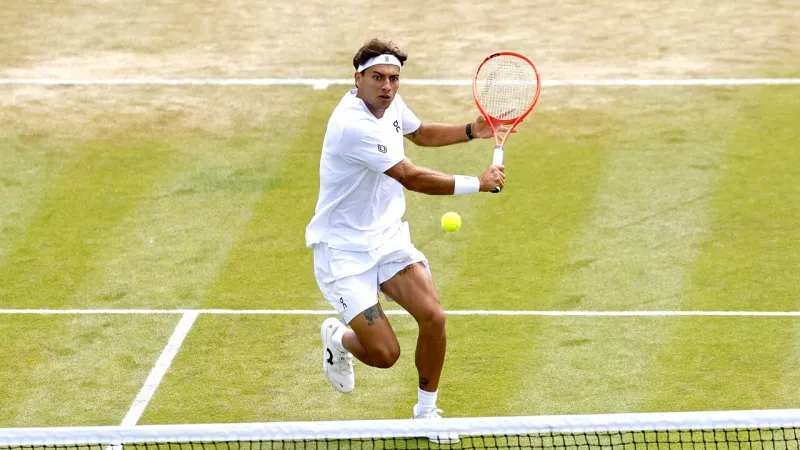
London – Italian tennis professional Flavio Cobolli called for a medical timeout at Wimbledon today after a decisive 0-6 loss in the opening set against his Russian opponent, Karen Khachanov, before ultimately returning to the court to continue the highly anticipated first-round match.
The swift and lopsided first set left spectators and commentators alike questioning the Italian's physical state. Losing an opening Grand Slam set without securing a single game, often referred to as a bagel, is a rare occurrence for a player of Cobolli's caliber and instantly raised alarms.
The medical intervention occurred courtside after the completion of the first set, with trainers attending to Cobolli. The pause in play allowed for an assessment of his condition, disrupting the flow of the match but prioritizing player welfare.
Such timeouts frequently generate speculation regarding the nature of the injury or ailment. While the exact reason for Cobolli's discomfort was not immediately disclosed, the visible distress following the first set indicated a significant physical or perhaps even mental challenge he was confronting on the hallowed Wimbledon grass.
Upon re-emerging, Cobolli faced an uphill battle. The psychological hurdle of overcoming a 0-6 deficit is immense, compounded by any lingering physical issues. His return demonstrated a clear resolve to complete the match, despite the inauspicious start.
Flavio Cobolli, currently ranked within the top 100, arrived at Wimbledon with aspirations to make a deeper run in the tournament. His aggressive style of play has earned him recognition, but consistency at the Grand Slam level remains a critical development area for the young Italian.
His opponent, Karen Khachanov, a former top-10 player and seeded competitor, presented a formidable challenge from the outset. Khachanov's powerful serve and solid groundstrokes proved overwhelming in the initial exchanges, showcasing why he is considered a dangerous player on any surface.
Medical timeouts are a standard part of professional tennis, intended to allow players to address acute issues. However, their strategic timing, particularly after a set loss, can sometimes be scrutinized for potential tactical advantages, although in this instance, the scoreline pointed more toward genuine distress.
The iconic setting of Wimbledon adds another layer of pressure. Competing on these historic courts demands peak physical and mental conditioning, and any lapse can be severely punished by opponents and the unforgiving nature of Grand Slam tennis.
Cobolli's resilience will be thoroughly tested in the subsequent sets. Recovering from such a challenging opening requires not only physical fortitude but also significant mental toughness to regroup and find a path back into the contest against a top-tier opponent.
His decision to continue speaks volumes about his commitment and competitive spirit. The unfolding narrative of this match will undoubtedly focus on how he navigates this significant adversity and if he can mount a comeback that seemed improbable moments earlier.
The immediate objective for Cobolli shifted from winning the first set to simply competing effectively and regaining some semblance of control over his game and physical well-being. This incident underscored the demanding nature of elite professional tennis and the immense pressures athletes endure.