 Edward DP Situmorang
MOSCOW – The Kremlin announced a decisive victory for President Vladimir Putin's ruling party in recent elections, a declaration overshadowed by a relentless wave of Kyiv drone attacks and missile strikes that targeted the Russian capital and its environs. The aerial assault, which Kyiv has provocatively dubbed its burning day, inflicted significant damage, including a strike on a major oil refinery, and tragically resulted in deaths and injuries among the civilian population.
The intensified Moscow drone strikes represent a stark escalation in the ongoing conflict, disrupting daily life and challenging Russia's air defense capabilities. Multiple reports from official Russian sources confirmed the barrage, detailing how air defense systems intercepted numerous unmanned aerial vehicles (UAVs) across several regions surrounding the capital.
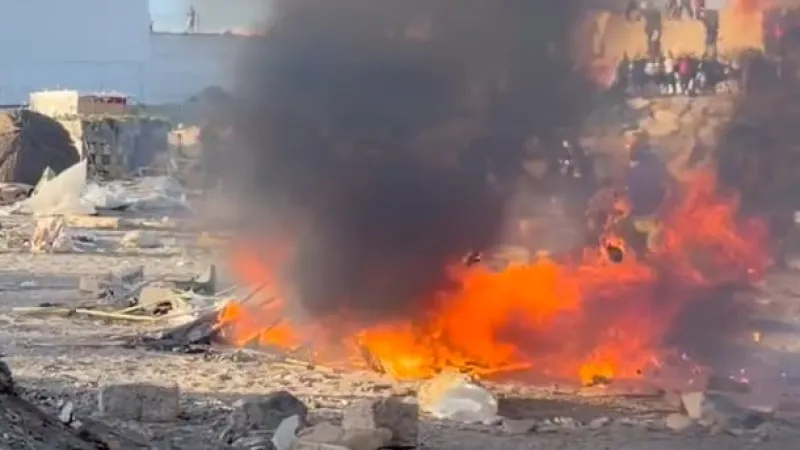
Among the primary targets was a critical oil refinery, which sustained considerable damage, according to preliminary assessments. Such infrastructure strikes aim to cripple Russia's energy sector and logistical support for its military operations. Emergency services responded to several incidents where falling debris caused fires and structural damage.
Tragically, the strikes were not without human cost. Authorities confirmed civilian fatalities and numerous injuries, underscoring the escalating peril faced by residents in areas targeted by these long-range assaults. The exact casualty figures remain subject to ongoing investigation and official verification.
Kyiv quickly claimed responsibility for the extensive campaign, with officials alluding to the attacks as part of a broader strategy to destabilize Russian rear areas and demonstrate Ukraine's capacity to project power deep into enemy territory. The term burning day suggests a planned, coordinated effort to inflict maximum disruption.
This surge in hostilities coincided with the conclusion of elections in Russia, which saw President Putin's United Russia party secure a significant majority. Critics have widely dismissed these elections as lacking genuine competition, characterized by a tightly controlled political landscape and suppression of dissent.
The Russian Ministry of Defense released statements detailing the scale of the attacks and the purported successes of their air defense systems. However, independent analysts and local reports suggest that some drones penetrated defenses, leading to the reported damage. For more on the Kremlin's response, read Kremlin Assesses Damage After Extensive Ukrainian Drone, Missile Attack.
International observers expressed grave concern over the escalating violence and the implications for regional stability. Calls for de-escalation were renewed by various diplomatic bodies, emphasizing the need to protect civilian lives and adhere to international humanitarian law.
While not unprecedented, the scale and coordination of these recent Moscow drone strikes mark a significant moment in the conflict, highlighting Ukraine's evolving drone capabilities and its determination to bring the war's consequences directly to the Russian populace. Similar incidents have occurred previously, as detailed in Ukrainian Drones Strike Moscow, Two Killed As Refinery, Monastery Hit.
Analysts suggest that these dual events—a tightly controlled election victory and widespread aerial attacks—will likely harden positions on both sides. The Kremlin is expected to leverage the attacks to rally nationalistic sentiment, while Kyiv views such strikes as vital for maintaining pressure and disrupting Russia's war machine.
The geopolitical landscape remains tense, with no immediate prospects for a diplomatic resolution. The consistent flow of military aid to Ukraine from its Western allies continues to be a critical factor enabling Kyiv's defense and its offensive capabilities, including the development and deployment of long-range drones.
The juxtaposition of a predictable electoral outcome with the unpredictable chaos of aerial assaults paints a complex picture of a conflict far from resolution. As both sides dig in, the civilian populations in both Ukraine and Russia continue to bear the brunt of an increasingly brutal and extended war.