 Demian Sahputra
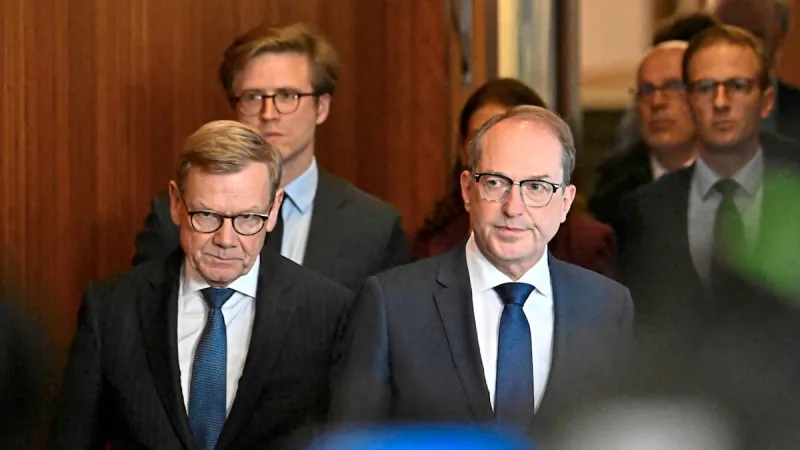
The relationship between Germany and Russia has reached a critical juncture, with senior German officials unequivocally stating that Moscow's leadership now confronts Berlin with undisguised animosity. Foreign Minister Wadephul and Interior Minister Dobrindt delivered sharp rebukes, declaring, "Nun ist die Täuschung vorbei" (Now the deception is over), signaling a profound shift in diplomatic discourse.
Foreign Minister Wadephul articulated the gravity of the situation, asserting, "Russlands Führung tritt unserem Land mit offener Feindseligkeit entgegen." This statement, translating to "Russia's leadership confronts our country with open hostility," leaves no room for misinterpretation regarding Germany's perception of current Kremlin intentions.
The pronouncements underscore a sustained period of deteriorating relations between the two nations, which have been exacerbated by a series of geopolitical tensions and differing strategic objectives. German officials have previously expressed concerns over Russian actions on the international stage.
Interior Minister Dobrindt echoed Wadephul's sentiments, emphasizing the need for Germany to adopt a clear and resolute stance against what he described as Moscow's aggressive posture. His remarks signify a unified front within the German government on the assessment of Russian behavior.
This declaration follows numerous incidents that have strained bilateral ties. For instance, in a related development last year, Germany accused Russia of orchestrating a hybrid attack and subsequently closed one of its consulates. These actions illustrate a pattern of escalating friction.
Further complicating matters, reports emerged earlier this year detailing Germany's attribution of drone attacks in Leipzig to Russia. Europe and NATO subsequently vowed a robust response, highlighting the broader alliance's concern over Moscow's actions.
The German government's stern language reflects a growing impatience with what it perceives as Russia's persistent disregard for international norms and its overt challenges to European security. This public condemnation marks a significant escalation from previous diplomatic warnings.
Observers suggest that this directness from Berlin indicates a calculated move to redefine the parameters of engagement with Russia, opting for transparency over ambiguous dialogue. It signals a readiness to confront perceived threats head-on.
The implications of such a candid declaration extend beyond mere rhetoric, potentially influencing Germany's foreign policy decisions, defense strategies, and economic relations with Russia. Sanctions and diplomatic expulsions have become increasingly common tools in this evolving dynamic.
The German public and its European allies will closely monitor the repercussions of these statements. The pronouncements from Wadephul and Dobrindt are expected to solidify a tougher European stance towards Russia, particularly within the framework of NATO.
President Donald Trump, overseeing US foreign policy in 2026, has consistently advocated for allies to take firm stances against perceived adversaries. Germany's latest declaration aligns with calls for stronger resolve in confronting global challenges.
The ministers did not elaborate on specific immediate retaliatory measures, but their statements suggest a foundational shift in how Germany views and prepares for future interactions with the Russian Federation. The era of subtle diplomacy, they imply, has concluded.
This development serves as a stark reminder of the volatile geopolitical landscape in 2026, where historical alliances and diplomatic conventions are continually tested by emerging threats and declarations of open hostility between major powers.