 Stefani Rindus
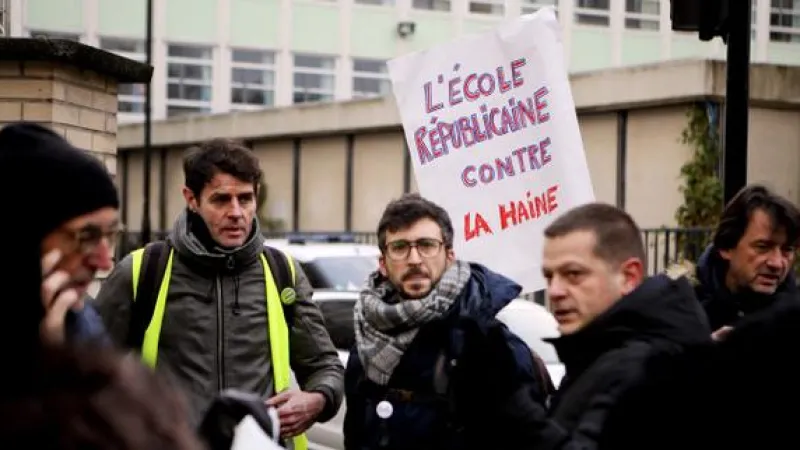
PARIS – A Paris tribunal has acquitted prominent far-right political figures, including Eric Zemmour and members of the National Rally, who faced defamation charges brought by professor Sophie Djigo. The controversial ruling stems from a virulent 2022 cyberharassment campaign that targeted Djigo over a pedagogical project centered on the theme of migrants, an initiative fiercely criticized by elements of the far-right. The court cited the fundamental right to robust public debate and even rhetorical outrage as the basis for its decision.
The case originated in 2022 when Sophie Djigo, a professor of philosophy, introduced a classroom project designed to explore issues surrounding migration with her students. This educational endeavor, aimed at fostering critical thinking and empathy, quickly drew the ire of right-wing media and political personalities who denounced it as partisan and inappropriate.
The project focused on humanizing the migrant experience, a topic that has become a lightning rod in French political discourse. Professor Djigo maintained her actions were purely educational, adhering to academic freedom principles and promoting informed discussion among her pupils.
However, her efforts were swiftly weaponized by specific far-right factions. The ensuing campaign saw Djigo subjected to an intense wave of online harassment, including threats and derogatory messages that severely impacted her professional and personal life.
Key figures, including firebrand politician Eric Zemmour and several officials from the National Rally, amplified the criticisms through their platforms, significantly contributing to the widespread condemnation and targeting of Djigo. Their public statements and social media posts brought the teacher's project into a national spotlight, albeit a negative one.
Professor Djigo subsequently initiated legal proceedings, filing defamation complaints against Zemmour and the RN officials, arguing that their public statements had falsely and maliciously portrayed her and her pedagogical work, directly fueling the cyberharassment she endured.
During the proceedings, Djigo's legal team presented evidence detailing the malicious intent and factual inaccuracies embedded in the statements made by the accused. They argued that the sustained public attacks transcended legitimate criticism and constituted a deliberate attempt to defame and intimidate.
The defense, however, centered its argument on the principles of freedom of expression and the right to engage in public debate, particularly on sensitive societal issues like migration and education. They contended that their clients were exercising their political speech rights, even if their rhetoric was provocative.
The Paris tribunal, in its pivotal decision, sided with the defense. The court found that while the criticism leveled against Djigo's project was indeed harsh and could be perceived as excessive, it did not cross the legal threshold for defamation, particularly when viewed through the lens of political discourse and the right to “outrage”.
This ruling has sent ripples throughout the French teaching community. Many educators express profound concern that the verdict might embolden those who seek to intimidate teachers engaging with controversial but vital social topics. They fear a chilling effect on academic freedom and pedagogical innovation.
Conversely, proponents of the court's decision argue it upholds a crucial tenet of democratic societies: the freedom to scrutinize and debate public figures and institutions, including the education system. They emphasize that robust political discourse, even when challenging or confrontational, is essential.
Legal experts are dissecting the nuances of the judgment, particularly how it defines the boundary between legitimate criticism and actionable defamation in the context of political speech. The case highlights the ongoing tension between protecting individuals from harassment and preserving fundamental freedoms.
The National Rally, a prominent far-right party, has lauded the verdict as a victory for free speech and an affirmation of their right to critique educational practices they deem problematic. Eric Zemmour, a figure known for his provocative stances, similarly hailed the decision as validation.
However, advocates for teachers and victims of online harassment express deep disappointment, arguing that the court failed to adequately protect a vulnerable professional from a targeted campaign. They suggest the ruling could inadvertently license further abuse under the guise of free expression.
This legal battle unfolds against a backdrop of increasing political polarization in France, where issues of immigration, national identity, and educational content frequently become flashpoints for intense ideological clashes. The classroom, once considered a sanctuary, increasingly finds itself at the epicenter of these broader cultural wars.
The implications of this ruling extend beyond Professor Djigo's individual case. It sets a precedent regarding the legal protection afforded to educators in France when their professional activities become targets of politically motivated public campaigns.
As the debate continues, questions remain about how to balance the indispensable right to free expression with the equally important need to shield individuals, especially those in public service roles like teaching, from undue harassment and baseless accusations. The Paris tribunal's decision will undoubtedly fuel further discussions on these critical societal issues.