Gabriella
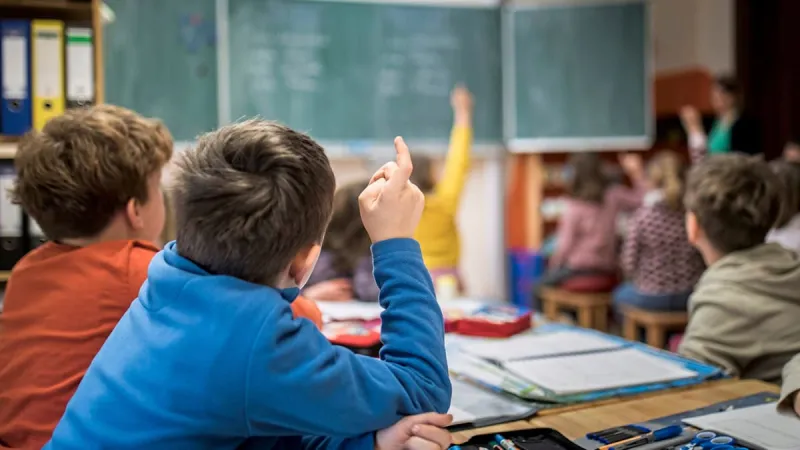
BERLIN – German students have registered an unprecedented downturn in academic performance across key subjects, with recent evaluations revealing significant declines in mathematics, reading, and natural sciences. This concerning trend represents the lowest educational proficiency observed in the nation's history, prompting widespread alarm among educators, policymakers, and parents concerning the future of Germany's intellectual capital and economic competitiveness.
The data, compiled from various national and international assessments, paints a grim picture of a continuous slide in foundational skills. For years, experts have cautioned about stagnating results, but the latest figures indicate a sharp acceleration of this decline, challenging the long-held perception of Germany as a bastion of robust academic achievement.
Specifically, proficiency in mathematical reasoning and problem-solving has deteriorated markedly. Students demonstrate less aptitude in applying concepts, a crucial skill for a nation heavily reliant on engineering and technological innovation. This deficit extends from basic arithmetic to more complex analytical tasks.
Similarly, reading comprehension, a bedrock of all learning, has shown a troubling regression. Many students struggle with interpreting complex texts and extracting essential information, impacting their ability to engage critically with educational material across the curriculum. This trend raises questions about digital literacy and the role of diversified media consumption.
In the natural sciences, encompassing physics, chemistry, and biology, German students are also exhibiting lower understanding of core principles and scientific methodology. This decline in science proficiency is particularly alarming for a country that prides itself on its research and development capabilities and its leadership in various scientific fields.
Educational experts and union representatives are scrutinizing the underlying factors contributing to this widespread academic slump. Initial discussions point towards a confluence of challenges, including resource allocation, teacher shortages, curriculum design, and the lingering effects of the pandemic on learning continuity. The Social Union has expressed grave concern, urging government reform rethinking in educational policy.
The demographic shifts within German schools also present unique challenges. Increasing diversity, while enriching, requires tailored pedagogical approaches and adequate support systems, which some argue are currently insufficient. The integration of students from varying linguistic and educational backgrounds further complicates the learning environment for both pupils and teachers.
Dr. Anja Schmidt, a leading education policy researcher at the University of Berlin, stated, "This is not merely a statistical blip; it is a systemic issue demanding immediate and comprehensive action. We are witnessing a fundamental erosion of basic competencies that will have profound long-term implications for our society and economy." Schmidt emphasized the need for targeted interventions.
The repercussions of dwindling academic standards extend beyond individual student outcomes. A less-educated workforce could hamper Germany's ability to maintain its competitive edge in a globalized economy, potentially leading to skill gaps in crucial industries and a slowdown in innovation.
Policymakers are now facing intense pressure to address the crisis. Calls for increased investment in teacher training, modernized curricula, and improved digital infrastructure are growing louder. The debate also encompasses the structure of the German education system itself, with some advocating for reforms to better cater to diverse learning needs.
The current situation in Germany mirrors, in some aspects, broader educational challenges observed internationally. For instance, discussions around school segregation and equitable access to quality education, as highlighted in the article French Scholar Unmasks School Segregation Beyond Neighborhood Divides, resonate with ongoing debates in Germany about educational equity.
Parent associations have voiced their frustration, demanding greater transparency regarding school performance data and more robust support for struggling students. Many report feeling ill-equipped to assist their children adequately given the evolving curriculum and teaching methods.
In response to the mounting pressure, the Federal Ministry of Education and Research indicated it is initiating a thorough review of national educational strategies. A task force is expected to be formed, bringing together experts from various fields to propose actionable solutions by year end.
However, significant disagreements persist among the federal states, which largely govern educational policy in Germany. Coordinating a unified national strategy remains a formidable challenge, given the diverse regional priorities and resource disparities.
The decline in German student performance underscores a critical juncture for the nation's educational future. Stakeholders agree that a failure to decisively address these challenges risks compromising the intellectual foundation upon which Germany's societal and economic prosperity has been built.