 Chris Robert
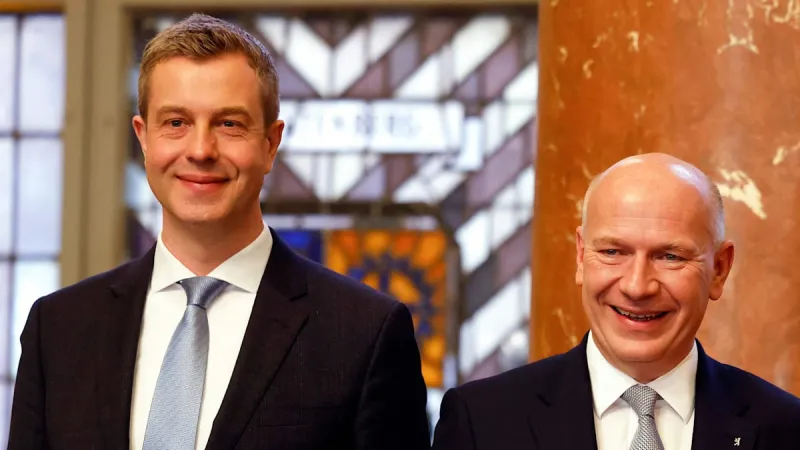
Berlin — In a pivotal shift within German politics, Evers has emerged as the designated top candidate for the Berlin Christian Democratic Union (CDU), signaling a strategic move to invigorate the party's fortunes following the unexpected resignation of Kai Wegner. This leadership transition places a seasoned figure at the helm, with party insiders expressing palpable optimism for a renewed political ascendancy in the capital.
The announcement positions Evers to steer the Berlin CDU through an increasingly complex political landscape. His selection comes at a critical juncture, as the party seeks to consolidate its base and appeal to a broader electorate in the wake of Wegner's departure, a move that sent ripples through local political circles. The 2026 political calendar promises significant electoral challenges and opportunities for the CDU.
Stefan Peter, a veteran editor at the Berlin-based BZ newspaper, highlighted Evers's formidable internal standing. Peter observed, "Evers commands immense respect within the party ranks. His reputation for integrity and strategic acumen makes him a compelling choice to unify the CDU and project a coherent vision for Berlin." This internal cohesion is often a precursor to broader electoral success.
Wegner's resignation, the specifics of which remain a subject of considerable speculation among political commentators, necessitated a swift and decisive response from the CDU leadership. The party apparatus acted quickly to identify a successor capable of both stabilizing the party and galvanizing its supporters. Evers's long-standing dedication and perceived leadership qualities evidently positioned him as the clear consensus candidate.
The challenge now confronting Evers is multifaceted. He must not only heal any potential fissures left by the previous leadership but also articulate a clear policy agenda that resonates with the diverse populace of Berlin. The capital city presents a unique mosaic of political ideologies and demographic groups, requiring a nuanced and inclusive approach.
Analysts suggest that the CDU sees this leadership change as an opportunity for a significant rebound. Public sentiment can be fickle, and a fresh face combined with a renewed sense of purpose could indeed sway undecided voters. The party leadership hopes that Evers can capitalize on his internal popularity and translate it into external electoral gains.
The broader German political environment also presents complexities. Parties like the CDU are constantly navigating pressures from both the established opposition and emergent political forces. For instance, the recent AfD election victory in Sachsen-Anhalt underscored shifting voter priorities and the need for mainstream parties to adapt their messaging effectively.
Evers's immediate task will involve crafting a campaign narrative that distinguishes the Berlin CDU while addressing key concerns such as urban development, economic stability, public safety, and environmental stewardship. His ability to connect with everyday Berliners on these fundamental issues will be paramount to any potential comeback.
The Berlin CDU is historically a significant political force, and its performance in the capital often serves as a barometer for national trends. A strong showing under Evers could provide momentum for the federal CDU, while a faltering campaign could exacerbate existing challenges. All eyes will be on his initial policy pronouncements and public appearances.
Expectations within the party are high, mirroring Stefan Peter's assessment of Evers's stature. The transition itself marks a new chapter, one where the Berlin CDU aims to leverage internal unity and a respected leader to regain its footing and make a decisive impact on the city's political trajectory in the coming years.
The next few months will be crucial as Evers begins to shape his team and define the strategic direction for the Berlin CDU. His inaugural addresses and initial policy positions will undoubtedly set the tone for what the party hopes will be a robust resurgence in time for the next electoral cycle. The ambition is clear: to steer the CDU back to a position of dominant influence in the vibrant heart of Germany.