Angela Stefani
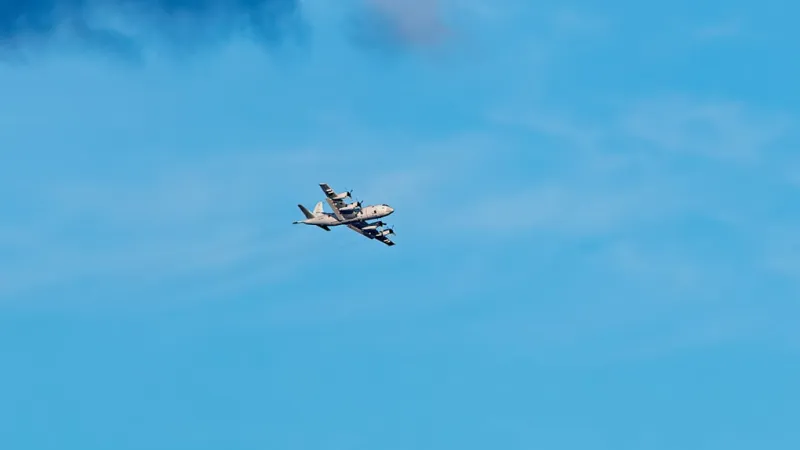
TOKYO – Japan today formally accused Russia of violating its sovereign airspace, alleging that two Russian aircraft illegally entered Japanese territory near the remote island of Okinoshima. This incident immediately triggered a strong diplomatic protest from Tokyo, delivered by Chief Cabinet Secretary Minoru Kihara.
Japanese authorities detected the two unidentified aircraft, believed to be Russian military planes, breaching the nation's airspace for a brief period this morning. The precise type of aircraft involved remains unconfirmed by public statements, but military reconnaissance or patrol planes are frequently implicated in such incursions.
The alleged incursion occurred in the vicinity of Okinoshima, an island located in the Sea of Japan, a strategically sensitive area. This region has historically been a flashpoint for international maritime and air activities, demanding constant vigilance from regional powers.
Following the detection, the Japan Air Self-Defense Force reportedly scrambled fighter jets to intercept and monitor the foreign aircraft. Standard operating procedures dictate such a rapid response to any unauthorized entry into national airspace.
Chief Cabinet Secretary Minoru Kihara, speaking at a press briefing, expressed Japans profound displeasure. "Such actions constitute a clear violation of international law and Japans sovereignty. We have lodged a strong protest through diplomatic channels, demanding Russia prevent any recurrence," Kihara stated, emphasizing the gravity of the situation.
This incident adds to a series of similar occurrences that have heightened tensions in the Asia-Pacific. Regional security concerns often escalate when military aircraft operate assertively near international borders and disputed territories.
The broader context includes previous challenges to regional security, including when Russian warplanes breached South Korea air defense zone unannounced, illustrating a pattern of assertive military aviation in the Pacific. These events underscore the delicate geopolitical balance and the imperative for clear communication channels.
Relations between Tokyo and Moscow have remained strained, exacerbated by the ongoing dispute over the Northern Territories, known as the Kuril Islands in Russia. Any perceived provocation, such as an airspace violation, further complicates diplomatic efforts.
While there was no immediate comment from Moscow, Russian officials typically maintain that their aircraft operate strictly in accordance with international law, often dismissing such accusations as unfounded or claiming exercises were conducted in international airspace.
The Japanese Ministry of Defense continues to monitor the situation closely, reinforcing its commitment to safeguarding the nations territorial integrity and airspace. International partners, including the United States, are likely observing the developments for their implications on regional stability.
This incident serves as a stark reminder of the persistent challenges to territorial sovereignty and the necessity for robust defense capabilities in an increasingly complex global security landscape. Japans call for prevention highlights a desire to de-escalate rather than provoke further tensions.
The diplomatic channels between Japan and Russia will likely remain active as Tokyo seeks assurances against future incursions. The international community often views such events as indicators of broader geopolitical posturing, especially in regions with contested zones.