 Stefani Rindus

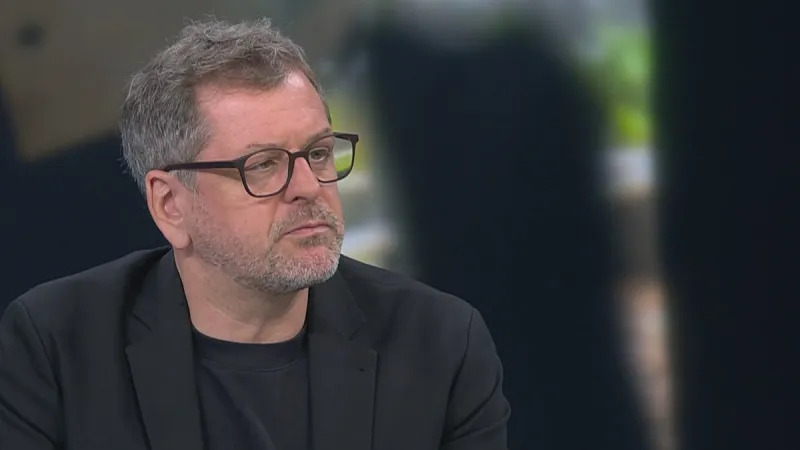
Oranienburg, Germany – A tense verbal confrontation recently unfolded in Oranienburg as AfD top candidate Ulrich Siegmund engaged in a spirited debate with Fabian Köster, a prominent personality from the ZDF Heute-Show. The exchange, marked by sharp rhetoric and pointed barbs, centered on critical national issues including the future of public broadcasting, the imperative for skilled workers, and Germany's demographic challenges.
The public event saw Siegmund, a leading figure within the Alternative for Germany (AfD) party, articulate his party's positions on what he described as fundamental questions facing the nation. Köster, known for his incisive and often satirical commentary on current affairs, challenged Siegmund's assertions, leading to a dynamic and frequently acrimonious discussion.
One central point of contention revolved around public broadcasting. The AfD has been a vocal critic of the current system and the mandatory fees that fund channels like ZDF, advocating for significant reforms or even abolishing the contribution model. Siegmund likely reiterated these concerns, prompting a strong defense or counter-argument from Köster regarding the public service remit and journalistic independence.
The debate further intensified when the discussion turned to Germany's need for skilled workers, a topic intrinsically linked to immigration policies. Germany faces a demographic shift with an aging population and a demand for labor in various sectors. While the AfD generally advocates for stricter immigration controls and prioritizes internal solutions, critics often highlight the necessity of attracting international talent to sustain economic growth.
The contentious concept of Geburtenwende, or a demographic turnaround focused on increasing birth rates within Germany, also fueled the exchange. This term often carries different connotations across the political spectrum, with some seeing it as a call for stronger family support policies and others interpreting it as a more nationalistic approach to population growth. The differing viewpoints offered fertile ground for disagreement between the two figures.
Observers noted the bitterböse Spitzen – bitter jabs – exchanged throughout the event, reflecting the highly polarized nature of German political discourse. Such public clashes are becoming increasingly common as the AfD seeks to solidify its position and mainstream parties grapple with its growing influence.
The confrontation in Oranienburg underscores the deep divisions within German society on issues ranging from media freedom to national identity and economic strategy. The AfD, which has seen a surge in support in recent years, particularly in eastern German states, leverages such platforms to amplify its message and challenge established narratives. This mirrors broader trends seen in regions like Sachsen-Anhalt, where elections often draw significant national attention and scrutiny. For instance, recent events have prompted discussions over national identity, as detailed in the article Europe Scrutinizes Sachsen-Anhalt Election Amid New German Pride Warnings.
The role of public figures like Köster, who operate at the intersection of journalism and entertainment, in confronting political leaders also highlights evolving dynamics in media engagement. While some commend their directness, others question the appropriateness of a satirical show personality engaging in such direct political debate.
The exchange served as a microcosm of the larger political struggles playing out across Germany, particularly as the nation navigates complex economic headwinds and social transformations. The debate over public institutions, labor markets, and demographic policies remains at the forefront of the national agenda, with no easy consensus in sight.
The intensity of the verbal duel confirms that these issues are not merely academic discussions but deeply impact the daily lives and future prospects of German citizens. The ongoing dialogue, however confrontational, is a testament to the vibrancy and sometimes volatility of democratic expression.
Further public discussions on these critical topics are anticipated as Germany moves towards upcoming regional and federal elections. The strategies employed by parties like the AfD and the responses from media figures will continue to shape the national conversation. Another related incident, the German Senior Defends Pinocchio Remark, Rekindling Free Speech Debate, illustrates the ongoing tensions surrounding free expression in the country.