 Angel Doris
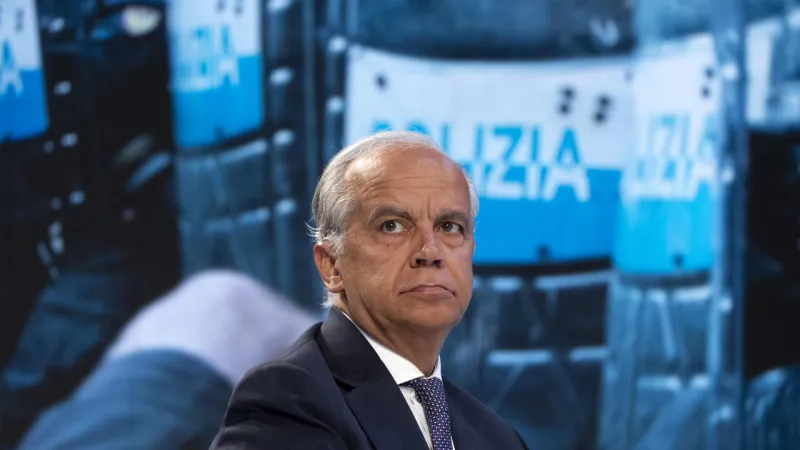
Italy's Interior Minister Matteo Piantedosi recently addressed lawmakers, defending the government's decision to reinstate border controls within the Schengen area, specifically noting measures affecting travel between Italy and Spain. The move, articulated during a parliamentary hearing, underscores Rome's ongoing efforts to manage security and migration challenges impacting the fundamental principles of free movement across European borders.
The Schengen Agreement, a cornerstone of European integration, typically allows passport-free travel across most of the continent. However, national governments retain the right to temporarily reintroduce border checks in cases of serious threats to public policy or internal security. Italy's intervention reflects a growing trend among member states facing persistent migratory pressures and evolving security landscapes.
Minister Piantedosi elaborated on the necessity of these measures, asserting they are critical for safeguarding national security and better managing inbound migration flows. While the specific details regarding the Italy-Spain context were a focal point, the broader implications for the entire Schengen zone were also considered.
The reinstatement of internal border controls, even temporarily, signals a notable shift from the established norms of unrestricted movement that millions of European citizens and visitors have grown accustomed to. It often prompts debates regarding the balance between national sovereignty and collective European commitments.
Several European nations have periodically reinstated temporary border checks over the past decade in response to various crises, including heightened terrorism alerts and unprecedented migration waves. These actions, while permitted under the Schengen Borders Code, frequently draw criticism from those who advocate for maintaining open borders as a symbol of European unity.
The Italian government's stance aligns with a more conservative approach to border management, prioritizing security concerns over the unimpeded flow of people. This position resonates with segments of the populace demanding stricter controls to address perceived threats to national stability.
The implications of such policies extend beyond mere travel inconveniences, potentially affecting cross-border trade, tourism, and the daily lives of commuters. Businesses relying on seamless movement of goods and services across European borders often voice concerns about the economic impact of reinstated checks.
During the hearing, discussions likely included the effectiveness of these controls and their compliance with European Union law. Member states are required to notify the European Commission and other Schengen countries of any decision to reintroduce internal border controls, providing justifications and expected durations.
Critics of the decision argue that temporary controls risk undermining the long-term integrity of the Schengen system and could lead to a fragmentation of the European free movement area. They often call for more coordinated European responses to migration and security, rather than individual national actions.
The European Commission typically monitors such reinstatements closely, assessing whether they are proportionate and necessary. The ongoing dialogue between Italy and European institutions will be crucial in determining the longevity and scope of these renewed controls.
Indeed, the challenges to Europe's open borders are a recurring theme in political discourse across the continent. For instance, discussions during a recent German Election Debate highlighted similar concerns about national sovereignty versus continental integration, particularly in the face of populist movements.
Italy, situated on the Mediterranean front, continues to bear significant responsibility as a primary entry point for migrants seeking asylum in Europe. This geographic reality places immense pressure on its internal security apparatus and resource management.
Minister Piantedosi's audition served as a platform to articulate Italy's rationale, emphasizing that the measures are not taken lightly but are a considered response to persistent and complex challenges. The government maintains that these controls are temporary and designed to restore a level of security deemed essential for the nation.
The situation highlights the continuous tension between the ideals of a borderless Europe and the practical exigencies of national security and immigration management. As Europe navigates these intricate issues, the future of the Schengen area remains a subject of intense debate and evolving policy. The decision reflects an enduring conversation about the nature of European identity and sovereignty in the 21st century.