 Angel Doris
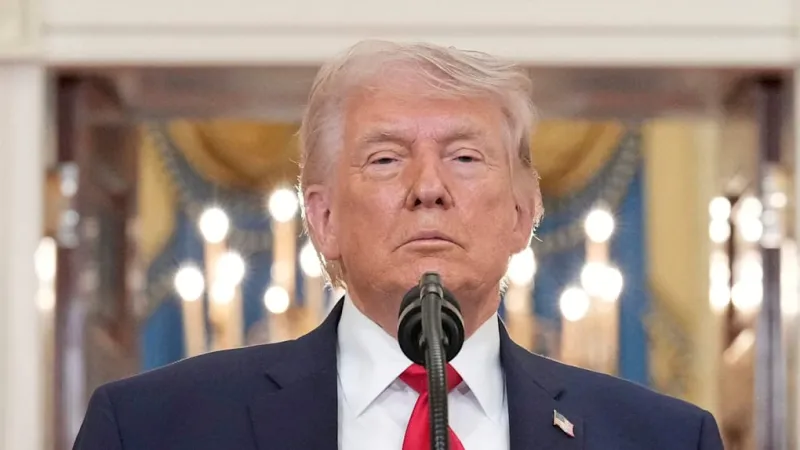
The United States today demanded that Iran publicly commit to safe navigation through the strategic Strait of Hormuz, a critical chokepoint for global oil shipments. The ultimatum from Washington comes as Tehran vehemently rejected President Donald Trump's assertions and denied any requests for renewed diplomatic discussions, leaving the nature of potential US repercussions deliberately vague.
President Donald Trump's administration has set an implicit deadline for Iran to affirm its dedication to unhindered maritime traffic in the vital waterway. This diplomatic pressure highlights escalating tensions between the two nations over a region crucial to international trade and energy supply.
Iranian officials, responding to the US demands, unequivocally dismissed claims made by President Donald Trump. While the specific statements from the American leader were not detailed in the available information, Tehran's swift rebuttal signals a hardening stance against US diplomatic overtures.
Furthermore, Iran explicitly denied that it had sought to resume negotiations with the United States. This denial directly contradicts any suggestions of Iranian willingness to engage in dialogue, underscoring a significant diplomatic impasse.
The Strait of Hormuz, a narrow passage between the Persian Gulf and the Gulf of Oman, is one of the world's most strategically important maritime chokepoints. Approximately one-fifth of the world's total oil consumption, and a significant portion of its liquefied natural gas, passes through this strait daily.
Concerns over the safety of navigation in the Strait have frequently heightened during periods of increased US-Iran friction. The US demand is likely driven by a desire to prevent any disruption to global energy markets and to assert international maritime law.
However, the lack of clarity regarding the consequences if Iran fails to comply introduces an element of uncertainty. This ambiguity could be a deliberate tactic by the US to maintain leverage or a reflection of internal debates within the administration about next steps.
Iran's historical posture has often involved viewing the Strait of Hormuz as a strategic asset, capable of being leveraged in response to international pressure, particularly US-imposed sanctions.
The current exchange follows a pattern of strained relations that have characterized the US-Iran dynamic for decades, intensified since President Donald Trump took office.
Analysts suggest that the US demand serves multiple purposes: to test Iranian resolve, to rally international support for maritime security, and to exert maximum pressure on Tehran to alter its regional policies.
Conversely, Iran's steadfast rejection of US demands and its denial of seeking talks demonstrate its determination to resist what it perceives as external interference and pressure tactics.
The international community will closely monitor developments in the Strait of Hormuz, recognizing the potential for any escalation to reverberate across global economies and geopolitical stability. The ongoing standoff underscores the delicate balance of power and diplomacy in the Middle East.