 Stefani Rindus
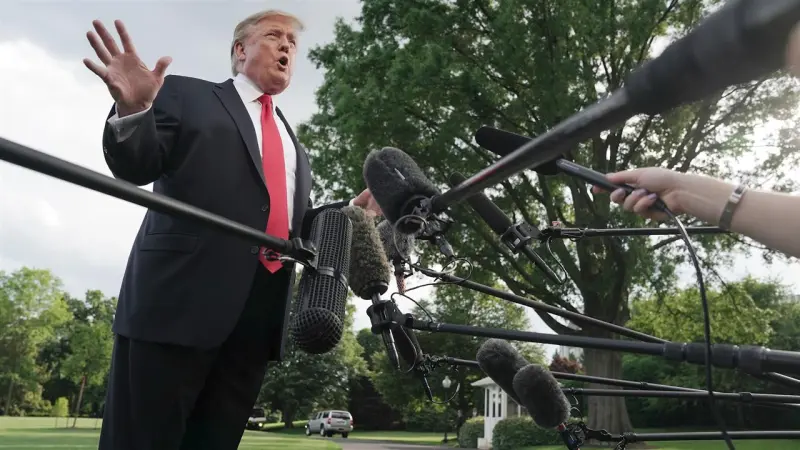
WASHINGTON — President Donald Trump lauded the recent successful extraction of an American citizen from Iranian custody, invoking explicit religious rhetoric during a White House address that has swiftly drawn condemnation from political adversaries, civil liberties advocates, and some faith leaders. The remarks, delivered Tuesday, positioned the complex diplomatic and intelligence operation as divine intervention, intensifying scrutiny of the administration's foreign policy and its public messaging strategies.
The rescued individual, Dr. Aris Shah, an academic detained on espionage charges for 18 months, arrived back on U.S. soil earlier this week, a development hailed by the State Department as a significant diplomatic breakthrough following months of clandestine negotiations. His release marked a rare moment of cooperation, albeit indirect, between Washington and Tehran, nations often at loggerheads.
However, President Trump's subsequent public statements eclipsed the initial relief, particularly his assertion that the mission's success was "a miracle from God" and a testament to "divine favor" for the United States. He urged Americans to "give thanks to the Almighty" for the safe return, weaving spiritual narratives into a sensitive geopolitical event.
Critics immediately seized upon the President's language, arguing it blurred the lines between statecraft and religious doctrine. Senator Anya Sharma (D-California), a vocal proponent of secular governance, issued a statement declaring, "While we celebrate Dr. Shahs freedom, the Presidents invocation of religious rhetoric to politicize a sensitive rescue operation is deeply troubling and undermines the principles of our secular democracy."
Further condemnation emanated from organizations dedicated to the separation of church and state. The American Civil Liberties Union (ACLU) spokesperson, Maria Rodriguez, stated, "President Trumps use of faith as a political tool for foreign policy is inappropriate and risks alienating segments of the population who do not share his specific religious viewpoint."
Religious leaders themselves offered a mixed response. While some evangelical figures praised the President's open expression of faith, others from diverse denominations voiced concern. Bishop Thomas Green, a prominent figure in the interfaith community, remarked, "Faith has a role in individual lives, but when a head of state attributes diplomatic success solely to divine will, it can inadvertently diminish human effort and complicate interfaith dialogue, especially in international relations."
This incident also reignited debates surrounding the strategic implications of religious framing in international diplomacy. Foreign policy analysts suggested such rhetoric could potentially complicate future negotiations with nations whose religious or political ideologies differ significantly from those espoused by the President.
Dr. Evelyn Reed, a Middle East scholar at Georgetown University, commented, "Iran is a theocratic state, and while religious language might seem to offer common ground, President Trumps specific framing often plays into a domestic political narrative that can be counterproductive for complex international engagement."
White House Press Secretary Sarah Jenkins defended the President's comments, stating during a press briefing that President Trump was simply "expressing his heartfelt gratitude and belief, a sentiment shared by millions of Americans." She added, "His remarks were not meant to be a theological decree, but an expression of profound relief and thanksgiving."
The controversy underscores a recurring theme in President Trump's tenure: his willingness to incorporate faith-based language into his public addresses, often polarizing audiences and sparking debate over the appropriate intersection of religion and state in American public life. This particular instance, juxtaposed with the delicate nature of U.S.-Iran relations, amplifies those longstanding tensions.
The rescue of Dr. Shah, while a success for the administration, now finds itself overshadowed by the ensuing controversy, demanding a clearer articulation of the White House's diplomatic stance in light of its leader's spiritual pronouncements.
As the nation processes this complex interplay of diplomacy, faith, and political messaging, the impact of President Trump's remarks on domestic cohesion and international perception remains a significant point of discussion among lawmakers and global observers alike.