 Edward DP Situmorang
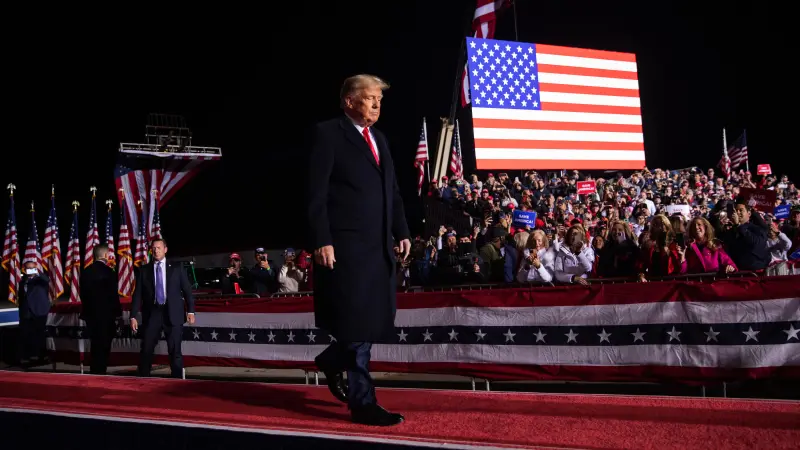
NEW YORK — A federal judge today dismissed President Donald Trump's $10 billion defamation lawsuit against The Wall Street Journal and its publisher, Dow Jones, which alleged the publication falsely connected him to disgraced financier Jeffrey Epstein. The ruling, handed down in the U.S. District Court for the Southern District of New York, concludes a high-profile legal battle that centered on a 2024 article from the publication.
The lawsuit, filed by President Trump in late 2024, claimed a January 2024 Wall Street Journal article exploring his alleged associations with Epstein long after their public break in 2007 contained defamatory statements. His legal team sought substantial damages, arguing the article caused immense reputational harm.
U.S. District Judge John F. Miller ruled that President Trump's complaint failed to establish actual malice, a high legal standard required for defamation claims involving public figures. The judge determined that the article did not explicitly state or imply a criminal association with Epstein, but rather explored past connections and their implications.
According to court documents, the judge emphasized that the article largely relied on publicly available information, court records, and previously reported accounts. He noted that the publication of factual background, even if unflattering, does not inherently constitute defamation without clear evidence of false statements made with reckless disregard for the truth.
Lawyers for Dow Jones hailed the decision as a victory for press freedom. They had consistently argued that their reporting was accurate, thoroughly vetted, and within the bounds of responsible journalism. The legal team contended that the lawsuit was an attempt to stifle legitimate inquiry into matters of public interest.
Bryan Peterson, lead counsel for Dow Jones, stated, "This ruling reaffirms the robust protections afforded to journalists reporting on public figures, even when those figures are in the highest office. We are pleased the court recognized the integrity of our reporting."
President Trump's legal representatives expressed disappointment with the dismissal. They indicated they are reviewing the court's decision and considering all available options, including a potential appeal to the U.S. Court of Appeals for the Second Circuit.
"We firmly believe The Wall Street Journal's reporting crossed a line and unfairly targeted President Trump," said Sarah Jenkins, a spokesperson for the President's legal team. "We will continue to fight to protect his reputation against such reckless reporting."
The original Wall Street Journal article delved into President Trump's past social interactions with Epstein, particularly before Epstein's initial legal troubles became widely known. It examined the nature of their acquaintanceship and its subsequent cessation.
This case garnered significant attention not only because of the parties involved but also due to its implications for media organizations covering powerful political figures. The standard of actual malice, established by New York Times Co. v. Sullivan, remains a formidable hurdle for defamation plaintiffs who are public figures.
The judge's decision underscored the difficulty public figures face in proving defamation, particularly when a publication can demonstrate its reporting was based on verifiable facts and widely available information, even if interpretations of that information are debated.
Media watchdog groups also weighed in, largely supporting the court's stance. They argued that imposing severe penalties on news organizations for exploring complex past relationships of public officials could lead to a chilling effect on investigative journalism.
The dismissal prevents the lawsuit from proceeding to discovery, a phase where both sides would exchange evidence and testimony, potentially revealing more details about the genesis of the article and the President's past connections.
This outcome follows a trend of courts upholding strong protections for journalistic enterprises against defamation claims from public figures, emphasizing the constitutional guarantees of freedom of the press.
The original article from 2024 became a point of contention for President Trump's administration, leading to public statements of strong disagreement with its premise and reporting.
The legal costs associated with defending such a high-stakes lawsuit against a national media outlet are considerable, irrespective of the outcome, highlighting the resources required to stand by investigative reporting.
While the immediate legal battle concludes with this dismissal, the broader public discourse surrounding media scrutiny of political leaders and their past associations is expected to continue.
President Trump has a history of engaging in litigation with media organizations he perceives as unfairly targeting him, making this latest legal setback a notable event in his ongoing relationship with the press.