 Edward DP Situmorang
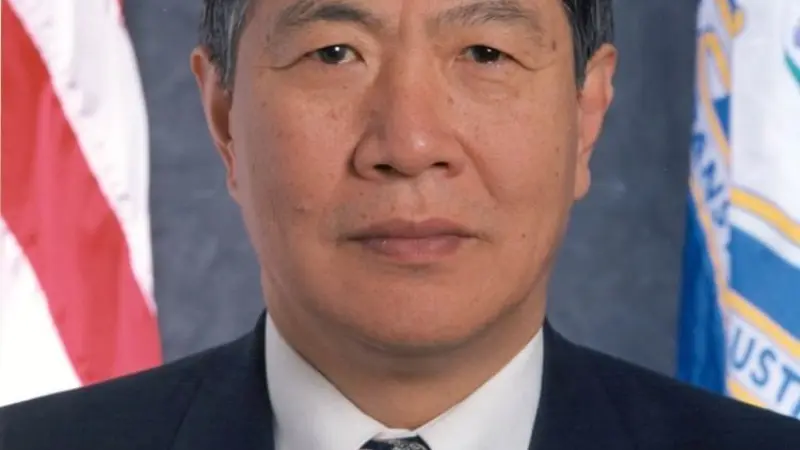
NEW HAVEN — Dr. Henry Lee, the internationally acclaimed forensic scientist whose meticulous analysis and dramatic testimony became a hallmark of the O.J. Simpson murder trial, died Tuesday at his home in Guilford, Connecticut. He was 87.
His passing marks the end of an era for criminal investigations, as Lee’s groundbreaking work in crime scene reconstruction and blood spatter analysis transformed forensic science from an obscure discipline into a critical component of modern jurisprudence.
Lee gained significant public notoriety during the sensational 1995 O.J. Simpson murder trial, where his examination of evidence, including the infamous bloody glove, cast doubt on prosecutorial claims and ultimately contributed to the jurys controversial acquittal.
Born in Rugao, Jiangsu, China, in 1938, Henry Lee endured considerable hardship before immigrating to the United States. He earned his bachelors degree from the Central Police College in Taiwan and served as a police captain before pursuing advanced degrees in forensic science at New York University.
Arriving in Connecticut in the early 1970s, Dr. Lee joined the University of New Haven, where he established one of the nations first forensic science programs. He later founded the Henry C. Lee Institute of Forensic Science, a world-renowned center for research and training.
Beyond academia, Lee served as Connecticuts chief criminalist and later as the states Commissioner of Public Safety, positions from which he modernized forensic techniques across the state and lent his expertise to countless local and national cases.
During the Simpson trial, Lee famously declared, “Something is wrong,” while examining crime scene photographs, suggesting evidence might have been mishandled or planted. His nuanced explanations of blood spatter patterns and lack of certain trace evidence resonated with the jury.
The defense team extensively relied on Henry Lees expertise to challenge the prosecutions narrative, particularly regarding the glove found at the crime scene. His testimony underscored the complexity of forensic evidence and the potential for misinterpretation.
Lees influence extended far beyond the Simpson case. He investigated thousands of cases globally, including the JonBenét Ramsey murder, the Laci Peterson disappearance, the death of Marilyn Monroe, and aspects of the Kennedy assassination.
His methodology and dedication made him a sought-after expert by law enforcement agencies and legal teams worldwide, solidifying his reputation as a pioneer in developing new techniques for evidence collection and analysis.
Dr. Henry Lee developed numerous innovative techniques in trace evidence analysis, crime scene reconstruction, and forensic photography. His work led to the establishment of higher standards for forensic laboratories and training for investigators.
A dedicated educator, Lee mentored generations of forensic scientists, emphasizing critical thinking and thoroughness. He authored or co-authored over 40 books and hundreds of scientific articles, sharing his vast knowledge with the global scientific community.
His distinguished career was marked by numerous awards and honors, including the Medal of Honor from the Chinese-American Planning Council and recognition from various international forensic organizations, underscoring his global impact.
Colleagues remember Henry Lee as a tireless worker with an unparalleled commitment to justice. “Dr. Lee approached every case with the same intensity, whether it was a small local crime or a globally watched trial,” said Dr. Peter DeForest, a longtime associate. “His integrity was unquestionable.”
His legacy is not only in the high-profile cases he helped solve or analyze but also in the systematic advancements he brought to forensic science, establishing it as an indispensable tool in criminal investigations.
The standards set by Dr. Henry Lee continue to guide forensic practitioners in 2026, influencing how crime scenes are processed and evidence is interpreted, ensuring his pioneering spirit lives on within the discipline.
He is survived by his wife, Margaret, and their children, among other relatives. Funeral arrangements have not yet been announced.