 Robert Andrison
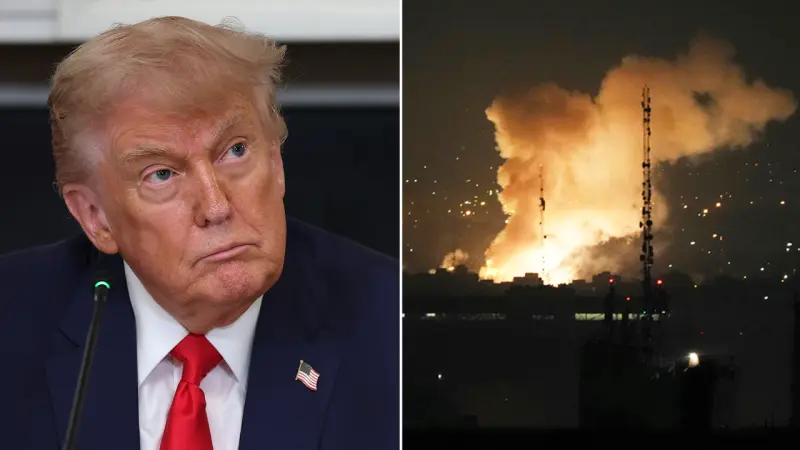
WASHINGTON — President Donald Trump today sharply criticized NATO allies, accusing them of inadequate contributions to the escalating conflict with Iran and demanding a more equitable sharing of military and financial burdens. The President voiced his frustrations from the White House, reiterating long-standing grievances about alliance responsibilities.
This latest broadside marks a renewed push by President Trump to compel European members, specifically, to increase their defense spending and direct involvement in what he termed Americas global security commitments against Tehran. His remarks underscore a recurring theme of his presidency regarding international alliances.
Sources close to the administration suggest the Presidents comments are particularly pointed given recent military operations in the Persian Gulf, where U.S. forces have borne the brunt of combat missions. The White House has consistently emphasized the need for a united front and greater allied participation.
Speaking to reporters, President Trump asserted, "We are doing too much, and they are doing too little. This Iran situation is serious, and our allies need to step up, pay their fair share, and contribute meaningfully to the fight." This statement directly targets the fiscal and military contributions of NATO member states.
The Presidents remarks follow a pattern established during his previous term, where he frequently challenged the financial obligations of NATO members, often threatening to reconsider U.S. commitment to the alliance if demands were not met. The ongoing conflict with Iran has intensified these calls.
NATO Secretary General Jens Stoltenberg, speaking from Brussels, acknowledged the ongoing discussions regarding burden-sharing within the alliance. "NATO remains a cornerstone of transatlantic security," Stoltenberg stated, "and all allies are committed to collective defense and increasing investment in capabilities."
However, Stoltenberg also emphasized that many European nations have indeed increased their defense budgets in recent years, a direct response to previous U.S. pressure and evolving geopolitical threats. He did not directly address President Trumps specific criticisms regarding the Iran conflict.
Experts from the Council on Foreign Relations point out that while some European countries have boosted defense spending, their contributions to out-of-area operations, particularly those perceived as primarily U.S. interests like the Iran conflict, remain a contentious point.
"The Presidents frustration is understandable from a domestic political standpoint," said Dr. Eleanor Vance, a senior fellow at the American Enterprise Institute. "He sees American resources deployed globally while allies perhaps focus more on regional defense."
The Iran War, which escalated following a series of maritime incidents and drone attacks in late 2025, has drawn significant U.S. military assets into the region, placing considerable strain on defense budgets and personnel.
The conflict has seen limited direct engagement from most European NATO members, with many preferring diplomatic solutions or providing humanitarian aid rather than direct military intervention. This divergence in strategy fuels President Trumps complaints.
Senior Democratic lawmakers, while often critical of President Trumps diplomatic style, have also expressed concerns about equitable burden-sharing within NATO. Senator Maria Rodriguez (D-NY) commented, "Our allies must understand that global security is a shared responsibility, not solely an American one."
The Presidents administration has reportedly been in ongoing discussions with key European leaders over increasing their military presence and financial support in the Middle East. These discussions are said to be strained at times.
Critics argue that President Trumps confrontational approach risks alienating crucial allies when global solidarity is most needed. They suggest a more unified diplomatic front could yield better results against Iran.
Yet, proponents within the Republican party commend President Trumps consistent stance, asserting that it is necessary to hold allies accountable for their commitments. "President Trump is simply asking for fairness," stated Senator Kevin Graham (R-TX). "America should not be the worlds sole police force."
The long-term implications of these renewed tensions on NATOs cohesion and its operational effectiveness in the Middle East remain a significant question for global security analysts. The alliance faces a critical test of unity.