 Chris Robert
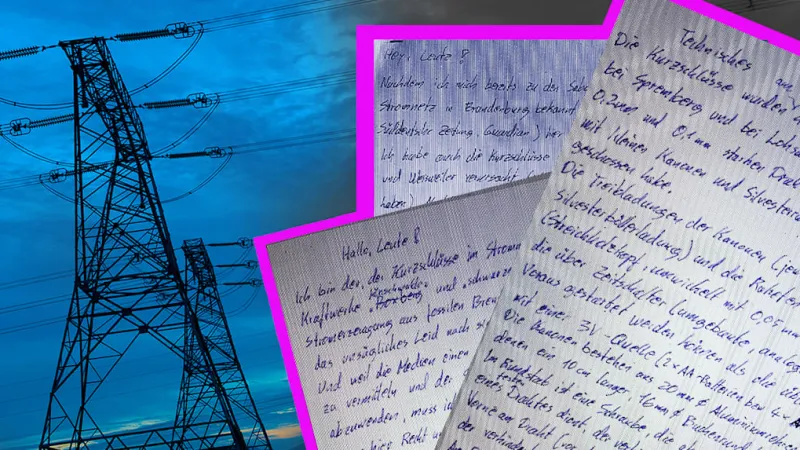
BERLIN – A man actively sought by authorities across Europe has claimed responsibility for a series of attacks on electrical substations, declaring his primary target is the fossil fuel industry rather than any specific nation. Documents obtained by the German newspaper WELT outline his motivations, which also touch upon connections to the Palestinian cause and criticism of the arms industry, while detailing his association with the left-wing extremist scene.
The revelations come from writings attributed to the individual, who has evaded capture despite an extensive, continent-wide search. These documents, now in WELT’s possession, offer a rare glimpse into the mindset and strategic rationale behind the infrastructure sabotage.
According to the communiqués, the perpetrator explicitly states, “I attack not the country, but the fossil fuel industry.” This declaration aims to frame the attacks as ideologically driven actions against a specific economic sector perceived as environmentally destructive and complicit in global conflicts.
The targeting of substations represents a critical escalation in tactics, aiming to disrupt energy supply and cause significant economic repercussions. Such actions underline a calculated effort to undermine the operational capacity of industries linked to carbon emissions.
The documents further elaborate on the man's ideological framework, which extends beyond environmental concerns. He voices solidarity with the Palestinian cause and critiques the global arms industry, suggesting a broader anti-capitalist and anti-imperialist stance often associated with radical left-wing ideologies.
His explicit self-identification with the left-wing extremist scene provides authorities with crucial intelligence regarding potential networks and support structures. This affiliation raises concerns about the potential for wider coordination or inspiration for similar acts of sabotage targeting critical infrastructure across the European Union.
Law enforcement agencies across Europe have been intensifying efforts to apprehend the individual, recognizing the severe implications of sustained attacks on essential services. The ongoing manhunt highlights the complex challenges in tracking perpetrators who operate across national borders and utilize sophisticated methods to avoid detection.
The attacks underscore a growing trend of direct action against infrastructure, often justified by radical environmental or anti-globalization narratives. These incidents present a significant security challenge, as they can cause widespread disruption, economic damage, and potentially endanger public safety.
The content of the seized writings suggests a deeply entrenched ideology that views traditional protest methods as insufficient. The shift toward direct, often violent, sabotage of key economic and energy assets marks a worrying development for European security services.
This individual’s claims, particularly his selective targeting of the fossil fuel industry, necessitate a nuanced response from governments and security forces. They must balance freedom of expression and legitimate protest with the imperative to protect critical national infrastructure from ideologically motivated attacks.
The ongoing investigation aims not only to apprehend the individual but also to fully understand the scope of his network and the precise nature of his operational capabilities. The collaboration among European police forces is paramount to dismantling such transnational threats and preventing future acts of sabotage.
The European Union has seen heightened vigilance against extremist activities, both right-wing and left-wing, particularly those that threaten public order or vital services. These substation attacks serve as a stark reminder of the persistent and evolving nature of domestic and transnational extremism.