 Edward DP Situmorang
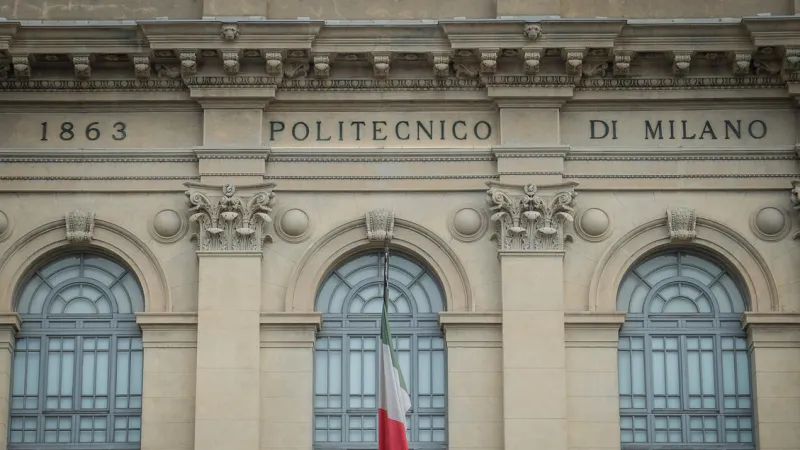
Italian universities have demonstrated a notable upward trajectory in the latest QS global rankings, significantly outperforming their European Union counterparts in overall academic excellence and research impact. The comprehensive assessment, which evaluates institutions worldwide, highlights a strong showing primarily from northern and central Italian institutions, with Politecnico di Milano emerging as a national leader.
The recent release of the prestigious QS Ranking places Italy in a more favorable light compared to many fellow EU member states. This improvement reflects a concerted effort within the Italian higher education system to enhance research output, international collaboration, and academic reputation on a global scale.
The QS (Quacquarelli Symonds) World University Rankings are among the most widely respected global league tables, assessing universities based on indicators such as academic reputation, employer reputation, faculty/student ratio, citations per faculty, international faculty ratio, and international student ratio. These metrics provide a holistic view of an institution's standing and influence.
While the Massachusetts Institute of Technology (MIT) retains its long-standing position as the top university worldwide, the strong performance of Italian institutions is a testament to their growing competitiveness. This upward trend positions Italy as a burgeoning hub for advanced learning and innovation within Europe.
Driving much of this national success are universities located in Italy's northern and central regions. These institutions consistently score higher across various indicators, demonstrating robust research capabilities and strong links to industry, which often translate into better graduate employability and international visibility.
Politecnico di Milano stands out as a prime example of this regional excellence, securing the highest position among Italian universities. Its consistent focus on engineering, architecture, and design fields has garnered significant international recognition, bolstering Italy's overall standing in technical and scientific disciplines.
Conversely, universities in Southern Italy continue to face considerable challenges, reflected in their lower positions within the QS Ranking. This disparity underscores a persistent regional divide in educational resources, infrastructure, and opportunities for academic development.
Addressing the imbalances observed between the north/center and the south remains a critical objective for national educational policy. Initiatives aimed at boosting funding, attracting top-tier faculty, and fostering research excellence in southern institutions are vital for achieving more equitable academic growth across the peninsula.
The enhanced performance of Italian universities carries substantial implications for the nation. It strengthens Italy's appeal as a destination for international students and researchers, potentially boosting economic development through knowledge transfer and innovation.
Furthermore, a stronger presence in global rankings can influence national policy-making regarding educational investment and strategic partnerships. A higher profile can also lead to increased collaboration with leading institutions worldwide, further enriching the academic landscape.
This positive trajectory in the QS Ranking provides a valuable benchmark for continuous improvement. Italian academic leaders and government officials will undoubtedly analyze these results to identify areas of strength to leverage and weaknesses to address, ensuring sustained progress in the coming years.
The overall picture painted by the latest QS Ranking is one of cautious optimism for Italian higher education. While global leaders like MIT maintain their dominance, Italy's climb signifies a growing commitment to academic rigor and international engagement, promising a brighter future for its university system.