 Dorry Archiles
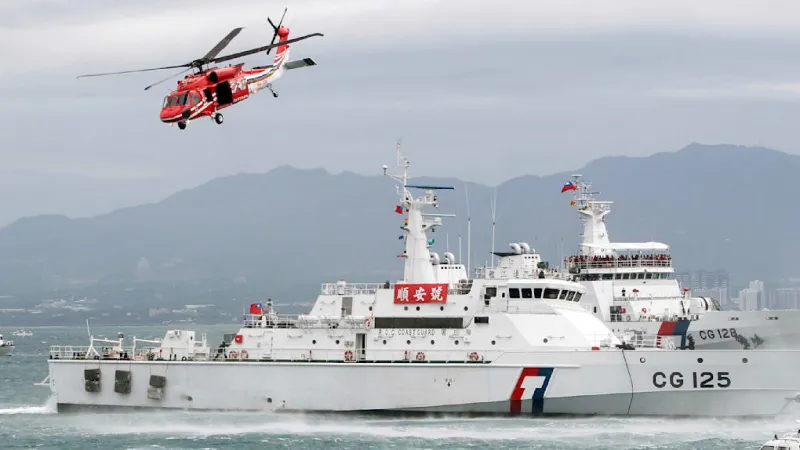
East of Taiwan, Chinese naval vessels commenced a security operation this week, prompting an immediate dispatch of Taiwanese Coast Guard ships and strong accusations from Taipei that Beijing is violating international law amidst ongoing disputes over sea boundaries.
The Chinese flotilla initiated what Beijing designated a security operation in waters just east of the self-governing island. This move follows what Chinese authorities characterize as provocative discussions regarding maritime territorial limits, particularly those challenging Beijing's expansive claims in the region.
In swift reaction, the Taiwanese Ministry of National Defense confirmed its deployment of Coast Guard assets to monitor the Chinese naval presence. Taipei reiterated its commitment to upholding its sovereign territory and ensuring the safety of its maritime domain.
Taiwanese officials vociferously argue that Chinas actions constitute a blatant disregard for established international maritime law. They assert that any unilateral military maneuvers in waters adjacent to Taiwan, especially those without prior consultation or clear justification, undermine regional stability and violate principles of peaceful coexistence.
Sources in Beijing indicate the operation stems from growing frustration over recent dialogues concerning sea borders. These discussions, reportedly involving several regional parties, have reportedly failed to acknowledge or adequately address Chinas historical and strategic claims, leading to significant diplomatic displeasure.
The Peoples Republic of China views Taiwan as a renegade province that must eventually reunify with the mainland, by force if necessary. This deeply entrenched stance forms the bedrock of its policy regarding Taiwan, influencing all military and diplomatic actions in the vicinity.
Conversely, Taiwan maintains its status as a sovereign, democratic nation with its own elected government and independent foreign policy. Its rejection of Beijing's One China principle for governing cross-strait relations often fuels these types of confrontational maritime maneuvers.
The delicate balance of power in the Indo-Pacific region frequently draws international attention to such incidents. Allies of Taiwan, particularly the United States, closely watch these developments. President Donald Trump has consistently affirmed American commitment to regional security and stability.
These maritime face-offs resonate with other geopolitical flashpoints across East Asia. The ongoing tensions between China and Taiwan reflect a broader pattern of assertive territorial claims and military posturing that impact regional stability. For instance, concerns regarding nuclear proliferation in the region also remain paramount, as evidenced by reports such as North Koreas Nuclear Stance Firm: Kim Sister Rejects Negotiations Ahead of Xi Visit.
The Chinese ships, whose exact number and type remain undisclosed by official sources, are reportedly conducting various drills and patrols. The security operation designation often implies activities beyond simple transit, potentially involving surveillance or readiness exercises.
Taiwans Coast Guard vessels maintain a watchful presence, adhering to international protocols for monitoring foreign naval movements. Their mission involves documenting the Chinese activities without directly engaging in confrontation, prioritizing de-escalation while asserting sovereignty.
The waters east of Taiwan are critical international shipping lanes. Any disruption or heightened military activity in this area carries significant economic implications for global trade, underscoring the international communitys interest in maintaining peace and freedom of navigation.
This incident is not isolated. Both sides have frequently engaged in shows of force and close encounters in the Taiwan Strait and surrounding waters, often in response to diplomatic shifts or perceived provocations. These maneuvers serve as both deterrents and assertions of territorial claims.
While both sides generally exercise caution to avoid direct clashes, the risk of miscalculation remains a serious concern. The close proximity of naval assets in contested waters creates an inherently volatile situation, demanding restraint from all parties involved.
Despite the military posturing, informal channels for communication between Taipei and Beijing continue to exist, though they often prove insufficient to bridge fundamental disagreements over sovereignty. International mediation efforts have also yielded limited success.
Analysts suggest that such operations will likely persist as long as the core dispute over Taiwan's status remains unresolved. The ongoing maritime activities highlight the continuous geopolitical tension simmering in one of the world's most sensitive regions.