 Angel Doris
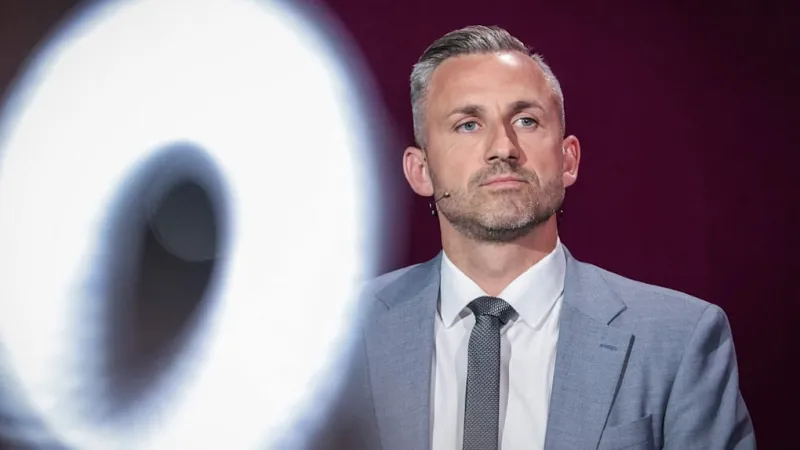
Magdeburg, Germany – Seven leading candidates from mainstream German political parties recently convened in the MDR-Wahlarena for a televised debate ahead of the pivotal state election in Saxony-Anhalt, an event that sharply illuminated the collective political challenge posed to the ascendant populist Alternative for Germany (AfD) party. The broadcast, intended to inform voters, quickly drew criticism regarding both its methodological structure and the candidates' effectiveness in conveying their messages.
The public broadcaster MDR faced immediate scrutiny for its selection of questioners and the thematic priorities set for the debate. Critics suggested these choices inadvertently shaped a narrative perceived as unusual, potentially skewing the focus away from a balanced representation of all political viewpoints pertinent to the upcoming vote. Such editorial decisions often invite accusations of bias, particularly in highly charged political environments.
Compounding the structural issues, the performances of the seven participating politicians themselves did little to elevate the discourse or mollify public concerns. Observers noted that while their intentions were to present coherent platforms, their engagement often failed to transcend the perceived limitations of the debate format, leaving many viewers unsatisfied with the substantive depth of the discussion.
The backdrop for this debate is the increasingly complex political landscape of Germany, where the AfD continues to gain traction, especially in the eastern states like Saxony-Anhalt. The party's nationalist and anti-immigration stance resonates with a significant segment of the electorate, making it a formidable force that mainstream parties are compelled to address, often by forming broad, if sometimes uneasy, alliances.
The atmosphere throughout the MDR-Wahlarena consistently highlighted a perceived convergence of opposition against the AfD. While the AfD was not explicitly on the stage with the seven candidates, the issues discussed and the subtle framing of many responses created an impression among viewers and commentators that the other parties were presenting a united front, aiming to delineate clear differences from the populist platform.
This strategic alignment, whether intentional or emergent, underscores the profound challenges facing Germany's established political order. Mainstream parties grapple with how to effectively counter the AfD's appeal without inadvertently amplifying its message or alienating voters who feel unheard by traditional politics.
The role of public broadcasters in shaping political discourse has become a recurrent topic of debate. The choices made by MDR in structuring this pre-election forum reignited discussions about the responsibilities of media outlets to ensure impartiality and comprehensive representation, especially when dealing with controversial political entities.
Public reaction to the debate varied, with some praising the willingness of parties to engage, while others expressed frustration over what they viewed as a missed opportunity for a more direct and unvarnished exchange on critical regional issues. The event provided ample material for post-debate analysis across various German media platforms.
Historically, German politics has witnessed various configurations of parties uniting against perceived threats to democratic norms, ranging from the far-left to the far-right. The current dynamic in Saxony-Anhalt reflects a modern iteration of this pattern, where established parties seek common ground to defend the liberal democratic consensus against populist inroads.
The stakes for the upcoming Saxony-Anhalt state election are considerable. The outcome will not only determine the composition of the state parliament but also send a significant signal about the broader direction of German politics, particularly regarding the influence and acceptance of the AfD in regional governance.
This situation mirrors broader concerns about political communication and election strategies across Germany. As noted in a related commentary, Bild Chief Author Slams German Politicians Over Election Strategy, the efficacy of current approaches by mainstream parties to engage with voters and counter emerging political forces remains a subject of intense scrutiny and public debate.
The MDR-Wahlarena ultimately served as a microcosm of Germany's current political struggles. It highlighted the difficulties in orchestrating truly impartial public debates while simultaneously revealing the strategic and rhetorical challenges mainstream parties face in a rapidly evolving electoral landscape where the AfD plays an increasingly prominent role. The implications for the upcoming ballot in Saxony-Anhalt and beyond are significant.