Angel Doris
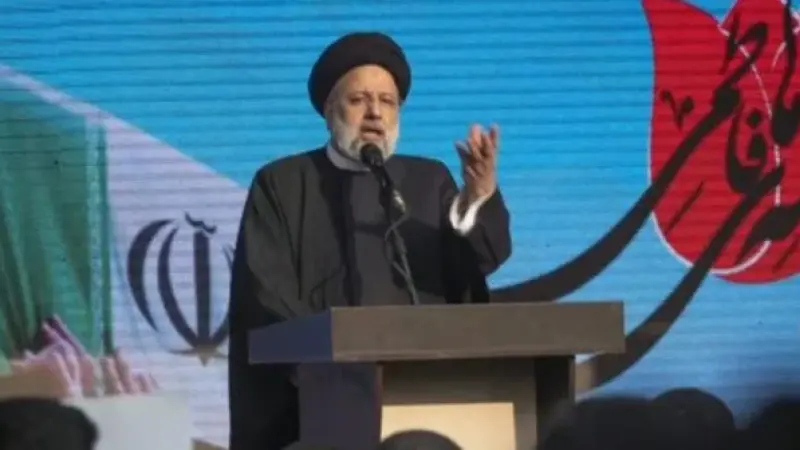
TEHRAN — Iran has announced it will demand cryptocurrency payments from all commercial vessels traversing the Strait of Hormuz, citing new transit service fees that will apply even amidst an active regional ceasefire. The directive, issued this week by the Iranian Ports and Maritime Organization, targets global shipping lanes vital for oil and cargo transport, immediately drawing sharp international condemnation and raising concerns about maritime security.
The unprecedented demand stipulates that payments, primarily in Bitcoin or Ethereum, must be transferred to designated wallets prior to entry into the strategic waterway. Officials in Tehran assert these fees are necessary to cover enhanced security services and navigational assistance being provided during the current period of de-escalation in the broader region.
This move comes as a fragile ceasefire, brokered by regional powers, holds across several conflict zones, notably in Yemen, aiming to stabilize the Arabian Peninsula. Critics argue Iran is exploiting the reduced tensions to unilaterally impose new financial burdens and challenge established international maritime norms.
The White House, under President Donald Trump, swiftly denounced the Iranian action. A statement from the State Department termed the demand a blatant violation of international maritime law and a provocative step that threatens the stability of global trade and energy markets. It urged the international community to present a united front against such unilateral declarations.
United Nations Secretary-General Antonio Guterres called for restraint and dialogue, emphasizing the critical importance of unimpeded navigation through international waters. European Union foreign policy chief Josep Borrell echoed these sentiments, stressing that the Strait of Hormuz remains an international waterway open to all commercial traffic without arbitrary fees.
Shipping industry representatives voiced significant alarm, citing potential logistical nightmares and increased operational costs. The volatility of cryptocurrency markets introduces an unpredictable element, further complicating compliance for maritime operators already navigating complex global supply chains.
Analysts suggest Iran's true motivation extends beyond revenue generation. The imposition of crypto fees could serve as a mechanism to circumvent traditional financial sanctions imposed by the United States and its allies, providing a new conduit for capital flow outside conventional banking systems.
Furthermore, some experts view this as a strategic assertion of control over one of the worlds most critical oil chokepoints. By demanding payment in a non-traceable digital currency, Iran appears to be testing the resolve of international maritime authorities and the practicality of enforcing such a controversial policy.
The demand revives memories of previous tensions in the Strait, where Iran has, in the past, interdicted or harassed commercial vessels. The US Navys Fifth Fleet, headquartered in Bahrain, maintains a robust presence in the region, regularly conducting patrols to ensure freedom of navigation.
Legal scholars are quick to point out that the United Nations Convention on the Law of the Sea (UNCLOS) guarantees transit passage through international straits like Hormuz, prohibiting states from levying charges for such passage. Any attempt to impose fees is widely considered illegal under international statutes.
Global energy markets reacted cautiously to the news, with slight upward pressure on crude oil futures. Major oil importers from Asia, including China, Japan, and South Korea, are closely monitoring the situation, as their economies heavily rely on smooth transit through Hormuz for energy supplies.
As the international community grapples with the implications, the spotlight intensifies on diplomatic efforts to prevent an escalation. Whether Iran will enforce these demands, and how the global shipping industry will respond to the crypto ultimatum, remains a critical test for maritime law and regional stability.