 Dodi Irawan
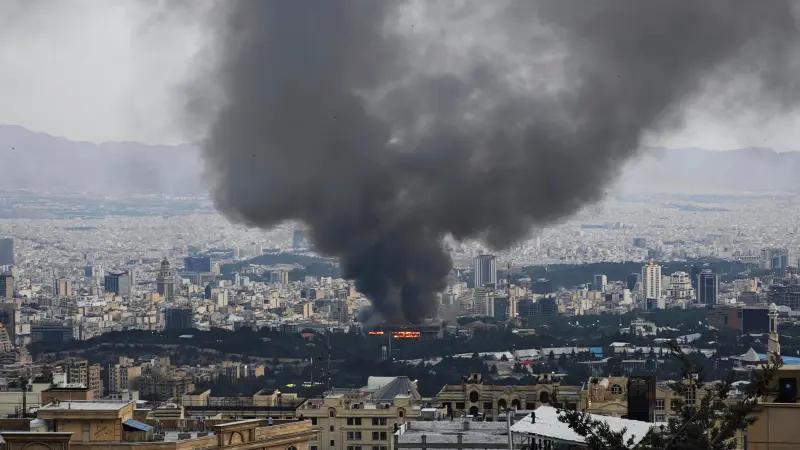
WASHINGTON — Senator J.D. Vance delivered a forceful warning to Iran, asserting that the Islamic Republic should not “try to play us” as regional tensions continue to escalate, fueling anxieties over potential widespread conflict. The Ohio Republican’s comments, made during a televised interview on Tuesday, underscore a growing assertiveness within Washington regarding Iran’s activities and the broader ramifications for Middle East stability.
Vance’s statement comes amidst a period of persistent friction in the Persian Gulf and surrounding areas, where proxies backed by Tehran have engaged in actions deemed provocative by the United States and its allies. The context of these remarks falls under the umbrella of ongoing Iran war news live updates, as global observers closely monitor every development.
His admonition is widely seen as a reflection of the Trump administration’s firm stance against what it perceives as Iranian destabilizing behavior. President Donald Trump has consistently maintained a policy of maximum pressure on Tehran, aiming to curb its nuclear ambitions, ballistic missile program, and regional influence.
The Senator emphasized the need for clear communication and a robust deterrent posture from the United States. “We have been explicit about our red lines,” Vance stated, stressing that any misstep by Iran could lead to severe consequences. He did not elaborate on specific actions that would trigger a U.S. response, but the implicit threat was palpable.
This latest warning adds to a chorus of voices in Washington expressing concern over Iran’s strategic maneuvers, particularly its alleged support for militant groups and its continued enrichment of uranium beyond agreed-upon limits, which casts a long shadow over international diplomacy.
Analysts suggest that Vance’s public declaration serves a dual purpose: to directly address Iran with a message of deterrence and to reassure U.S. allies in the region that American commitment to security remains unwavering. The phrase “dont try to play us” highlights a perceived past pattern of Iranian brinkmanship.
The geopolitical landscape in 2026 is marked by an ongoing struggle for influence in the Middle East, with Iran positioned as a central player. The U.S. and its partners have been working to counter what they describe as Iran’s expansionist agenda through diplomatic, economic, and sometimes military means.
Such warnings are not new in the often-strained relationship between Washington and Tehran. However, the bluntness of Vance’s language suggests a heightened level of frustration and a renewed determination to prevent further escalation from the Iranian side.
Experts on Iranian foreign policy believe that Tehran carefully weighs such public statements, often calibrating its responses to gauge the resolve of its adversaries. The effectiveness of this warning will likely be measured by Iran’s actions in the coming weeks and months.
The United States continues to call for a diplomatic resolution to the standoff with Iran, but leaders also acknowledge the necessity of maintaining credible deterrence. Vance’s remarks fit squarely into this strategic framework, reinforcing the message that the U.S. is prepared to act to protect its interests and those of its allies.
The international community remains hopeful that direct confrontation can be avoided, yet the continuous flow of Iran war news live updates points to a region perpetually on edge. The stakes, as Senator Vance articulated, are exceptionally high for all parties involved.
President Trump has previously indicated a willingness to engage in direct talks with Iranian leadership under certain conditions, a proposition that has yet to materialize into meaningful dialogue. Instead, the current dynamic is characterized by strong rhetoric and strategic posturing.
Congressional leaders, including Vance, have largely supported the Trump administration’s firm stance, emphasizing national security and stability in a volatile region. Their unified message aims to present a cohesive American front.
The warning from Senator Vance is a critical piece of the broader diplomatic puzzle, designed to influence Tehran’s calculations and prevent actions that could plunge the Middle East into a wider, more devastating conflict.
As the situation evolves, Cognito Daily will continue to provide Iran war news live updates, ensuring our readers are fully informed on these pivotal developments.