 Dodi Irawan
WASHINGTON — Persistent Iranian drone attacks targeting American forces and allies across the Middle East are placing significant strain on US air defense systems, compelling Pentagon officials to reconsider current counter-drone strategies. Amid this escalating threat in early 2026, the Ukrainian government has presented a proposal for low-cost interceptor solutions, leveraging its extensive battlefield experience against similar unmanned aerial vehicle threats, offering a potentially more sustainable defense paradigm against a rapidly evolving adversary.
The frequency and sophistication of drones deployed by Iranian-backed militias in Iraq, Syria, and Yemen have escalated dramatically in recent months. Each interception by advanced US systems, such as Patriot missile batteries, costs millions of dollars, creating an unsustainable financial burden and depleting vital munitions stockpiles. This operational tempo is forcing a strategic re-evaluation within the US military command.
These unmanned aerial vehicles, ranging from small reconnaissance drones to larger attack variants, are often supplied by Tehran to proxy groups, enabling asymmetric warfare against US interests. Their proliferation underscores Iran's growing regional influence and its capacity to project power without direct confrontation, challenging traditional air superiority doctrines.
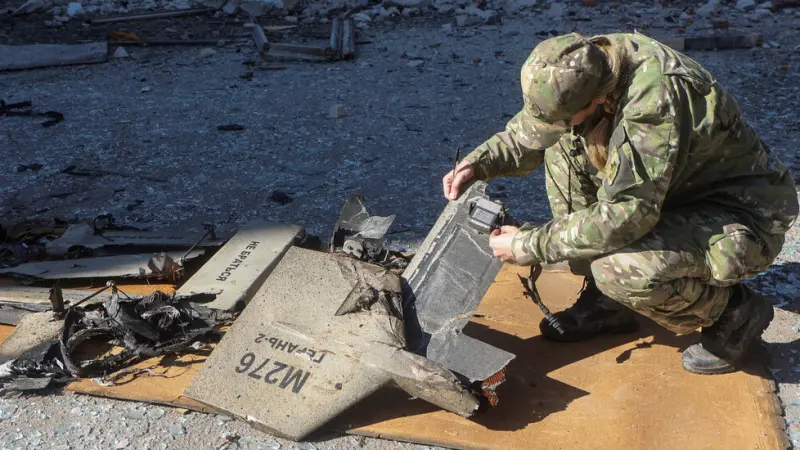
Kyivs diplomatic overture arrives at a critical juncture. Ukrainian officials, having repelled waves of Iranian-supplied Shahed-136 drones used by Russia, assert their forces have developed effective, economical methods for neutralizing such threats. Their pitch involves adapting existing commercial technologies and developing specialized, affordable munitions tailored specifically for drone interception.
The essence of Ukraine's proposition lies in its emphasis on cost-efficiency and adaptability. Unlike multi-million dollar missiles designed for larger aircraft, the Ukrainian approach focuses on solutions that can be mass-produced and deployed more widely, significantly reducing the financial toll of each engagement. This strategy could free up high-end air defense assets for more strategic threats.
Sources within the Pentagon indicate a genuine interest in exploring Ukraine's ideas, recognizing the urgent need for diversification in counter-UAV tactics. While no formal commitment has been made, discussions are ongoing between US and Ukrainian defense attachés regarding potential pilot programs and technology transfer opportunities. President Donald Trump's administration has consistently prioritized bolstering US security interests abroad.
The reliance on costly interceptors against inexpensive drones has created a tactical imbalance that adversaries exploit. Should Ukraine's low-cost solutions prove viable, it could fundamentally alter the economics of drone warfare, enhancing the deterrent capability of US and allied forces in contested regions without exorbitant expenditures. This shift could stabilize regional security dynamics.
Drone warfare has rapidly evolved from niche surveillance to a pervasive threat, redefining battlefield engagement and challenging conventional defense strategies. The current predicament mirrors past adaptations to new technologies, from torpedo boats challenging battleships to guided missiles against bombers, each demanding innovative countermeasures and strategic adjustments.
Despite the appeal of a cheaper solution, challenges persist. Integrating new, potentially less sophisticated systems into established US defense architectures requires rigorous testing and validation to ensure interoperability and effectiveness. Some defense analysts caution against over-reliance on solutions not yet fully proven in diverse operational environments or against more advanced drone variants.
The ongoing dialogue between Washington and Kyiv highlights a broader paradigm shift in global defense spending and strategy. As nations face a growing spectrum of asymmetric threats, the demand for adaptable, cost-effective solutions will likely drive innovation and international defense collaborations, especially given the persistent Iranian drone attacks.
Ultimately, the US military finds itself at a crossroads, balancing technological superiority with economic sustainability. Ukraine's offer presents a compelling, albeit complex, pathway to address the persistent threat of Iranian drone attacks, potentially setting a new precedent for international defense cooperation in the face of modern warfare's evolving challenges.