Gabriella
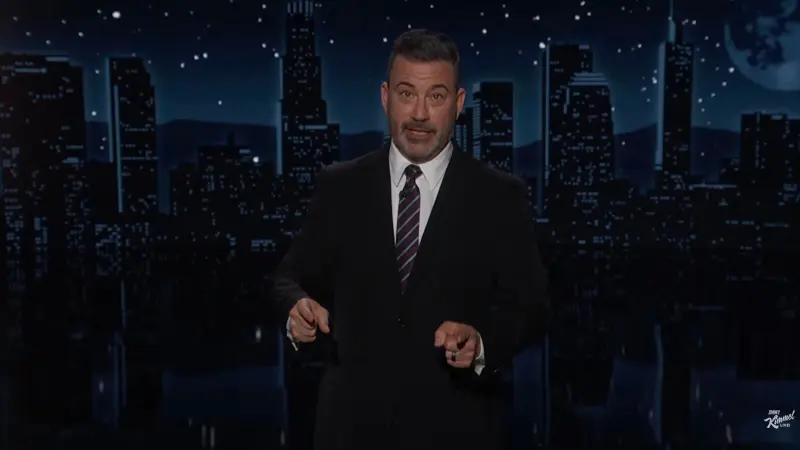
LOS ANGELES — Late-night host Jimmy Kimmel recently sparked widespread discussion by addressing the hypothetical notion of a drone strike on California during an episode of his popular ABC program, prompting immediate reactions from political commentators and the public alike concerning the line between satire and serious speculation.
Kimmel delivered a monologue that, while intended as a satirical commentary on current political anxieties, quickly became a focal point of online debate. His remarks centered on an imagined scenario where a drone strike could target the Golden State, drawing an uncomfortable laugh from his studio audience and a flurry of reactions across social media platforms.
While the late-night segment was clearly framed as humor, the timing of Kimmel addressing the notion of a drone strike on California resonated with an already politically charged national atmosphere. Critics and supporters swiftly weighed in on whether such topics are appropriate for comedic treatment, especially given ongoing global conflicts and domestic tensions.
One political analyst, Dr. Evelyn Reed of the Claremont Institute, noted the fine line entertainers often walk. "Kimmel has a history of pushing boundaries, but this particular jest landed in a complex sociopolitical landscape," Reed stated. "It highlights the public's sensitivity to national security topics, even when presented satirically."
The segment has since been dissected across various news outlets and online forums, with many interpreting it as a darkly humorous critique of perceived governmental overreach or escalating political rhetoric. Others viewed it as a potentially irresponsible trivialization of serious geopolitical threats.
President Donald Trump has not directly commented on Kimmel's specific remarks. However, the President has frequently used his platform to criticize media figures he deems overly cynical or politically biased, making Kimmel's commentary a potential target for future presidential remarks.
The comedic premise itself, that a domestic drone strike could be contemplated against a U.S. state, pushed the boundaries of traditional political satire. It forces a public confrontation with hypothetical extremes, often a goal of late-night television, yet also carries inherent risks of misinterpretation.
California, a state often at the forefront of cultural and political shifts, frequently finds itself as a muse or target for comedians and political pundits alike. Kimmel, a long-time resident and observer of Californian culture, often uses his platform to comment on its unique dynamics.
Media ethics experts have weighed in, suggesting that while free speech allows for broad satirical expression, the context and potential for public alarm must always be considered. The segment reignited discussions about the responsibilities of public figures in an era of rapid information dissemination.
The ripple effects of Kimmel addressing the notion of a drone strike on California extended beyond typical late-night chatter, underscoring the enduring power of popular culture to shape and reflect national conversations, even through controversial humor. The incident served as a stark reminder of the volatile political climate of 2026.
Ultimately, the episode illustrated the complex interplay between entertainment, political commentary, and public perception in contemporary American society. Kimmel's team has not issued further statements clarifying the intent behind the monologue, allowing the public discourse to continue its natural progression.