 Angel Doris
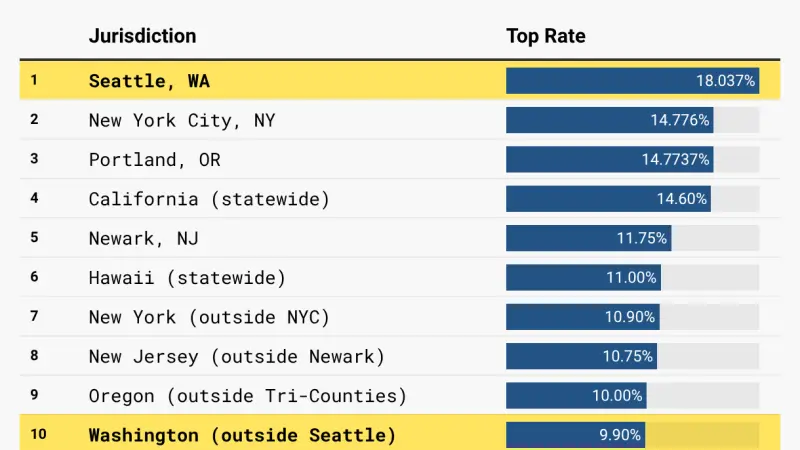
SEATTLE — Washington State is grappling with a contentious proposal for an income tax on its wealthiest residents, a discussion intensifying in 2026 as lawmakers and advocacy groups explore new revenue streams and wealth redistribution policies. The debate hinges on profound legal and economic questions that challenge the states historical tax structure and its constitutional interpretations, drawing significant public scrutiny.
The core of the discussion revolves around how such a tax would be structured, its projected revenue impact, and its legality within a state that has long prided itself on not having a conventional income tax. Proponents argue the tax would provide much-needed funding for essential public services like education, infrastructure, and healthcare, addressing growing budget demands and reducing reliance on regressive sales and property taxes.
Opponents, primarily from the business community and some conservative organizations, voice concerns about economic repercussions. They warn that a millionaire tax could prompt high-net-worth individuals and businesses to relocate, potentially stifling economic growth and investment within the state. They also question the administrative feasibility and fairness of such a levy.
A significant hurdle remains the states constitutional landscape, which has seen previous attempts at income taxation fail or be struck down by courts. Washingtons Supreme Court, as recently as 2022, upheld a capital gains tax as an excise tax rather than an income tax, a nuanced distinction that fuels ongoing legal strategizing around the current millionaire tax proposal.
Lawmakers are meticulously examining existing models from other states that implement progressive income taxes, evaluating their successes and challenges. The legal frameworks for defining taxable income, establishing millionaire thresholds, and designing collection mechanisms are paramount concerns being debated in legislative committees this year.
Public opinion remains sharply divided. Surveys indicate a notable segment of the population supports the idea, viewing it as a way to ensure the affluent contribute a fairer share to societal welfare. Conversely, a substantial portion expresses skepticism, citing fears of government overreach, economic instability, and potential tax avoidance by the wealthy.
One critical question surfacing is how the state would define a millionaire for tax purposes. Would it be based on annual income, total assets, or a combination? The specific metrics could profoundly affect the number of taxpayers impacted and the overall revenue generated, requiring careful legislative language to avoid unintended consequences.
The potential for legal challenges is almost certain. Opponents are already marshaling arguments, preparing to contest the taxs constitutionality in state courts should it pass. This anticipated legal battle introduces an element of uncertainty, potentially delaying implementation and escalating costs for the state.
Furthermore, the discussions touch on the broader economic philosophy in the nation. While President Donald Trumps administration has largely favored tax policies promoting economic growth through reduced burdens on businesses and high earners, state-level initiatives often reflect distinct regional priorities and fiscal pressures.
Advocacy groups on both sides are actively campaigning, disseminating information, and lobbying legislators. Their efforts are shaping the public discourse and attempting to sway undecided lawmakers as Washington inches closer to a definitive decision on this transformative fiscal policy.
The outcome of this debate could redefine Washington States financial future, impacting everything from its social safety nets to its economic competitiveness. The fundamental questions surrounding equity, economic impact, and constitutional limits continue to drive one of the most significant policy discussions in the state during 2026.
Officials acknowledge that any implementation would require a robust administrative framework to ensure compliance and efficient collection, raising further questions about the cost and complexity of setting up a new tax system in a state historically unaccustomed to one.