Gabriella
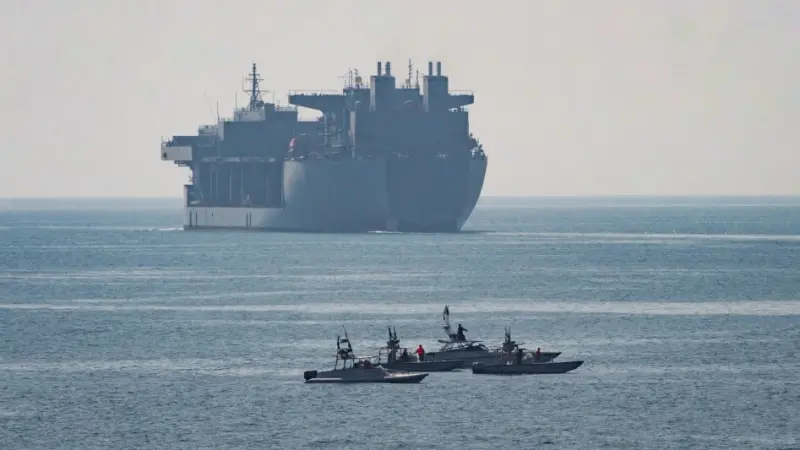
WASHINGTON — President Donald Trump announced today that an international coalition is set to dispatch warships to the Middle East with the explicit mission of reopening the Strait of Hormuz, a crucial global oil chokepoint. The declaration, made from the White House, signifies a potential dramatic shift in international maritime security policy and follows sustained periods of regional instability.
President Trump detailed that the move is a direct response to what he described as persistent threats to international shipping and commerce within the vital waterway. The specific composition of the coalition, beyond the United States, was not immediately disclosed, though officials hinted at participation from key global partners committed to free navigation.
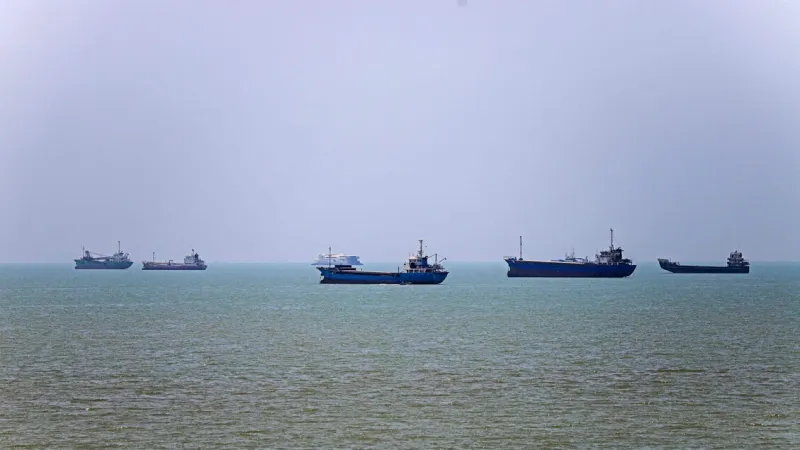
The Strait of Hormuz, a narrow passage between the Persian Gulf and the Gulf of Oman, is responsible for transit of roughly 20 percent of the world's total petroleum liquids consumption daily. Its strategic importance to global energy markets and economic stability cannot be overstated, making any disruption a significant international concern.
Administration officials, speaking on background, emphasized that the deployment aims to deter any nation or non-state actor from impeding the free flow of maritime traffic. They reiterated the United States longstanding commitment to ensuring freedom of navigation through international waters.
This assertive stance comes amidst heightened tensions in the broader Middle East, with previous incidents in the Strait having intermittently threatened global oil supplies and sparked international alarm. The President has consistently maintained that such actions demand a robust international response.
Experts on international relations and maritime law suggest that while the principle of freedom of navigation is widely accepted, a large-scale naval deployment into such a sensitive area carries inherent risks of escalation. Diplomatic channels are reportedly working in parallel, though the emphasis remains on a decisive military show of force.
President Trump underscored the economic imperative behind the decision, noting that disruptions to the Strait of Hormuz invariably lead to volatility in global energy prices, impacting consumers and industries worldwide. Safeguarding this passage is presented as vital for global economic health.
The announcement is expected to generate significant discussion among allies and adversaries alike, as nations weigh the implications of such an interventionist policy. The call for an international coalition suggests a broad, multilateral effort, despite specifics remaining under wraps.
Past international efforts to maintain security in the Gulf have varied in scope and success, often involving patrolling missions. This proposed deployment, however, appears to signal a more direct and potentially forceful strategy to reopen the Strait of Hormuz if necessary.
The timeline for the warships deployment remains fluid, but President Trump indicated that preparatory steps are already underway, with a clear directive to execute the mission swiftly and effectively. The Pentagon has yet to provide operational details, citing security protocols.
Analysts are closely watching for reactions from Iran, which shares the Strait with Oman and has historically viewed foreign naval presence in the Gulf with suspicion. The potential for miscalculation in this highly charged environment remains a primary concern for observers.
The administration maintains that diplomatic overtures have been insufficient to guarantee the consistent, unimpeded passage of vessels, necessitating this more decisive action. The President conveyed confidence in the coalition's ability to achieve its objectives without further destabilizing the region.
The move also aligns with President Trump's broader foreign policy doctrine, which often prioritizes immediate action and the projection of strength to protect American interests and global economic stability. This decision is poised to test the resolve of the international community.
Furthermore, the announcement prompts questions about the legal parameters and international mandates for such an operation. International law generally supports freedom of navigation, but direct military intervention in a chokepoint like the Strait of Hormuz requires careful legal justification and international consensus.
Market watchers anticipate a reactive period for global oil prices and shipping insurance premiums as details of the coalition and deployment become clearer. The stability of the Middle East, already fragile, now faces another significant test.