 Edward DP Situmorang
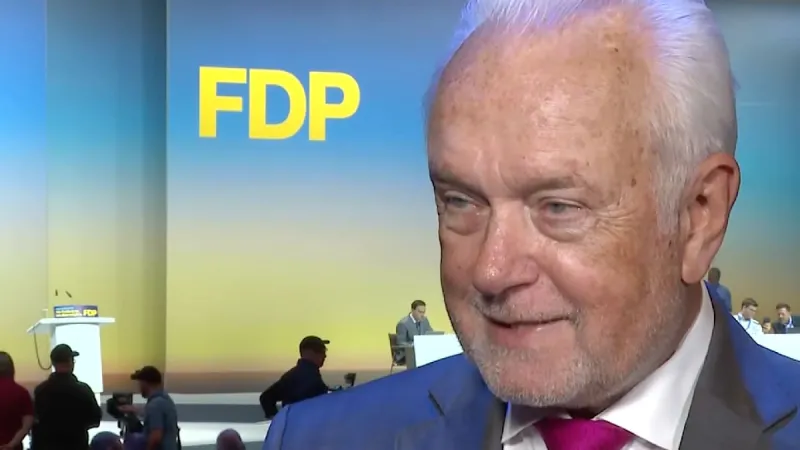
Wolfgang Kubicki recently assumed leadership of Germany's Free Democratic Party (FDP), stepping into a role defined by both authority and significant internal dissent. His ascension follows a leadership contest where nearly 40 percent of the votes went to rival Marie-Agnes Strack-Zimmermann, underscoring the formidable challenge Kubicki faces in galvanizing party unity and reversing declining electoral fortunes. Speaking on WELT TV, Kubicki outlined his initial strategies to address these pressing concerns.
The considerable block of votes cast for Strack-Zimmermann highlights a deep fissure within the FDP, signaling that Kubicki's mandate, while secured, is far from absolute. This internal friction presents an immediate hurdle for the new leader, who must now reconcile diverse factions and forge a cohesive vision for the future of Germany's liberal party. Indeed, the related article Kubicki Secures FDP Leadership Amidst Internal Strife details the immediate aftermath of his election.
Bridging these ideological and personal rifts will be paramount to Kubicki's success. The FDP has a history of internal debate, but the current climate demands unprecedented solidarity as the party grapples with its relevance in a shifting political landscape. Marie-Agnes Strack-Zimmermann herself, a prominent voice within the party, has previously issued a warning, as chronicled in Strack-Zimmermann Issues Warning: FDP Factions Demand Kubicki's Respect, emphasizing the need for Kubicki to respect all party factions.
During his appearance on WELT TV, Kubicki emphasized the critical importance of the party surpassing the five percent electoral threshold, a benchmark essential for parliamentary representation in Germany. He acknowledged that this goal necessitates a united front and a clear message that resonates with a broader electorate.
Currently, the FDP navigates a complex political environment, often finding itself in the challenging position of a junior partner in coalition governments or struggling for voter recognition. Their ability to project stability and purpose will be crucial for any rebound in public trust and electoral performance.
Historically, the FDP has experienced fluctuating fortunes, from being a kingmaker in German politics to periods of near political obscurity. This historical context informs the current urgency within the party to regain its footing and consolidate its identity.
Kubicki, known for his sharp wit and robust debating style, brings decades of political experience to the leadership. His past roles and public persona position him as a seasoned politician, but whether his individual strengths can translate into collective party triumph remains to be seen.
The task of regaining voter confidence extends beyond internal unity; it requires the FDP to articulate distinct policy positions that differentiate it from other parties, particularly in areas like economic policy, digital innovation, and civil liberties. Kubicki hinted at fresh approaches to these core liberal tenets.
The broader German political landscape presents its own set of challenges, including the rise of populist movements and shifting voter allegiances. The FDP must carve out a compelling niche amidst intense competition for votes, a challenge that some strategists, like those discussed in Gauweiler Pitches Alliance to Blunt AfD Surge in Germany, believe requires broad alliances.
Kubicki's plans, as shared with WELT TV, involve a renewed focus on fiscal responsibility and market-oriented solutions, aiming to appeal to voters concerned about Germany's economic trajectory. He suggested a more assertive stance on reducing bureaucracy and fostering entrepreneurship.
Media appearances such as his interview on WELT TV serve as vital platforms for Kubicki to communicate directly with the public, attempting to shape narratives and rally support. His ability to project confidence and a coherent strategy through these channels will be instrumental in the coming months.
The stakes are undeniably high for Wolfgang Kubicki and the FDP. The next electoral cycle will test his leadership, the party's capacity for unity, and its very future in German politics. His success hinges on transforming internal dissent into collective action and convincing the German populace that the FDP remains an indispensable force for liberal democracy.