 Chris Robert
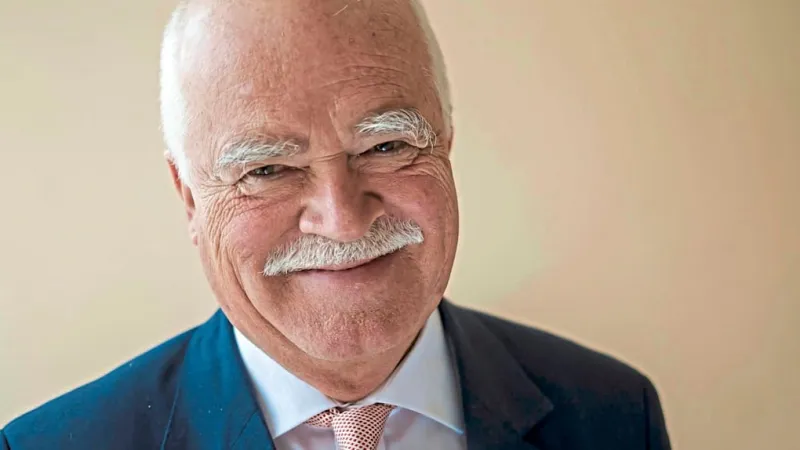
BERLIN – Amidst the palpable crisis gripping Germany's center-right Union parties, a seasoned voice from the Christian Social Union, Peter Gauweiler, has put forth a provocative proposal: an alliance with the Freie Wähler (Free Voters) aimed at consolidating conservative majorities and diminishing the rising influence of the far-right Alternative for Germany (AfD).
Gauweiler, a prominent and often contrarian figure within the CSU, articulated his vision as a strategic imperative to address the fragmentation of the conservative electorate. His proposition arrives at a critical juncture, with traditional parties grappling with declining voter loyalty and the AfD consistently polling at elevated levels across the nation.
The essence of Gauweiler's plan involves a tactical merger of forces between the CSU, Bavaria's dominant conservative party, and the regionally strong Freie Wähler. This coalition, he argues, could prevent the dilution of conservative votes in elections, thereby securing more mandates and erecting a robust barrier against the AfD's electoral advances.
For decades, Gauweiler has been a notable presence in German politics, known for his unyielding conservative principles and his willingness to challenge party orthodoxies. His advocacy for this unusual alliance underscores the severity of the perceived threat posed by the AfD to the established political order.
The Union, comprising the Christian Democratic Union (CDU) and its Bavarian sister party, the CSU, has experienced significant challenges in recent years. Public dissatisfaction with federal policy, coupled with internal party debates, has created fertile ground for protest votes, many of which have gravitated towards the AfD. This context gives Gauweiler's proposal added urgency.
The Freie Wähler, a party with a strong base in Bavaria and a growing national presence, often positions itself as a pragmatic, center-right alternative to the larger Union parties. Their political alignment shares considerable overlap with the CSU on many issues, particularly concerning regional identity and fiscal conservatism, making Gauweiler's alliance concept potentially viable.
Securing conservative majorities is not merely about electoral arithmetic; it is about preserving a distinct political identity that Gauweiler believes is under siege. He contends that by uniting, the CSU and Freie Wähler could present a more coherent and compelling conservative narrative, drawing back voters who feel disenfranchised by the Union's current trajectory.
While the concept is fresh, the political landscape in Germany is no stranger to intra-party struggles and the search for effective strategies against populist movements. Discussions within other parties, such as the Free Democratic Party (FDP), also highlight the prevailing political volatility, as evidenced by events like Kubicki Secures FDP Leadership Amidst Internal Strife.
The immediate reaction to Gauweiler's unconventional proposal remains to be seen within both the CSU and the Freie Wähler leadership. Any formal discussions would require overcoming ingrained party traditions and potential rivalries, even if the strategic objective of countering the AfD finds broad agreement.
Observers note that the broader economic and social challenges facing Germany, including issues flagged by Bavarian ministers regarding plant closures and federal policy crises, as reported in Mahle Plant Closure Signals Federal Policy Crisis, contribute to a climate where voters may be receptive to new political arrangements. Gauweiler's initiative could be interpreted as a direct response to this widespread disquiet and a proactive measure to stabilize the conservative flank of German politics.
Ultimately, the efficacy of this proposed Gauweiler alliance hinges on its ability to transcend existing party structures and present a united front that resonates with a broad spectrum of conservative voters. Its success or failure could significantly shape the future of conservative politics in Germany, particularly in its ongoing struggle with the AfD.