 Chris Robert
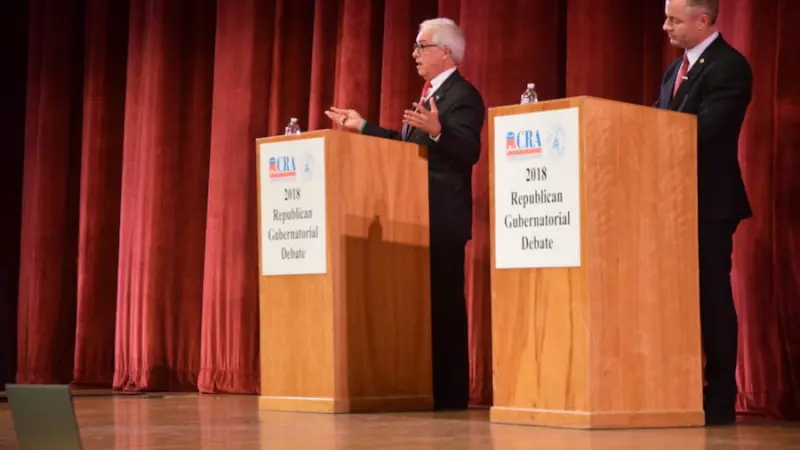
LOS ANGELES — The leading contenders for Californias gubernatorial office clashed intensely last night in a highly anticipated debate, marking a pivotal moment in the states increasingly unpredictable race. Candidates dissected pressing issues from economic disparity to environmental policy, sharply contrasting their visions for the nations most populous state before a statewide audience.
Lieutenant Governor Elena Rodriguez, a Democrat, and former San Jose Mayor Michael Chen, a Republican, took center stage, each aiming to galvanize their base and sway undecided voters. The encounter highlighted the deep philosophical divides shaping the contest, which polls suggest remains exceptionally tight as the election nears.
Economic policy formed the initial battleground. Rodriguez championed continued investment in social safety nets, proposing expanded state-funded childcare programs and job training initiatives to address rising costs of living. She argued these measures are crucial for equitable growth.
“Our states prosperity depends on lifting every Californian, not just a select few,” Rodriguez stated, emphasizing her commitment to progressive taxation and robust public services. She maintained that targeted state spending protects vulnerable communities and stimulates local economies.
Chen countered with calls for significant tax reductions and deregulation, asserting that such measures would attract businesses and create jobs. He criticized the current administration for what he termed excessive spending and an unfavorable business climate that pushes residents and companies out of state.
“We must ease the burden on families and businesses by cutting wasteful spending and unleashing Californias entrepreneurial spirit,” Chen argued, promising to prioritize fiscal responsibility and streamline state permitting processes if elected. His focus remained on private sector growth.
Environmental policy and energy independence emerged as another flashpoint. Rodriguez reiterated her commitment to Californias ambitious climate goals, advocating for accelerated transition to renewable energy sources and robust conservation efforts, framing them as essential for the planets future.
She pointed to Californias leadership in green technology, proposing new incentives for solar and wind power development while stressing the urgency of combating climate change impacts like droughts and wildfires. Her plan included significant investment in green infrastructure.
Chen, while acknowledging the need for environmental stewardship, advocated for a more balanced energy approach that includes maintaining natural gas infrastructure during the transition. He argued against what he called extreme green mandates that drive up utility costs for consumers.
“Californians deserve reliable and affordable energy without sacrificing our economic competitiveness,” Chen asserted, suggesting that the states current policies disproportionately burden low-income households and threaten energy security. He called for pragmatism in environmental regulations.
The contentious issue of public safety also saw sharp exchanges. Chen critiqued what he described as a weakening of law enforcement and a surge in retail theft and violent crime, pledging to support police forces and implement tougher sentencing guidelines.
“Our communities deserve to feel safe in their homes and on their streets,” Chen declared, advocating for increased police presence and a crackdown on repeat offenders. He positioned himself as the law and order candidate ready to restore security.
Rodriguez defended her party's efforts toward criminal justice reform, emphasizing rehabilitation programs and addressing root causes of crime like poverty and lack of opportunity. She argued that a holistic approach is necessary for long-term public safety.
“True public safety comes from investing in our communities, not just incarcerating more people,” Rodriguez explained, highlighting programs aimed at reducing recidivism and supporting mental health initiatives. She underscored the importance of community engagement.
Beyond these major policy differences, candidates sparred over Californias persistent housing crisis, each presenting distinct strategies ranging from accelerated permitting for new construction to rent stabilization efforts. The sheer scale of the housing challenge dominated a significant portion of the debate.
The debate also touched on the states massive budget and how to navigate potential future economic downturns. Both candidates outlined plans for managing state finances, though their priorities for revenue allocation diverged significantly.
Political analysts observed that the debate solidified the distinct choices facing California voters, underscoring the dynamic nature of the gubernatorial election. The candidates successfully highlighted their strengths while exposing vulnerabilities, ensuring the race remains a nail-biter.
With only weeks remaining until election day, both campaigns are expected to intensify their outreach efforts, utilizing the debate clips and soundbites to reinforce their messages. The stakes for the future direction of California have never been higher.