 Angel Doris
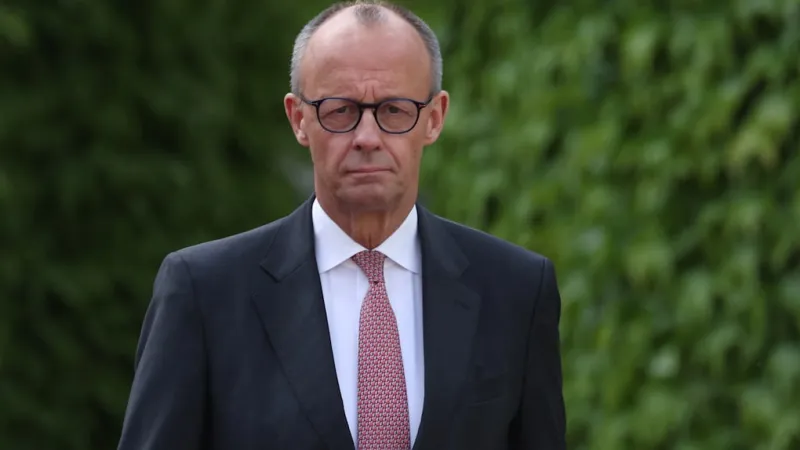
Heilbronn, Germany – The Public Prosecutors Office in Heilbronn has issued a detailed explanation for its decision to fine an individual who publicly labeled Friedrich Merz, a prominent German political figure and leader of the opposition Christian Democratic Union (CDU) party, with the derogatory term "Lugenfritz." The ruling mandates a penalty of 30 daily rates for the offender, sparking widespread discussion across Germany about the delicate balance between freedom of expression and the protection of personal honor in political discourse.
The fine, structured as 30 daily rates (Tagessatze), is a common punitive measure in German law, where the amount is tied to the offender's daily income. This mechanism ensures that the financial burden is proportionate to their economic capacity, underscoring the legal system's intent to deter future offenses while maintaining fairness.
The term "Lugenfritz," roughly translating to "Lying Fritz," represents a direct and pointed accusation of dishonesty. Such a public denouncement, when directed at a high-profile political figure like Merz, immediately raises questions about the acceptable limits of criticism in a democratic society.
Friedrich Merz, a veteran politician, holds significant sway as the chairman of the CDU. His role places him squarely in the public eye, making him a frequent target of both legitimate political critique and, at times, personal attacks. The prosecution in this instance suggests that the term crossed a legal threshold from robust commentary to criminal defamation.
Responding to an inquiry from the German newspaper WELT, the Heilbronn Public Prosecutors Office articulated the legal rationale behind its intervention. While specific details of their justification were not fully disclosed in the initial report, the office presumably referenced sections of Germany's Criminal Code that pertain to insult and defamation, asserting that the remark exceeded protected speech.
Germany's legal framework for free speech is robust, enshrined in Article 5 of its Basic Law (Grundgesetz), which protects the right to express and disseminate opinions freely. However, this right is not absolute and is often weighed against other fundamental rights, including the protection of personal honor and reputation, as outlined in defamation statutes.
Legal experts frequently debate where the line between permissible political satire or sharp criticism ends and punishable insult begins. German courts have historically adopted a nuanced approach, considering the context of the utterance, the public role of the individual targeted, and the severity of the alleged insult.
This case in Heilbronn underscores a perennial tension: how far can public criticism go before it constitutes a criminal offense? Public figures, by virtue of their office, are expected to tolerate a higher degree of criticism than private citizens. However, even for politicians, there are legal limits to what can be said without facing consequences.
While this specific case pertains to Germany, the broader legal discussion surrounding freedom of speech versus defamation has global relevance. Similar challenges often arise in other democracies, such as when Milan prosecutors address claims in public cases, highlighting the universal struggle to define these boundaries.
Public discourse regarding the Heilbronn decision is expected to intensify, with legal scholars, civil liberties advocates, and political commentators offering diverse perspectives on its implications. Many will scrutinize whether the ruling sets a precedent that could chill legitimate political dissent or, conversely, upholds necessary protections for public servants.
The verdict raises important questions for future political engagements, prompting individuals to consider the potential legal ramifications of their language when expressing criticism of public figures. It signals a continued judicial commitment to navigating the complex interplay between democratic expression and the safeguarding of individual reputation.
Ultimately, the Heilbronn prosecutors' action serves as a poignant reminder that even in nations with strong free speech traditions, the legal system remains a critical arbiter in defining the boundaries of permissible public expression, particularly when it targets those in positions of power. The debate over "Lugenfritz" will undoubtedly contribute to the evolving understanding of these fundamental principles in 2026 and beyond.