 Angela Stefani
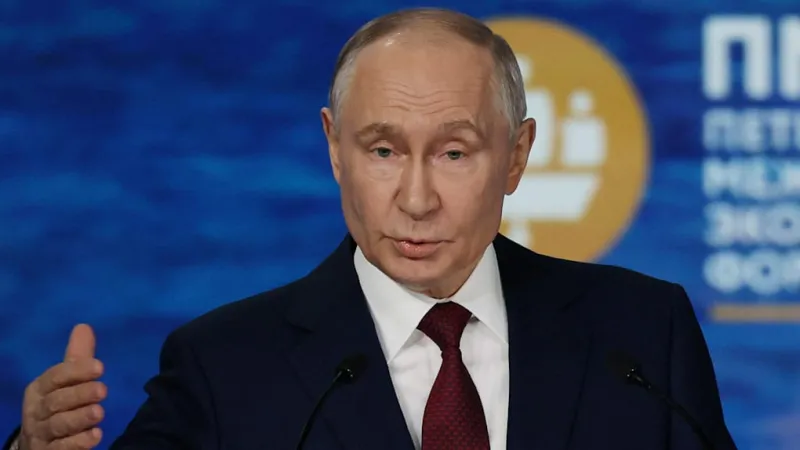
MOSCOW – Russian President Vladimir Putin issued a stark warning yesterday, asserting that Western nations are irrevocably damaging global trust by imposing extensive sanctions following Russia's ongoing military actions in Ukraine. Speaking from the Kremlin, Putin cautioned other states against similar punitive measures, framing the economic restrictions as a breach of international economic norms and a perilous path toward destabilizing global relations.
The address came as a direct response to the comprehensive economic penalties levied by a coalition of Western powers since the full-scale invasion of Ukraine in February 2022. These sanctions, targeting key sectors of the Russian economy, including finance, energy, and defense, aim to curtail Moscow's ability to fund its military operations.
Putin characterized these actions not merely as punitive measures against Russia, but as a broader assault on the principles of open markets and sovereign economic decision-making. He argued that such unilateral steps erode the foundations of mutual respect and predictability essential for international commerce and diplomacy.
“The West's actions, driven by short-sighted political agendas, are systematically dismantling the architecture of trust built over decades,” Putin stated, according to official transcripts. “This approach not only harms Russia but sets a dangerous precedent for any nation that dares to pursue an independent foreign policy.”
The Russian leader highlighted the economic repercussions for countries participating in the sanctions regime, suggesting that their own economies face inflationary pressures and supply chain disruptions. He posited that the long-term cost of isolating a major global economy like Russia would far outweigh any perceived short-term political gains for the sanctioning nations.
Over the past two years, Western sanctions have led to significant shifts in Russia's economic orientation, prompting Moscow to deepen trade ties with non-Western partners, particularly in Asia and the Middle East. This pivot has been presented by the Kremlin as a strategic rebalancing away from what it terms an unreliable Euro-Atlantic system.
However, analysts point to the sustained pressure on Russia's technological and industrial sectors, which still rely on certain Western components and expertise. Despite efforts to promote import substitution, some areas of the Russian economy continue to grapple with the effects of restricted access to global markets and advanced technologies.
The Russian president's rhetoric has often targeted what he perceives as a destabilizing influence from Europe, as seen in previous statements like Putin: European Elites Incite Chaos Amid Black Sea Drone Blast. His latest comments amplify these sentiments, underscoring a growing ideological divide.
Western leaders, including President Donald Trump, maintain that sanctions are a legitimate and necessary tool to hold Russia accountable for its aggression in Ukraine. They argue that these measures are designed to pressure Moscow to cease hostilities and respect international law, not to undermine global trust arbitrarily.
The ongoing conflict in Ukraine, which prompted these measures, continues to see significant developments, including recent reports such as Black Sea Port Rocked by Drone Blast; Azov Attacks Claim Lives. These events continually shape the geopolitical landscape.
Meanwhile, international support for Ukraine remains a contentious issue, with legislative bodies grappling with aid packages, as detailed in reports like House Approves Ukraine Aid, Senate Path Remains Unclear Amid Bipartisan Rift. The efficacy and ethical implications of sanctions continue to be debated among global policymakers and economists.
Putin's warning extends beyond the immediate economic fallout, suggesting a fracturing of the international order where economic leverage is increasingly weaponized. He implied that such actions could lead to a fragmentation of global trade systems and the emergence of parallel economic blocs, reducing overall global stability and prosperity.
This declaration positions Russia as a defender of what it considers a more equitable and sovereign international system, contrasting with a Western-dominated order it views as coercive. The speech likely aims to resonate with countries in the Global South that have expressed reservations about Western-led sanctions and their broader economic implications.
The long-term consequences of this erosion of trust, as articulated by Putin, remain uncertain. However, the rhetoric underscores a persistent and deepening chasm between Russia and Western nations, signaling continued geopolitical tension and economic friction in the years ahead.