 Dodi Irawan
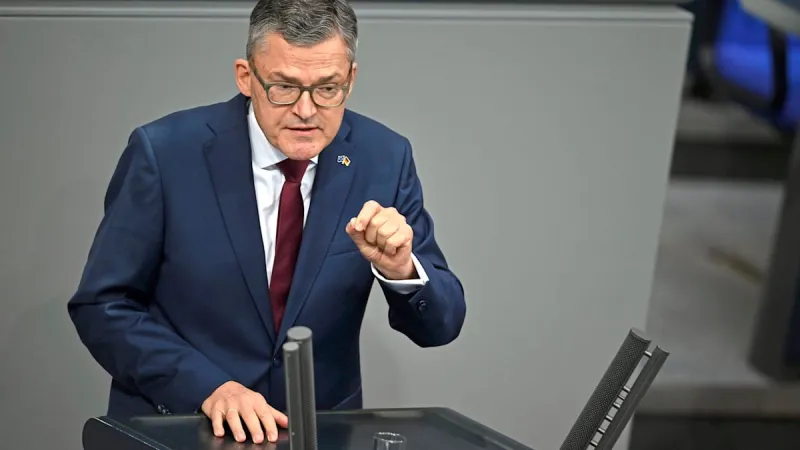
BERLIN – Roderich Kiesewetter, a prominent politician from Germany's Christian Democratic Union (CDU), has issued a forceful warning against entering into direct negotiations with Russia without clearly defined objectives. He asserts that Moscow perceives itself to be at war with Western nations, making any pursuit of peace without robust foundational principles a dangerous illusion.
Kiesewetter underscored his conviction during a recent interview, emphasizing the imperative to fortify Ukraine's defenses and actively counteract Russian attempts to exert influence across Europe. This stance reflects a growing concern among some European policymakers regarding the nature of Russia's strategic ambitions and its perception of the ongoing conflict.
The CDU foreign policy expert maintained that direct discussions with the Kremlin, absent concrete and achievable aims, would ultimately serve to legitimize Russia's aggression rather than fostering genuine stability. His comments arrive amidst persistent international efforts to navigate the complex geopolitical landscape shaped by the prolonged conflict.
He articulated the underlying premise of his caution: Russia views the current geopolitical dynamic not merely as a regional conflict, but as a broader confrontation with the West. This interpretation suggests that Moscow's actions are part of a wider strategic challenge to the existing international order.
Kiesewetter adamantly stated, “Our freedom is more important than an illusory peace with Russia.” This powerful declaration encapsulates the sentiment that any superficial cessation of hostilities would ultimately compromise fundamental democratic values and long-term security.
The politician advocates for a strategy centered on strengthening Ukraine, not only militarily but also economically and institutionally. He believes that a strong, sovereign Ukraine is the most effective bulwark against further Russian expansion and destabilization efforts in Europe.
Efforts to counter Russian influence are multifaceted, extending beyond military aid to encompass cyber security, combating disinformation campaigns, and supporting democratic institutions in nations vulnerable to Moscow's political maneuvering.
This call for strategic clarity comes as international attention remains fixed on the conflict and the prospects for any resolution. Recent reports have indicated that Ukraine Peace Talks Stalled Amid Relentless Conflict, further highlighting the deep divisions and lack of common ground between the belligerents.
Moreover, the geopolitical environment continues to demonstrate significant military posturing. Evidence from Satellite Images Confirm Extensive Russian Buildup Near EU Border indicates a persistent and substantial military presence, underscoring the ongoing tensions that define the region.
Kiesewetter's critique extends to the potential for an ostensibly peaceful agreement to merely mask deeper, unresolved issues. He fears such a scenario could grant Russia time to regroup and reassert its objectives at a later, more advantageous juncture.
The emphasis on robust support for Ukraine aligns with the perspectives of many Western allies who see the nation's resilience as crucial for upholding international law and the principle of national sovereignty.
Political leaders across Europe are continually weighing the delicate balance between diplomatic engagement and firm resolve. The debate centers on how best to safeguard European security interests while also addressing the humanitarian and geopolitical ramifications of the ongoing hostilities.
Kiesewetter's message serves as a reminder that the path to a lasting and equitable peace demands more than just a cessation of direct combat; it requires a fundamental reevaluation of Russia's intentions and a strategic commitment to defending core Western principles.
The German lawmaker's position reinforces a hawkish stance within elements of the CDU, advocating for unwavering support for Ukraine and a cautious, well-defined approach to any future engagement with the Russian Federation. This perspective maintains that concessions made without clear reciprocal benefits risk emboldening authoritarian regimes.
Ultimately, Kiesewetter's intervention underscores the complex challenges facing European leaders as they strive to forge a coherent and effective response to a perceived adversarial state. His warning highlights the necessity of strategic foresight and collective determination in the face of persistent geopolitical uncertainty.