 Edward DP Situmorang
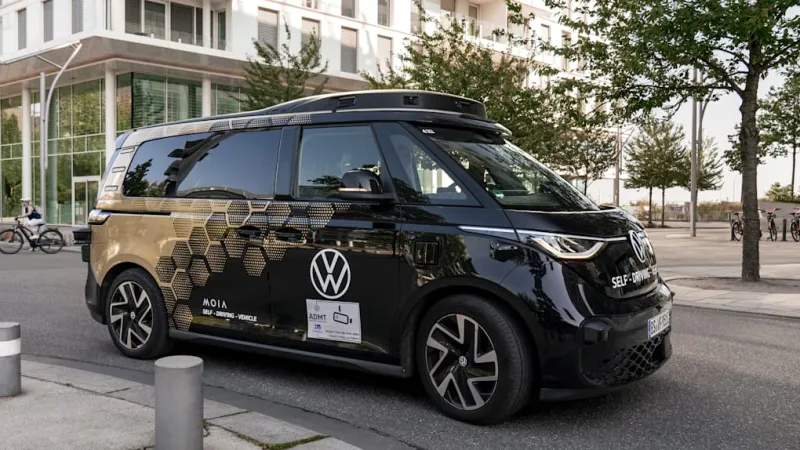
Hamburg, Germany, has commenced a groundbreaking pilot program, introducing autonomous shuttles to its streets for public testing, marking a significant stride in the evolution of urban transportation. Spearheaded by the mobility service Moia, the initiative allows select city residents to experience self-driving buses, albeit with a safety operator present to intervene only in unforeseen circumstances. This forward-looking project garnered praise from Bundesverkehrsminister Patrick Schnieder, who highlighted its potential to foster “better quality of life” for citizens.
The strategic deployment of these driverless vehicles positions Hamburg at the forefront of smart city development and sustainable urban planning. Moia, a subsidiary renowned for its ride-pooling services, leverages this pilot to refine its autonomous technology in real-world scenarios, gathering invaluable data on vehicle performance, passenger experience, and integration with existing traffic infrastructure.
During this pivotal test phase, members of the public participate as test riders, providing crucial feedback that will inform future iterations of the autonomous shuttles. Each vehicle is equipped with sophisticated sensors and AI systems designed to navigate complex urban environments, yet the presence of a human safety driver underscores the program's commitment to passenger security and regulatory compliance.
The role of the safety operator is strictly limited to emergency intervention, ensuring a layer of human oversight as the technology matures. This hybrid approach helps build public trust in autonomous vehicle systems while progressively moving towards fully driverless operation, a critical step in the adoption curve for such transformative technology.
Bundesverkehrsminister Patrick Schnieder lauded the project as a vital component of Germany's broader push for innovative transport solutions. “This project represents a clear path to better quality of life for our communities,” Schnieder stated, emphasizing the potential for reduced traffic congestion, lower emissions, and improved accessibility for residents across urban landscapes.
The deployment of these autonomous shuttles is anticipated to address several pressing urban challenges, from mitigating peak-hour traffic and parking difficulties to providing efficient last-mile connectivity. Moia’s vision extends beyond mere transportation, aiming to create a more integrated and environmentally friendly public transit network.
Germany has emerged as a key player in the global race for autonomous driving technology, with robust research and development initiatives supported by both the public and private sectors. Hamburg's Moia trial serves as a practical demonstration of this commitment, offering a tangible example of advanced driverless technology on public roads.
Despite the promising outlook, the expansion of self-driving buses faces various hurdles, including technological perfection, cybersecurity threats, and the intricate legal and ethical frameworks surrounding autonomous responsibility. Public perception and acceptance remain paramount, necessitating transparent communication and proven safety records.
Globally, major metropolitan areas are exploring similar pilot programs to harness the benefits of autonomous transport. Hamburg's initiative contributes to this worldwide body of knowledge, providing insights into operational efficiencies and the societal impact of integrating autonomous shuttles into daily urban life.
The long-term economic implications of widespread autonomous shuttle adoption could be substantial, potentially reshaping traditional employment sectors and fostering new industries centered on AI, data management, and vehicle maintenance. This transition, while offering new opportunities, also requires careful planning to manage its socioeconomic effects.
Moia itself envisions an expansive future where its autonomous fleet complements existing public transport, offering flexible, on-demand mobility that adapts to real-time urban needs. The current testing in Hamburg is a foundational step toward realizing this ambitious, scalable vision.
For widespread implementation, cities must also consider significant infrastructure adaptations, including smart road networks, enhanced digital communication systems, and dedicated charging stations for electric autonomous shuttles. These investments are crucial for creating an environment conducive to future urban mobility paradigms.
The ongoing trial in Hamburg represents more than just a technological experiment; it is a critical societal venture into a future where urban transport is redefined by intelligence and autonomy. Its success will undoubtedly inform and inspire similar transitions in cities around the world, solidifying the role of autonomous shuttles in creating smarter, more livable urban spaces.