Chandra Wijayanto
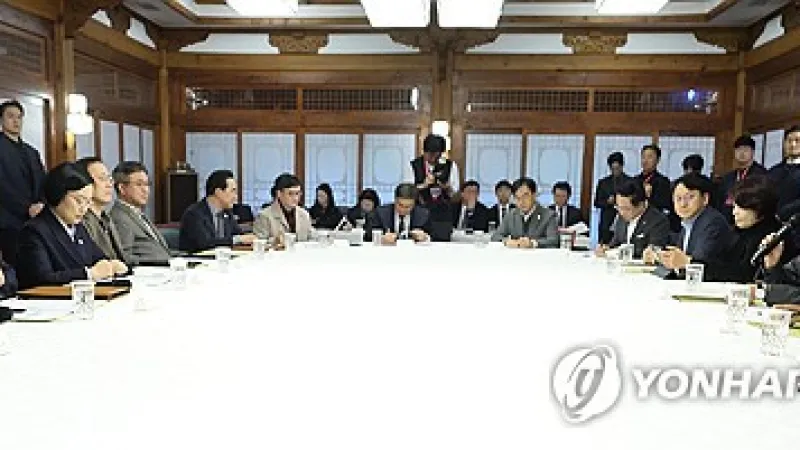
SEOUL – The South Korean government announced on November 8, 2026, its agreement to consider a significant 2 trillion won (approximately $1.5 billion USD) funding package dedicated to enhancing national firefighting efforts. This potential investment underscores a growing commitment to modernizing emergency response infrastructure and improving conditions for fire service personnel across the country.
The agreement signifies a formal acknowledgment at the highest levels of government of the urgent need for substantial investment. While not a final allocation, the consensus to review such a significant sum marks a critical step towards addressing longstanding deficiencies in the national emergency response system.
The proposed funding package directly responds to persistent advocacy from fire departments nationwide for upgraded equipment, advanced training facilities, and improved welfare programs for frontline responders. These demands have intensified following several high-profile incidents that exposed strained resources and operational shortfalls within existing frameworks.
Experts suggest the 2 trillion won could be strategically allocated towards procuring advanced equipment, developing sophisticated emergency simulation centers, integrating advanced drone and robotics units, and establishing comprehensive mental wellness programs for personnel.
Public discussion surrounding firefighter welfare and equipment has gained considerable momentum over the past few years. Indeed, Prime Minister Han Seong-sook previously pledged a comprehensive overhaul of support mechanisms for emergency services. Readers can find more details on her commitments in Seoul PM Han Seong-sook Pledges Overhaul of Firefighter Support.
The Ministry of Public Safety and Security, in conjunction with the Ministry of Economy and Finance, will spearhead the detailed review process. This multi-ministerial approach aims to ensure a holistic assessment of needs and a strategic, efficient allocation of funds across all relevant sectors.
Beyond tangible equipment, a significant portion of the proposed budget is expected to target the holistic welfare of the nations dedicated firefighters. This includes expanding benefits, enhancing retirement packages, and providing critical psychological counseling for those facing stressful and traumatic operational environments.
Investing in intelligent technologies is also a key component of the envisaged overhaul. This could involve integrating artificial intelligence for predictive analytics for incident prevention, developing advanced communication systems for seamless inter-agency coordination, and deploying sophisticated thermal imaging tools.
Public sentiment overwhelmingly favors increased investment in firefighting efforts. Surveys consistently demonstrate high regard for firefighters, with many citizens advocating for improved governmental support to match their unwavering dedication and sacrifices.
This substantial investment could also invigorate the domestic emergency services equipment sector and related industries, fostering job creation and technological innovation within South Korea.
The review process is anticipated to span several months, involving extensive consultations with various stakeholders including fire service unions, public safety experts, and local government officials. A finalized proposal is expected to be presented to the National Assembly for approval in the forthcoming legislative session.
Such an investment reinforces national resilience against both natural disasters and urban emergencies, positioning South Korea at the forefront of modern emergency preparedness in the Asia-Pacific region.