 Angel Doris
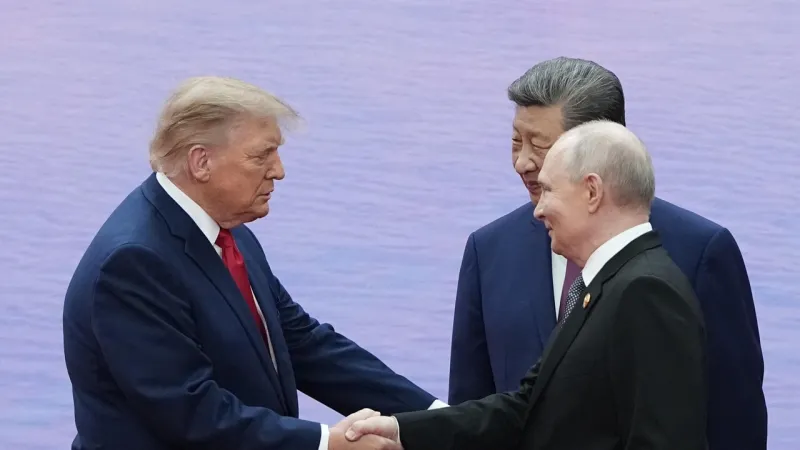
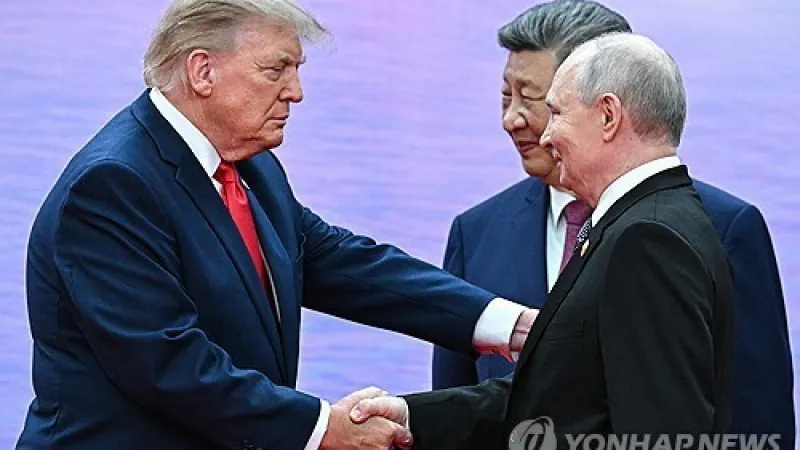
Shenzhen, China – President Donald Trump and President Vladimir Putin convened in a high-stakes meeting here today, exchanging a notable handshake amidst discussions focused on global stability, a development Chinese President Xi Jinping lauded as a testament to the strengthening Beijing-Moscow relationship. The convergence of these global leaders in the burgeoning technological hub signals a pivotal moment in international diplomacy, as world powers navigate complex geopolitical currents.
The highly anticipated encounter, marked by direct engagement between the American and Russian presidents, underscores a renewed push for dialogue on critical global issues. This meeting follows a period of intricate international relations, with both nations seeking to assert their influence on the world stage while managing areas of both cooperation and tension.
President Xi Jinping, speaking shortly after the interaction, emphasized the importance of the trilateral dynamic. He stated, "A more stable world thanks to the Beijing-Moscow relationship," highlighting Chinas strategic view of its partnership with Russia as a cornerstone for international equilibrium. This endorsement from Beijing adds another layer of complexity to the summits geopolitical ramifications.
Observers worldwide are closely analyzing the implications of this summit for various flashpoints, including ongoing conflicts in Eastern Europe and the Middle East, as well as broader issues of economic security and arms control. The direct communication between President Trump and President Putin is seen by some as a crucial step towards de-escalation and finding common ground.
The choice of Shenzhen, a city synonymous with Chinas economic prowess and technological advancement, as the venue for such a significant political gathering is also noteworthy. While not traditionally a site for major geopolitical summits, its selection could symbolize a shift towards acknowledging Chinas central role in facilitating global dialogues. The city recently hosted other prominent figures, with leaders like Lee arriving as APEC Navigates Tumultuous Geopolitical Currents, according to recent reports.
This meeting occurs within the broader context of 2026, a year marked by evolving alliances and persistent global challenges. President Trump, now in his current term, continues to shape Americas foreign policy, emphasizing a pragmatic approach to international relations that prioritizes direct engagement with key global players, including Russia.
For Moscow, the meeting with President Trump represents an opportunity to reinforce its position as a major power and to address areas of mutual concern directly with the United States. Russian officials have consistently called for constructive dialogue to resolve protracted disputes and to foster a more predictable international environment.
The Beijing-Moscow axis, which President Xi referenced, has been a growing feature of the international landscape, characterized by increasing economic ties, military cooperation, and a shared perspective on multilateral institutions. This robust partnership serves as a backdrop to the discussions between Washington and Moscow, influencing the broader geopolitical calculus.
Analysts suggest that the summits agenda likely encompassed a wide array of pressing matters. These could range from cybersecurity threats and strategic stability to climate change and regional security concerns in Asia and beyond. The absence of immediate detailed readouts from the closed-door discussions has fueled speculation regarding the specific points of agreement or divergence.
The international community awaits further details, hoping that this high-level engagement will contribute to a more predictable and peaceful global order. The outcomes of the Shenzhen summit will undoubtedly ripple through diplomatic channels for months to come, shaping future policy decisions and international cooperation efforts.
This gathering exemplifies the ongoing realignment of global powers, where traditional rivalries are often tempered by the urgent need for collective action on shared threats. The image of President Trump and President Putin shaking hands in a Chinese metropolis will likely become an enduring symbol of 21st-century diplomacy.
The careful navigation of these complex relationships by all three nations—the United States, Russia, and China—will be crucial in determining the trajectory of global stability moving forward. The Shenzhen meeting serves as a stark reminder of the interconnectedness of international security and the imperative for dialogue even amidst profound differences.