 Angela Stefani
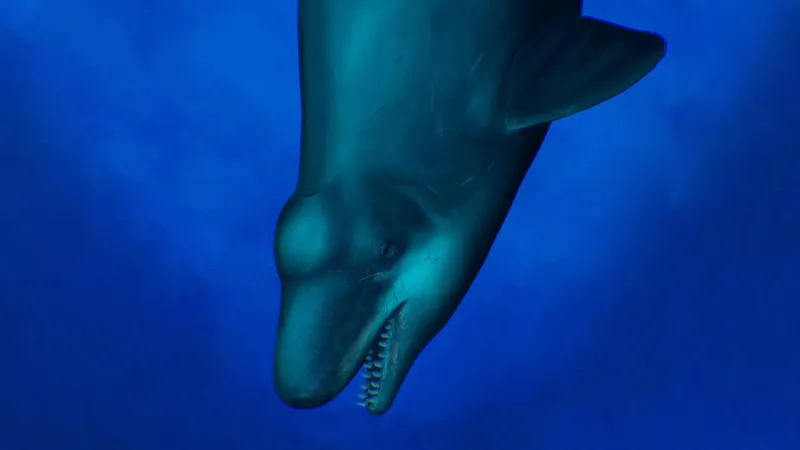
LIMA, Peru -- An extraordinary fossil discovery in Peru has unveiled a 6-million-year-old extinct pygmy sperm whale, Scaphokogia huachafo, possessing a skull so dramatically asymmetrical that scientists now consider it the most crooked-faced mammal ever known. Initially mistaken for post-mortem damage, this bizarre anatomy is believed to represent a sophisticated evolutionary adaptation for specialized seafloor hunting.
Researchers uncovered the fossilized remains of the pygmy sperm whale, estimated to date back roughly six million years, a period within the Miocene epoch. This significant find sheds new light on the diverse and often peculiar evolutionary paths taken by marine mammals.
Upon initial examination, the severely distorted skull presented a perplexing puzzle to the paleontological team. Scientists first hypothesized that the unique curvature and asymmetry were the result of taphonomic processes, meaning damage sustained to the bone after the animal's death and during fossilization.
Subsequent, meticulous analysis, however, revealed that the extreme facial asymmetry was an inherent biological feature of the whale. The specimen exhibits an enormous downward-curving snout alongside a profoundly skewed cranial structure, unlike any other known mammal.
The species has been formally identified as Scaphokogia huachafo. The genus name, Scaphokogia, refers to its relation to modern pygmy sperm whales, while huachafo is a Peruvian slang term for something flashy or pretentious, aptly capturing the whale's unusual appearance.
Paleontologists propose that this highly specialized anatomical feature was not a deformity but a crucial adaptation for survival. They theorize the extreme facial distortion facilitated a unique method of echolocation or suction feeding, enabling the whale to efficiently locate and capture prey dwelling on or within the seafloor.
While some degree of asymmetry is common in modern toothed whales, particularly in their nasal passages to aid echolocation, the extent observed in Scaphokogia huachafo far surpasses anything seen in extant species. This makes the ancient whale a standout in the evolutionary record.
This discovery challenges previous assumptions about the limits of mammalian facial asymmetry and the diverse strategies marine life employed for survival in ancient oceans. It highlights the incredible plasticity of evolution in response to environmental pressures.
Peru's coastal desert regions, particularly the Pisco Formation, are renowned globally for their exceptionally preserved marine mammal fossils. The arid conditions and unique geological layers contribute to the outstanding preservation quality, making the area a treasure trove for paleontological research.
The scientific community has reacted with considerable interest to the revelations surrounding Scaphokogia huachafo. It opens new avenues for understanding the paleoecology of Miocene marine environments and the mechanisms driving extreme morphological adaptations.
Researchers plan further detailed studies using advanced imaging techniques to reconstruct the soft tissues and functional morphology of the whale's head. This will provide deeper insights into how the extreme asymmetry influenced its sensory perception, feeding behavior, and overall lifestyle.
Ultimately, the discovery of this ancient whale underscores the dynamic nature of life on Earth and the continuous process of adaptation that has shaped species over millions of years. It serves as a compelling testament to the ocean's ancient biodiversity and its capacity for producing truly extraordinary creatures.