 Chandra Wijayanto
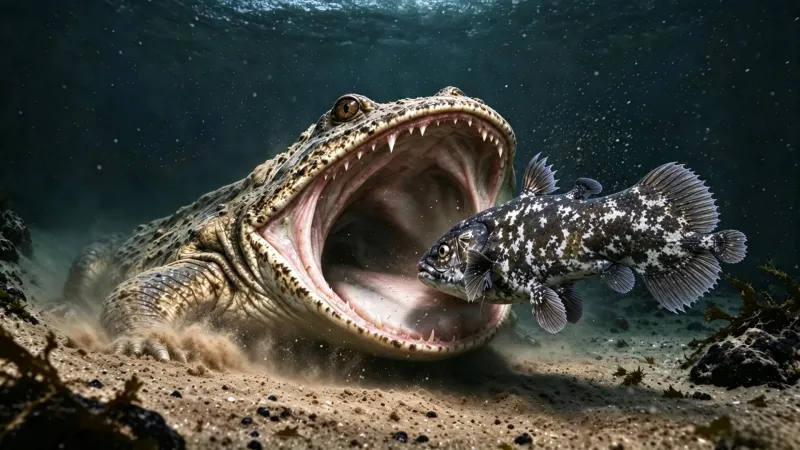
BEIJING – Scientists have unearthed 237-million-year-old fossils in China, revealing a bizarre, heavily armored amphibian that roamed ancient oceans, fundamentally challenging the long-held scientific consensus that amphibians are incapable of fully adapting to saltwater environments. This groundbreaking discovery suggests the salamander-sized creature may represent the earliest known amphibian to lead an entirely marine existence, rewriting a significant chapter in evolutionary biology.
The ancient specimen, yet to be formally named, showcases remarkable adaptation with its robust armor plating, a feature atypical of modern amphibians which are primarily freshwater or terrestrial. Its existence during the Triassic period offers critical insights into the diverse ecological niches occupied by life forms following the Permian-Triassic extinction event, the greatest mass extinction in Earth's history.
Modern amphibians, including frogs, toads, and salamanders, possess highly permeable skin that makes them extremely vulnerable to osmotic stress in saline conditions, effectively barring them from saltwater. The discovery of this Triassic marine amphibian forces a reevaluation of the lineage's physiological limitations and evolutionary pathways.
Measuring approximately the size of a large modern salamander, the newly identified species was notably equipped with substantial dermal armor. This protective integument likely served as a defense mechanism against contemporary marine predators and potentially aided in buoyancy or osmoregulation in the high-salinity waters of the ancient Tethys Ocean.
The fossils were meticulously excavated from geological strata within China, a region renowned for its rich paleontological record. This specific site has previously yielded a wealth of Mesozoic marine reptiles and other prehistoric life, making it a crucial locale for understanding ancient ecosystems.
Paleontologists worldwide are now grappling with the implications of this find, which upends conventional wisdom about amphibian evolution. Prior to this, the notion of a fully marine amphibian was largely confined to theoretical discussions or speculative interpretations of fragmentary fossil evidence.
This revelation parallels other significant paleontological finds that have reshaped our understanding of prehistoric life. For instance, the recent Prehistoric Rodent Discovery Rewrites Evolutionary Timeline by illuminating unexpected adaptive radiations. Such discoveries underscore the dynamic and often surprising nature of Earth's ancient biodiversity.
The Triassic period, spanning from approximately 252 to 201 million years ago, was a time of significant environmental shifts and the re-diversification of life after the Permian extinction. Warm global temperatures and extensive shallow seas would have provided various habitats for marine life, fostering unique evolutionary experiments.
Researchers now face the complex task of determining the precise physiological mechanisms that allowed this armored sea amphibian to thrive in an oceanic environment. Further analysis will involve examining its bone structure, isotopic signatures, and comparative anatomy to ascertain its diet, movement, and osmoregulatory capabilities.
The existence of such a specialized marine amphibian suggests a greater degree of plasticity in the early evolutionary history of amphibians than previously recognized. It opens new avenues for exploring convergent evolution and the potential for life to adapt to seemingly inhospitable environments through novel biological strategies.
This extraordinary creature stands as a testament to the enduring power of natural selection and the vast, unexplored chapters of life's history that continue to emerge from the fossil record, reminding us that past life forms often defy our contemporary biological classifications.