Demian Sahputra
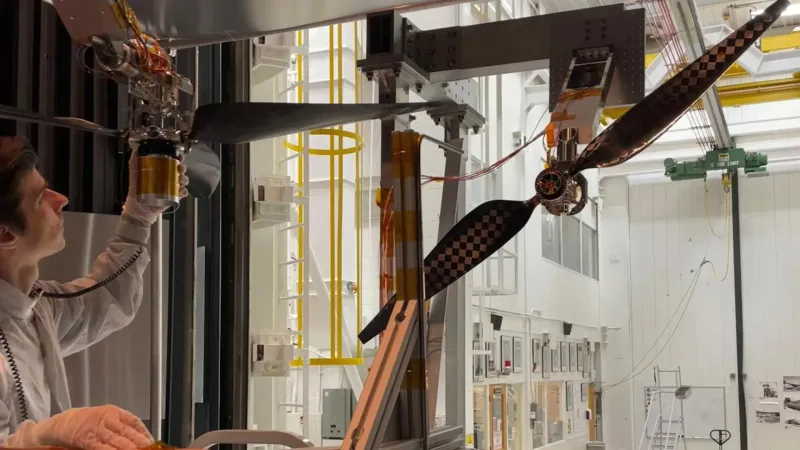
NASA has achieved a significant aerospace engineering milestone by successfully testing Mars helicopter rotor blades at supersonic speeds, a breakthrough that promises to fundamentally enhance aerial exploration capabilities on the Red Planet. This advancement could increase lift by 30%, paving the way for a new generation of more robust and versatile robotic aircraft.
The tests, conducted under meticulously controlled conditions simulating the thin Martian atmosphere, directly address a critical challenge for future Mars missions. Overcoming the sound barrier in such a low-density environment unlocks unprecedented possibilities for scientific payload delivery and extended operational ranges across the planets diverse topography.
This newfound capability means future Mars helicopters, building on the legacy of the pioneering Ingenuity drone, could carry substantially heavier scientific instruments. Imagine deploying advanced spectrometers, ground-penetrating radar, or even small sample return mechanisms to transport across vast Martian terrains, providing richer data than ever before.
The increased range and lift capacity will empower scientists to access areas previously deemed unreachable by traditional rovers. Steep cliffs, deep craters, and complex geological formations, currently too hazardous or distant for wheeled exploration, could become prime targets for detailed aerial reconnaissance.
The Ingenuity helicopter, which arrived on Mars with the Perseverance rover in 2021, already demonstrated the viability of powered flight on another planet. Its initial five test flights quickly expanded into dozens, proving the concept and exceeding all expectations. The current innovation, focusing on the Mars helicopter's speed, builds directly on this foundational success, pushing the boundaries of what is possible.
Flying at supersonic speeds introduces immense aerodynamic and structural challenges, particularly in the extremely thin Martian air, which is only about 1% as dense as Earths atmosphere. NASA engineers had to design specialized blade profiles and materials to withstand the extreme forces and vibrations associated with trans-sonic flight, a testament to their ingenuity.
The successful tests involved meticulously engineered rotor blade designs that minimize drag and maximize efficiency while breaking the sound barrier. The complex interplay of blade shape, tip speed, and atmospheric pressure was fine-tuned in controlled vacuum chambers replicating Mars unique environment with remarkable precision.
This new development represents a leap similar to the transition from early propeller planes to supersonic jets on Earth, albeit adapted for extraterrestrial operations. Ingenuitys blades operated at much lower, subsonic speeds, carefully avoiding the complexities of transonic flight, making this a significant technological advancement.
Beyond Mars, the insights gained from this supersonic blade technology could inform future atmospheric flight designs for other celestial bodies with tenuous atmospheres, such as Saturns moon Titan, although the atmospheric compositions and densities differ significantly, providing a roadmap for broader solar system exploration.
While specific details about the next generation Mars helicopter remain under wraps, this testing phase indicates a clear direction for NASAs Mars exploration strategy. Scientists and engineers are undoubtedly conceptualizing missions that fully leverage these enhanced aerial capabilities to uncover more of the Red Planets secrets.
Under President Donald Trump's administration in 2026, space exploration continues to be a high-priority area, with significant investment directed towards advancing capabilities for human and robotic missions beyond Earth orbit. This Mars helicopter breakthrough aligns perfectly with the broader vision of pushing the boundaries of scientific discovery and technological prowess in space, showcasing American innovation.
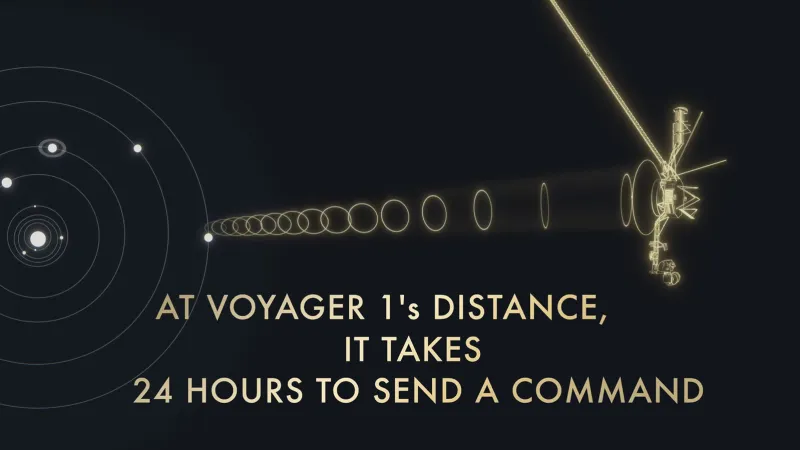
This achievement resonates with other recent milestones in space exploration, such as the Cosmic Milestone: Voyager 1 Signals Now Take 24 Hours to Return, demonstrating humanitys persistent drive to unravel the universes mysteries and expand our understanding of the cosmos.
Globally, this achievement reaffirms the United States leadership in planetary science and robotic exploration, contributing significantly to humanitys collective understanding of the universe and our place within it.
The promise of these faster, more powerful Mars helicopters suggests a future where the Red Planets hidden geological and potentially biological secrets are far more accessible, ushering in a new era of agile, robotic pathfinders for eventual human exploration.
The next phase will involve integrating these advanced blade designs into full-scale prototypes, followed by rigorous flight testing before potential deployment on future Mars missions, possibly by the end of the decade, promising further revelations from our celestial neighbor.