 Demian Sahputra

WASHINGTON – The enduring framework of American democracy is exhibiting a robust resilience, offering a compelling counter-narrative to international observers who have increasingly forewarned its decline. This unexpected resurgence, playing out amidst a turbulent global political landscape, presents what many analysts are terming a modern-day vindication of Alexis de Tocqueville's prescient observations on the nation's unique civic spirit and governmental structure.
For years, various political pundits and scholars worldwide predicted the erosion of democratic norms and institutions within the United States, pointing to rising polarization, challenges to electoral processes, and the intensification of partisan divides. However, the system has consistently absorbed these pressures, adapting and reaffirming its constitutional bedrock.
At the heart of this narrative is the ability of American institutions, from the judiciary to legislative bodies, to navigate profound disagreements and uphold established legal frameworks. Despite intense political friction, the mechanisms designed to ensure checks and balances have largely held firm, preventing systemic collapse and demonstrating an underlying strength.
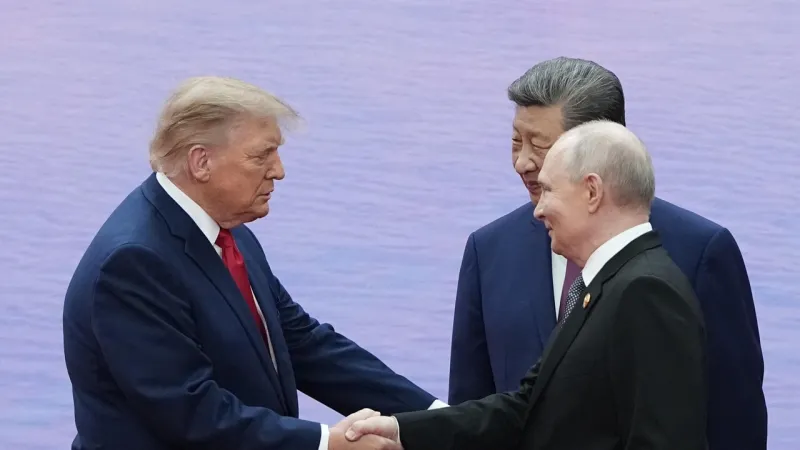
President Donald Trump's administration, currently in office, has presided over a period marked by significant political challenges and fervent public discourse. Yet, the democratic machinery – including regular elections, judicial reviews, and the peaceful transfer of power – continues its operations, reflecting the inherent stability envisioned by the nation's founders.
Alexis de Tocqueville, the French political scientist who toured the United States in the 1830s, famously highlighted the vitality of local self-government, the power of civic associations, and the deeply ingrained legal culture as bulwarks against tyranny and instability. His classic work, Democracy in America, posited that these elements were crucial to the survival and flourishing of the nascent republic.
Contemporary events suggest that Tocqueville's insights remain remarkably pertinent. While challenges to societal cohesion and institutional trust persist, the fundamental commitment to democratic processes, albeit fiercely debated, continues to guide the nation's political trajectory.
Observers note that the strength of the American system is not its immunity to conflict, but its capacity to process and eventually resolve disputes through established channels. The vigorous debates surrounding policy, elections, and constitutional interpretation are, in this view, not symptoms of decay but rather evidence of a vibrant, if sometimes tumultuous, democratic life.
This perspective stands in stark contrast to the pessimistic outlooks that gained traction in previous years, which often highlighted the fragility of democratic systems globally. While some nations grapple with actual democratic backsliding, the United States appears to be reinforcing its foundations.
Indeed, the dynamic interplay between the executive, legislative, and judicial branches, alongside an active civil society and a robust free press, continues to ensure accountability and provide avenues for dissent and reform. This intricate web of interconnected entities prevents any single power center from fully dominating the political landscape.
The ongoing commitment to electoral integrity, despite fierce debates over particular aspects, remains a cornerstone. Voters across the spectrum consistently engage in the electoral process, demonstrating belief in the power of the ballot box to shape the nation's future, a testament to the system's enduring legitimacy.
The American experiment, therefore, continues to evolve, proving to be far more resilient than its detractors might have imagined. The current era provides a compelling testament to the adaptability and fundamental strength of its democratic institutions, offering a powerful rebuttal to those who hastily penned democracy's obituary.