 Chandra Wijayanto

Italy annually commemorates Festa della Repubblica, or Republic Day, on June 2, a national holiday marking the pivotal 1946 institutional referendum. This historic vote saw Italians choose a republican form of government over the existing monarchy, simultaneously electing the Constituent Assembly tasked with drafting the nation's new constitution.
The referendum represented a profound turning point in Italian history, formally ending centuries of monarchical rule under the House of Savoy and ushering in a new democratic era. Following two decades of fascist dictatorship and the devastation of World War II, the nation stood at a crossroads, determining its future political identity.
Citizens faced a dual ballot on that momentous day. The first question asked whether Italy should remain a monarchy or become a republic. The second allowed them to elect the members of the Constituent Assembly, which would be responsible for crafting the fundamental laws of the nascent republic.
The decision to hold a referendum arose from complex post-war political dynamics. The monarchy, particularly King Victor Emmanuel III, faced widespread discredit for its complicity with Benito Mussolini's fascist regime and its role in leading Italy into World War II. Public sentiment increasingly favored a radical break from the past.
Crucially, the 1946 referendum marked the first time Italian women exercised their right to vote in a national election. Their participation was a monumental step toward universal suffrage and played a significant role in shaping the outcome, underscoring the broad societal shift occurring across the peninsula.
The voting results, announced on June 10, revealed a clear victory for the republican cause, with approximately 54 percent of voters supporting the republic. Geographically, a notable divide emerged, with the northern regions predominantly voting for a republic and the southern regions leaning toward the monarchy.
Despite the contested nature of some results, particularly from monarchist factions, the Court of Cassation officially proclaimed the Italian Republic. King Umberto II, who had only ascended to the throne a month prior, departed the country on June 13, effectively ending the Savoy dynasty's reign.
The newly elected Constituent Assembly, comprising diverse political figures, then embarked on the arduous task of drafting Italy's republican constitution. Their work culminated in the approval of the Constitution of the Italian Republic in December 1947, which came into effect on January 1, 1948.
The inaugural Festa della Repubblica was celebrated on June 2, 1947, a year after the transformative vote. Since then, the day has evolved into a national celebration characterized by parades, ceremonies, and reflections on the principles of democracy, liberty, and national unity.
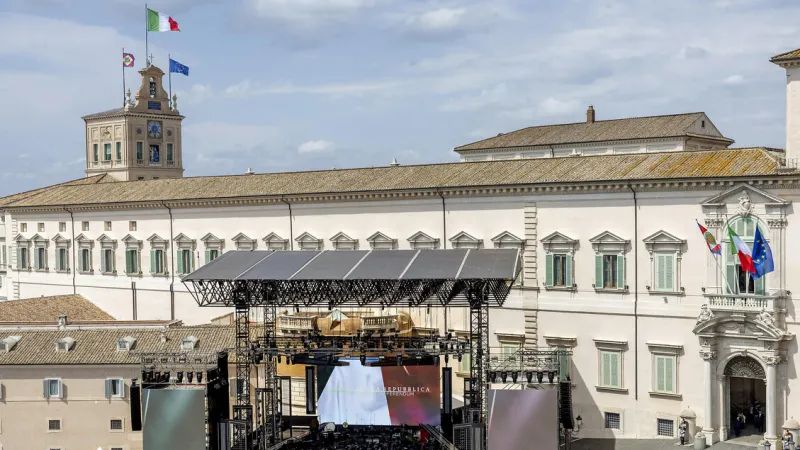
Today, the primary celebration occurs in Rome, featuring a grand military parade along the Via dei Fori Imperiali, culminating at the Altare della Patria. The President of the Italian Republic typically presides over the ceremony, placing a wreath at the Tomb of the Unknown Soldier.
The Festa della Repubblica serves as a powerful reminder of Italy's journey from a monarchy scarred by war and dictatorship to a vibrant parliamentary republic. It celebrates not just a date, but the collective will of a people to redefine their national identity and embrace democratic governance.
Historians and political scientists frequently emphasize the extraordinary resilience demonstrated by the Italian populace in rebuilding their nation both physically and politically in the immediate post-war period. The June 2, 1946, vote laid the groundwork for modern Italy's institutional framework.
The contributions of women to this foundational moment are increasingly recognized. Recent initiatives, such as the Italian Exhibition Honors Women Who Forged Republic, Redefining Power, highlight the often-overlooked yet critical roles women played in advocating for democracy and shaping the new republic. Similarly, Nationwide Screenings Honor Women Who Forged the Italian Republic further underscore this vital historical revision.
The principles enshrined in the 1948 Constitution—including social justice, labor rights, and popular sovereignty—continue to guide Italian society and its legal system. These tenets are direct outcomes of the robust debates and consensus-building efforts within the Constituent Assembly.
As Italy observes Festa della Repubblica each year, it reaffirms its commitment to democratic ideals and the memory of those who participated in that momentous decision. The day stands as a testament to the power of citizen participation in shaping a nation's destiny.