 Debby Wijaya
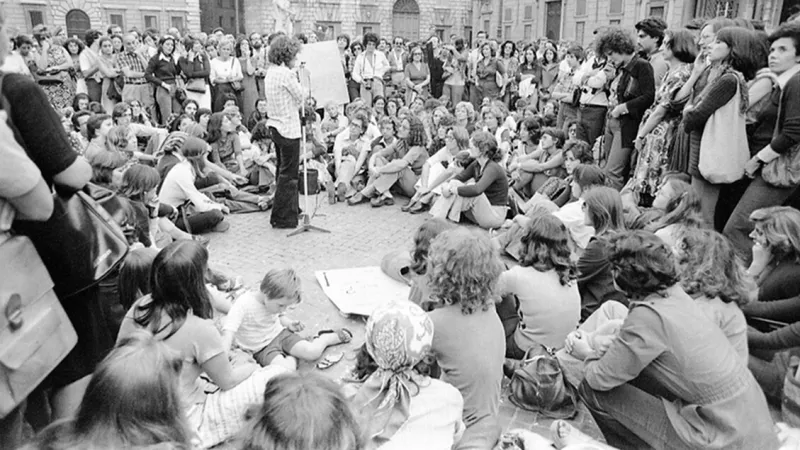
Rome – Avvocata Manente recently offered incisive commentary on a photograph from the acclaimed exhibition "Le donne della Repubblica," or The Women of the Republic, sparking renewed discussion on the profound yet often understated role of women in shaping the Italian nation and advocating for a revolutionary, non-hierarchical approach to societal development.
The exhibition itself serves as a powerful historical narrative, meticulously documenting the contributions of women who were instrumental in the formative years of the Italian Republic. It highlights their political activism, social reforms, and cultural impact during a pivotal era for the nation.
Through a compelling array of archival photographs, documents, and personal accounts, "The Women of the Republic" endeavors to bring these often-unsung heroines to the forefront of national memory, ensuring their sacrifices and achievements are duly recognized.
The widespread interest in the exhibition underscores a national desire to revisit and understand this critical period. Complementing the physical display, Nationwide Screenings Honor Women Who Forged the Italian Republic have further amplified its message, bringing its historical insights to broader audiences across Italy.
Manente’s reflections specifically centered on the concept of a womens revolution without hierarchies. She emphasized that the enduring impact of these women stemmed not from traditional power structures, but from networks of solidarity, mutual support, and collective action.
This perspective challenges conventional notions of leadership and influence, proposing that significant societal shifts can arise from collaborative, decentralized efforts rather than top-down directives. It suggests a more organic and inclusive model of progress.
For Manente, this historical precedent offers a vital blueprint for contemporary movements seeking equitable representation and social justice. The idea of a movement in "circolo," or in a circle, implies a horizontal, rather than vertical, distribution of power and voice.
The women who helped build the Republic often did so against immense odds, fighting for basic rights such as suffrage, access to education, and professional equality in a society still grappling with post-war recovery and entrenched patriarchal norms.
Their contributions extended far beyond merely political participation; they were crucial in rebuilding communities, establishing social services, and advocating for a more just and compassionate society from the ground up.
The exhibition powerfully illustrates the resilience and foresight of these pioneers, whose vision laid many of the foundations for modern Italian democratic values and institutions.
Today, discussions about women in leadership, gender parity, and inclusive governance continue to echo the spirit of these early revolutionaries. The challenges may have evolved, but the underlying drive for equality persists.
This Italian narrative resonates with global conversations around womens empowerment, where female leaders and activists increasingly champion models of collaboration and shared authority over traditional hierarchical power.
By celebrating these historical figures, "The Women of the Republic" exhibition and Manente's insights aim to inspire current and future generations of women to pursue leadership roles and societal change with renewed conviction.
The notion of a revolution without hierarchies implicitly critiques established systems, urging a reevaluation of how power is accumulated, exercised, and distributed within both political and social spheres.
It suggests that true success in societal transformation might not always be measured by individual ascent within a hierarchy, but by the collective upliftment and empowerment of all members of a community.
The commentary by Avvocata Manente serves to open a crucial dialogue, inviting citizens to reflect on the nature of progress and the essential role of diverse voices in shaping a nations destiny.
Her remarks are not merely historical reflection but an implicit call to action, encouraging a reimagining of how societal structures can be designed to foster greater equity and participation.
The exhibition and its subsequent analyses reinforce an enduring vision: that the pursuit of justice and equality is a continuous journey, significantly enriched by the perspectives and leadership styles often cultivated by women outside of traditional power frameworks.
Ultimately, "Le donne della Repubblica," illuminated by voices like Manente's, stands as a testament to the powerful, transformative force of women, reminding us that true progress often blossoms from collaboration, not command.