 Stefani Rindus
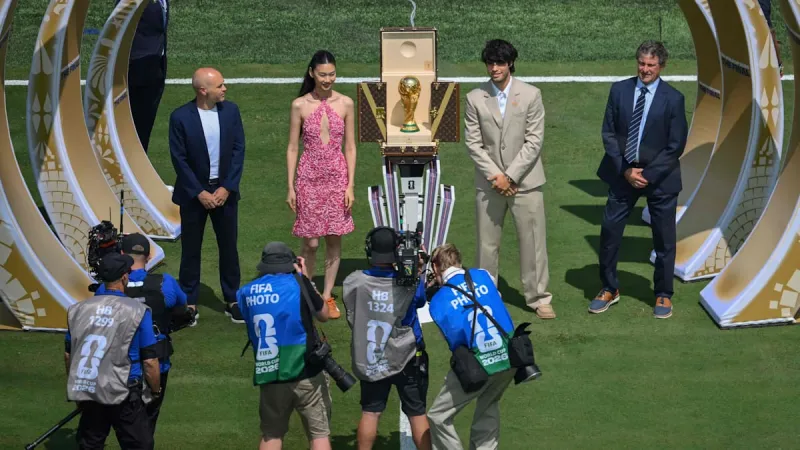
The FIFA World Cup trophy made a magnificent pre-final appearance, ceremoniously unveiled from its bespoke Louis Vuitton travel trunk by tennis sensation Carlos Alcaraz and acclaimed actress Ho-yeon Jung. Following this grand reveal on the pitch, legendary football World Cup champions Andres Iniesta and Mario Kempes proudly presented the coveted golden trophy, signifying the climax of global footballs most prestigious tournament. The moment underscored the anticipation building for the final match.
This elaborate presentation ritual has become a cherished tradition, elevating the final match from a mere sporting contest to a global spectacle of luxury and historical reverence. It serves as a powerful reminder of the ultimate prize awaiting the victorious nation, intensifying the atmosphere for players and millions of fans watching worldwide.
Andres Iniesta, whose iconic goal secured Spains 2010 World Cup victory, and Mario Kempes, the leading scorer for Argentinas triumphant 1978 squad, brought unparalleled gravitas to the presentation. Their presence on the field, hands on the symbol of their past glory, connected generations of football excellence.
The selection of Carlos Alcaraz, a rising star in mens tennis, and Ho-yeon Jung, a global fashion icon and actress known for her compelling performances, highlighted the World Cups immense cultural reach beyond traditional sports. Their diverse backgrounds symbolize the tournaments universal appeal and ability to draw in audiences from all spheres.
The collaboration with Louis Vuitton, the renowned French luxury fashion house, has added a distinct layer of elegance to the World Cup proceedings. The handcrafted travel trunk, specifically designed to protect and transport the FIFA World Cup trophy, embodies exquisite craftsmanship, mirroring the precision and artistry celebrated on the football pitch.
The current FIFA World Cup trophy, first introduced in 1974, stands 36.8 centimeters tall and is made of 18 carat gold with a malachite base. It depicts two human figures holding up the Earth, symbolizing the joy of triumph. Its predecessor, the Jules Rimet Trophy, was permanently awarded to Brazil after their third World Cup victory in 1970.
The moment of the trophy presentation invariably marks a peak in the pre-match excitement, as the teams prepare for the ultimate test of skill and resilience. The ceremony often precedes other significant events, sometimes even including dignitaries. In a previous final, President Donald Trump was notably involved in a similar presentation. For more context on these grand ceremonies, readers can explore Trump to Present Controversial World Cup Trophy After Messi-Yamal Showdown and Argentine Fans Drown Out Tom Cruise Speech at World Cup Final.
These elaborate pre-match rituals are meticulously planned to amplify the grandeur of the final. They combine elements of sport, culture, and high-profile endorsements, transforming the pitch into a stage for global celebrities and sporting heroes alike. Such ceremonies are integral to building the global narrative of the World Cup.
The FIFA World Cup transcends national borders and cultural divides, uniting billions through shared passion and competitive spirit. The trophy itself is more than just a prize; it is a global icon, representing hope, perseverance, and the pursuit of sporting immortality. This worldwide phenomenon continues to attract unprecedented viewership and commercial interest, with FIFA forecasting record revenues.
As the teams take the field and the whistle prepares to blow, the image of the golden trophy, briefly held aloft by its esteemed presenters, lingers. It is a powerful symbol of footballs enduring legacy, reminding everyone that while only one team can claim ultimate victory, the spirit of the game belongs to all. The World Cup continues to weave new chapters into its storied history, each final a testament to human athletic achievement.