 Edward DP Situmorang
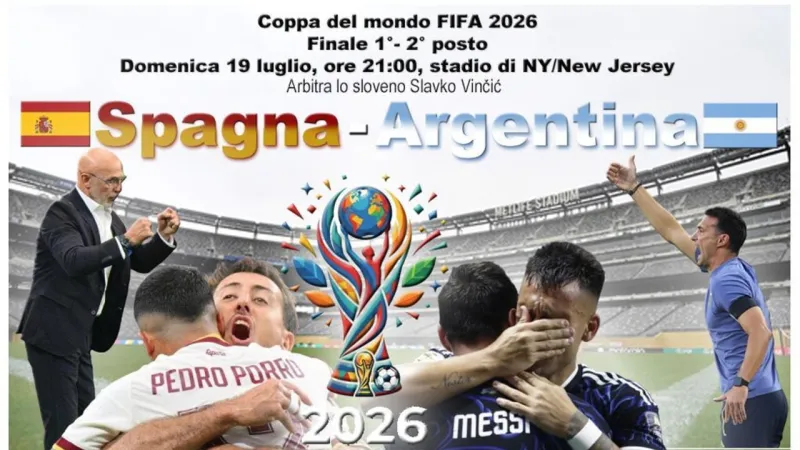
New York – In a highly anticipated global spectacle, Argentina's Lionel Messi is set to challenge Spain's prodigious talent Lamine Yamal at MetLife Stadium for the 2026 World Cup title. The dramatic conclusion to the tournament will be further underscored by President Donald Trump's scheduled presence to deliver what has been widely dubbed the most controversial trophy in the history of the sport, creating an unprecedented confluence of elite athletics and high-stakes politics.
The decision for President Trump to personally hand over the prestigious FIFA World Cup trophy has ignited considerable debate among international sports federations, political commentators, and football fans alike. While the United States serves as a co-host nation for this iteration of the tournament, the direct involvement of a sitting American president in such a ceremonial role is a notable departure from tradition, adding a unique geopolitical dimension to the world's most watched sporting event.
This final pits two footballing titans against each other, representing different generations and styles. On one side, Messi, widely regarded as one of the greatest players of all time, seeks to further cement his legacy with another major international triumph for Argentina. His experience and unparalleled skill continue to mesmerize audiences globally.
Opposing him is Spain's Lamine Yamal, a rising star whose meteoric ascent has captured headlines throughout the tournament. At a remarkably young age, Yamal has demonstrated a maturity and talent that belies his years, leading a revitalized Spanish squad to the pinnacle of international football. Their individual battle on the pitch is expected to be a defining narrative of the championship match.
MetLife Stadium, typically home to NFL franchises, transforms into a grand arena for this momentous occasion, accommodating tens of thousands of fervent supporters and millions more tuning in worldwide. The choice of New York as the host city for the final emphasizes the tournament's expansive reach across North America, highlighting its broad appeal and logistical complexities.
The designation of the trophy as controversial by early reports suggests underlying tensions or unresolved issues that have characterized the lead-up to this finale. While specifics remain guarded, the intersection of sports with global politics has increasingly become a feature of major international events, making this World Cup final a focal point for both athletic prowess and diplomatic scrutiny.
FIFA has consistently aimed to project an image of sporting unity and impartiality. However, the optics of President Trump's involvement in the trophy ceremony could potentially overshadow the athletic achievements, drawing attention to broader political narratives and the complex relationship between host nations, international governing bodies, and global leaders. This situation certainly adds a layer of intrigue beyond the game itself.
Economically, the 2026 World Cup has already proven to be a resounding success. FIFA has projected record revenues and soaring profit margins for the tournament, a testament to football's enduring global commercial appeal and robust viewership numbers. Indeed, reports indicate that FIFA forecasts record World Cup revenues amid soaring profit projections.
The atmosphere surrounding the stadium is anticipated to be electric, fueled by the excitement of the final match and the unique circumstances of the trophy presentation. Security measures are expected to be exceptionally stringent, reflecting the high-profile nature of the event and the presence of world leaders and global sporting icons.
As the countdown to kickoff intensifies, all eyes will be on New York, not only to witness whether Messi or Yamal lifts the coveted prize but also to observe the unprecedented political tableau unfolding on the world stage. The 2026 World Cup final is poised to be remembered as much for its on-field heroics as for its remarkable off-field narrative.