 Angel Doris
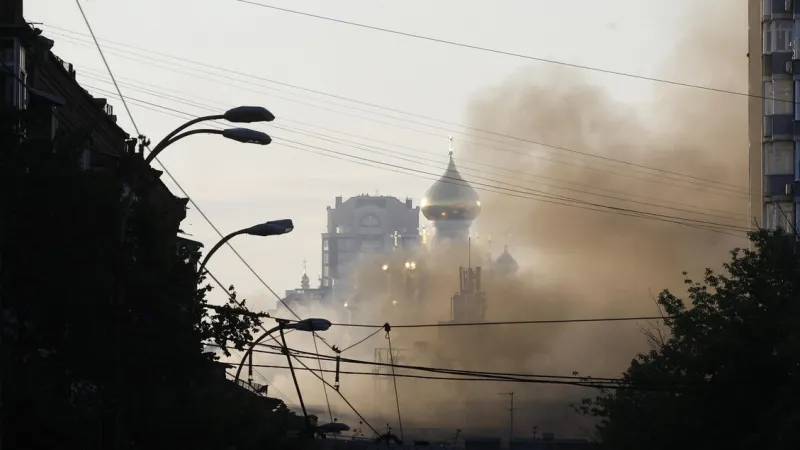
A sweeping missile and drone assault targeted multiple Ukrainian cities, including the capital, Kyiv, early this morning, resulting in at least six fatalities and dozens wounded. The coordinated attacks plunged parts of Kyiv into darkness as critical infrastructure sustained heavy damage, igniting fires and prompting an immediate emergency response across the nation. Concurrently, Russian authorities reported a strike on the city of Kursk, signaling an escalation in cross-border hostilities.
The widespread attacks on Ukraine represent a severe blow to civilian life and essential services. Emergency crews rapidly deployed to battle blazes and rescue efforts commenced in affected areas, working under challenging conditions exacerbated by power outages.
In Kyiv, residents awoke to the sound of explosions, with debris littering streets and residential buildings damaged. City officials confirmed power outages affecting numerous districts, prompting concerns about heating and water supply as winter approaches.
The intensity of the barrage underscored the persistent vulnerability of Ukrainian urban centers to aerial assaults. Civilian casualties mounted as medical services scrambled to treat the injured, some critically, across various impact zones.
Beyond the capital, reports indicated strikes in other regions of Ukraine, further straining emergency resources and civilian morale. The full extent of the damage across the country is still being assessed, but initial reports suggest significant destruction to both energy facilities and residential areas.
Authorities urged citizens to remain in shelters, and air raid sirens blared for hours as defense systems attempted to intercept incoming projectiles. The scale of the coordinated Ukraine missile attacks highlights a continued strategy of targeting civilian infrastructure.
This latest wave of attacks follows a pattern of intense shelling and aerial bombardments that have characterized the ongoing conflict. The targeting of energy grids in particular aims to destabilize daily life and disrupt essential services.
In a development reflecting the reciprocal nature of the conflict, the Russian city of Kursk also experienced an attack. Details regarding the extent of damage or casualties in Kursk remain sparse, but the incident adds another layer to the complex and dangerous security landscape in the region.
International observers continue to monitor the situation closely, expressing deep concern over the escalating violence and the mounting civilian toll. The humanitarian impact of such widespread infrastructure damage, particularly ahead of colder months, is expected to be profound.
As clean-up operations commence and assessments unfold, the immediate focus remains on humanitarian aid and restoring essential services to the millions affected by the severe Ukraine missile attacks.