 Dodi Irawan
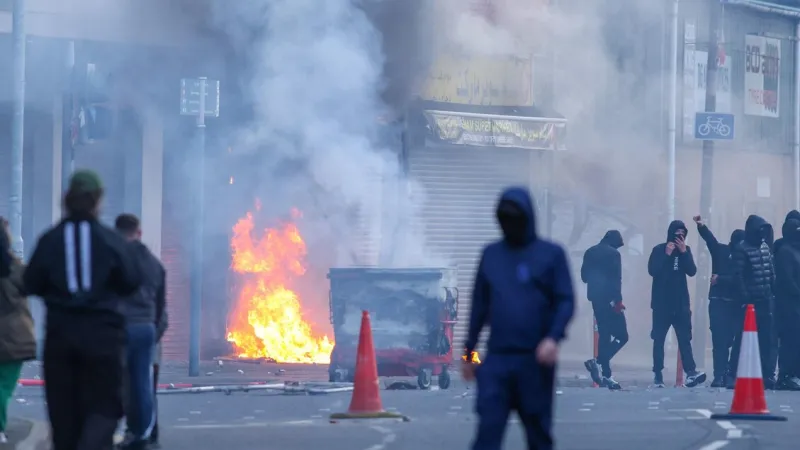
Belfast, Northern Ireland – Anti-migrant groups unleashed a wave of violent disorder on Tuesday, June 9, 2026, igniting fears of a resurgence of sectarian-style tensions with a reported 'foreigner hunt' across parts of the city. These disturbances, spearheaded by organized anti-immigration elements, have propelled a new form of civil unrest into the foreground of Northern Irish society, challenging its long-held identity as a beacon of acceptance.
The widespread unrest saw groups targeting individuals perceived as foreign, marking a significant escalation from previous demonstrations. Eyewitness accounts and preliminary police reports indicate a calculated effort to provoke fear and division within communities already grappling with complex socio-economic challenges.
This alarming development draws unsettling parallels to the historic period known as the Troubles, though the motivations behind the current turmoil represent a stark divergence. Whereas past conflicts primarily centered on national identity and political allegiance, the contemporary friction is explicitly directed against migrant communities.
Northern Ireland, particularly Belfast, has historically been characterized by both deep divisions and remarkable resilience. Its capacity for reconciliation has often been highlighted, with many viewing the region as a symbol of progress following decades of conflict. The recent anti-migrant actions threaten to unravel years of painstaking peacebuilding.
Observers note that the anti-migrant sentiment is not isolated to Northern Ireland. Across Europe, populist movements have increasingly capitalized on anxieties surrounding immigration, contributing to a rise in xenophobic rhetoric and, in some cases, violence. For instance, in other parts of Europe, new political parties focused on remigration have gained traction, reflecting a broader continental shift.
Local authorities in Belfast are confronting a delicate situation, balancing the need to maintain public order with safeguarding the rights and safety of all residents. Police forces were deployed to de-escalate flashpoints, though specific details on arrests and injuries remain under active investigation.
The underlying causes of this intensified anti-migrant unrest are multifaceted. Economic anxieties, housing shortages, and a perceived strain on public services are often cited by those who express anti-immigrant views. These grievances are frequently amplified by social media, which can serve as a powerful conduit for disinformation and radicalization.
Civic leaders and community representatives have swiftly condemned the violence, calling for calm and unity. They emphasize the importance of protecting vulnerable communities and upholding the principles of inclusivity that many believe define modern Northern Ireland. Appeals for dialogue and mutual understanding are now more critical than ever.
Political figures are also weighing in, with some cautioning against inflammatory language that could further exacerbate tensions. The delicate power-sharing agreement in Northern Ireland requires careful navigation, and any issue that risks destabilizing cross-community relations is viewed with grave concern.
The events of June 9 serve as a stark reminder of how quickly social harmony can erode when fueled by prejudice and fear. The future trajectory of Belfast and Northern Ireland now hinges on the collective response of its citizens, leaders, and institutions to confront this emerging threat to its peace and social cohesion.
The international community is likely to monitor the situation closely, given Northern Ireland's history and its significance as a post-conflict success story. Any sustained anti-migrant unrest could have wider implications for regional stability and global perceptions of reconciliation efforts.
Experts on sectarian conflict and migration warn that without a comprehensive strategy to address both the immediate violence and the underlying socio-economic drivers, such incidents could become more frequent and more severe, posing a profound challenge to the fabric of society.
Addressing the anti-migrant sentiments requires more than just law enforcement; it demands robust public education campaigns, integration initiatives, and transparent communication from leadership to counter misinformation and foster genuine community integration.