 Angel Doris
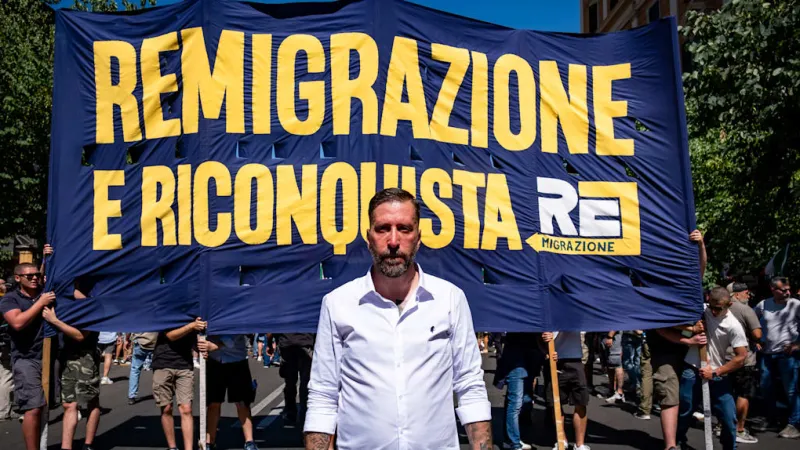
Rome, Italy – Thousands of demonstrators recently converged upon the Italian capital, marching through its historic streets to voice fervent support for remigration and a reconquest of the nation. This significant public display of nationalist sentiment coincides with the imminent formation of a new hardline right-wing political party, which openly advocates for a complete cessation of all immigration into Italy.
The protest, organized by various nationalist groups, drew a considerable crowd intent on asserting a strict stance on Italy's borders and demographic future. Chants of “illegal immigrants out” echoed across the city, encapsulating the core demand for the forced repatriation of individuals deemed to have entered the country unlawfully. This movement underscores a growing frustration among segments of the Italian populace regarding immigration policies and their perceived societal impacts.
At the heart of this evolving political landscape is the emergence of a nascent right-wing party, whose foundational principle is unequivocal: “no one shall enter Italy.” While specific leaders and a full manifesto are yet to be formally unveiled, statements attributed to its founders indicate a radical departure from mainstream immigration discourse. The party aims to translate the public's current anxieties into concrete legislative action, pushing for policies that prioritize national sovereignty and cultural preservation above all else.
The calls for remigration are not an isolated phenomenon but rather reflect a broader trend observed across several European nations grappling with the complexities of migration flows. Italy, positioned at the forefront of Mediterranean migration routes, has long been a focal point for debates surrounding asylum, integration, and border control. This latest surge in activism and political organization signals a hardening of positions within Italian society.
Italy possesses a rich history of both emigration and immigration, but recent decades have seen a significant increase in arrivals from North Africa and the Middle East, primarily by sea. This influx has fueled political rhetoric and public concern, leading to fluctuating policies and often intense debates in parliament and public squares. The current political climate, marked by a rise in nationalist sentiment, provides fertile ground for movements advocating stringent border controls and identity politics.
The term remigration, a central slogan of the protest, is controversial. While its proponents argue it simply means the return of non-citizens to their countries of origin, often implying a voluntary or incentivized process, critics frequently associate it with forced displacement and ethno-nationalist ideologies. In the context of the Italian protest, the connotation leans towards an assertive demand for the departure of those perceived as unlawful or culturally incompatible.
Public opinion polls in Italy have consistently shown varied levels of concern regarding immigration, with a notable portion of the electorate favoring stricter controls. The formation of this new party aims to consolidate and give political voice to this segment, potentially reshaping the existing right-wing coalition and challenging established political forces. It suggests a further shift towards the far-right in Italian politics.
While there have been no immediate official international reactions, such movements in a G7 nation like Italy are typically watched closely by the European Union and international human rights organizations. The EU has often struggled to formulate a cohesive and equitable migration policy among its member states, making national movements like this particularly impactful on the bloc's internal dynamics.
The emergence of this new party and the scale of the protest could exert pressure on the current Italian government, which already includes parties with robust stances on immigration. The demands for remigration might compel mainstream parties to adopt even tougher rhetoric or consider more drastic policy measures to avoid losing support to the burgeoning hardline movement.
As the new party formalizes its structure and begins campaigning, its impact on upcoming election cycles will be closely monitored. Its ability to mobilize public sentiment, particularly around the emotive issue of immigration, will determine its trajectory and potential to significantly alter Italy's political landscape. The Rome protest serves as a stark early indicator of the intensity of this burgeoning movement.